So what's a writer to do when actually visiting the locale of your current work in progress is impossible? Ask if you are a visual person and jump on the internet. This panorama of paintings showing Hobart Town between 1820-1860 helped me "see" into a very different time and place where my characters live and struggle.
This day trip to Port Arthur by Tim Hoosier helps me to visualize what was once a harsh and forbidding prison. Few escaped for the wardens and guards perpetuated the idea that the waters surrounding this stubby peninsula were shark-infested.
This grisly National Geographic video highlights the dreaded Tasmanian Devil. In photos, this small cousin to the more familiar kangaroo is rather cute. But after seeing this video, I now have a scene where Mac goes out into the night to investigate what sounds like a woman screaming.
National Novel Writing Month was good to me. After a month of not writing at all (due to travel and family illness), November kicked me back. Years of Stone is now at 36,000 words and I'm facing my next challenge: Making sure the historical underpinning is dead accurate.
May your own writing go well.

Sunday, December 18, 2011

Thursday, September 15, 2011
Revising character . . .
I came to my writing this week not wanting to admit that I was disenchanted with my main character, Deidre. In Standing Stones, Book 1, Deidre was brave. She followed Mac to Van Dieman's Land, flaunting convention, at a time when women had few resources. She became a teacher through her own will, and stood up to her mother and her minister to pursue her own destiny. Yet in Years of Stone, Book 2, once in Tasmania, she deflates, overwhelmed by bustling Hobart Town, unsure of her place, easily cowed by the upper class. No wonder I don't like her any more. This wasn't Deidre.
So when Deidre lands in Tasmania in 1842, would she be less overwhelmed? Is her feeling of ineffectualness really a mirror to my own sense of “Gosh, where am I?” in this not-so-clearly-understood colonial past? She’s not bowed over by convention. In common with Mac, she has the courage to stand up to those in power.
In Standing Stones, both Mac and Deidre suffered for their stand. In Years of Stone, they would not change. They will fight for something, and, they will succeed.
Lady Jane Franklin, the wife of Lieutenant-Governor John Franklin, is a powerful figure in Tasmanian history, but Deidre does not seek approval from her, nor does she aspire to the upper class. So I need to discover what Deidre and Mac are likely to stand for and to defend. That's at the macro level and will help me "see" the resolution of Deidre's initial decision to follow Mac to this faraway land where so many were transported.
Deidre is strong-willed. Her first goal is to get established in rough and tumble Hobart Town of 1842. Does she find a job, a place to stay, a boarding house? Is her money stolen (following the shipwreck, she has some sewn into her clothing). Does she get attacked? Does she walk down the street alone, with men catcalling after her? BY HER OWN EFFORTS, SHE NEEDS TO PUSH THROUGH HER OWN OBSTACLES.
How is she accepted by the middle tier (that’s her true home, not the upper class). Will she be geographically pushed away? If I am to develop CONFLICT, Deidre can never be safe in a place made safe by others. She has to create her own place through her will power and her courage.
After spending three years with this character, I'm still wondering if she sees the forest or the trees? What is her wider vision? What is her fatal flaw? Does she remain worthy of Mac? Is he worthy of her? What I do know now is that she is feisty and courageous, and I care about her again.
Some writers go about telling their stories after resolving these questions. They use any combination of character studies, plot outlines, note cards, even computer-generated programs that help to keep the process organized. I just try to sit down each day and work on the story. Deidre and Mac. Mac and Deidre.
 This piece of scrimshaw, carved by some nameless sailor, shows such a sweet couple, perhaps the yearning of this sailor so long ago, perhaps an archetype of Deidre and Mac. The scrimshaw is dated 1840, Tasmania, and held at the Queen Victoria Museum and Gallery.
So when Deidre lands in Tasmania in 1842, would she be less overwhelmed? Is her feeling of ineffectualness really a mirror to my own sense of “Gosh, where am I?” in this not-so-clearly-understood colonial past? She’s not bowed over by convention. In common with Mac, she has the courage to stand up to those in power.
In Standing Stones, both Mac and Deidre suffered for their stand. In Years of Stone, they would not change. They will fight for something, and, they will succeed.
Lady Jane Franklin, the wife of Lieutenant-Governor John Franklin, is a powerful figure in Tasmanian history, but Deidre does not seek approval from her, nor does she aspire to the upper class. So I need to discover what Deidre and Mac are likely to stand for and to defend. That's at the macro level and will help me "see" the resolution of Deidre's initial decision to follow Mac to this faraway land where so many were transported.
Deidre is strong-willed. Her first goal is to get established in rough and tumble Hobart Town of 1842. Does she find a job, a place to stay, a boarding house? Is her money stolen (following the shipwreck, she has some sewn into her clothing). Does she get attacked? Does she walk down the street alone, with men catcalling after her? BY HER OWN EFFORTS, SHE NEEDS TO PUSH THROUGH HER OWN OBSTACLES.
How is she accepted by the middle tier (that’s her true home, not the upper class). Will she be geographically pushed away? If I am to develop CONFLICT, Deidre can never be safe in a place made safe by others. She has to create her own place through her will power and her courage.
After spending three years with this character, I'm still wondering if she sees the forest or the trees? What is her wider vision? What is her fatal flaw? Does she remain worthy of Mac? Is he worthy of her? What I do know now is that she is feisty and courageous, and I care about her again.
Some writers go about telling their stories after resolving these questions. They use any combination of character studies, plot outlines, note cards, even computer-generated programs that help to keep the process organized. I just try to sit down each day and work on the story. Deidre and Mac. Mac and Deidre.

Thursday, September 08, 2011
'Fire Sisters' is up at Fiction365 . . .
Today, my flash fiction, "Fire Sisters" is up at Fiction365.
The story began in response to a writing prompt from the "Practice" group at the online Internet Writing Workshop back in March. The prompt was fire. My first thought was of those women factory workers who walked up nine flights of stairs to be locked into a shirtwaist factory sweatshop in New York City. The Triangle Shirtwaist Factory fire of 1911 was an unforgettable tragedy and provoked changes in union and occupational safety laws.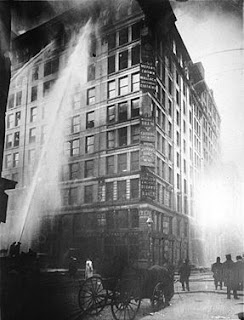
You can read a summary of the fire at Wikipedia or my story at Fiction365.
Otherwise, I'm still drafting and researching Years of Stone, just now reading a lot about women in prison in 1840, most recently, Kay Daniels' Convict Women. Interestingly, not everything you read in a book is true, but more about that later.
Today, I'm just celebrating.
The story began in response to a writing prompt from the "Practice" group at the online Internet Writing Workshop back in March. The prompt was fire. My first thought was of those women factory workers who walked up nine flights of stairs to be locked into a shirtwaist factory sweatshop in New York City. The Triangle Shirtwaist Factory fire of 1911 was an unforgettable tragedy and provoked changes in union and occupational safety laws.

You can read a summary of the fire at Wikipedia or my story at Fiction365.
Otherwise, I'm still drafting and researching Years of Stone, just now reading a lot about women in prison in 1840, most recently, Kay Daniels' Convict Women. Interestingly, not everything you read in a book is true, but more about that later.
Today, I'm just celebrating.
Friday, August 26, 2011
And more research . . .
I just finished reading Alan Brennert's fascinating Honolulu, a tale of Korean immigrant life in Hawai'i in the 1920s and 1930s, the scope of the book from the point of view of an imported picture bride who experiences plantation life, Honolulu's red light district, the stigma of divorce, and a slow climb out of poverty. Brennert's book helps me see Hawai'ian history more clearly and the rich blended ethinic mix we take for granted today. Also, rare for me, I forgot he was writing from a female point of view. An excellent read.
I also found his 'Author's Note' at the end of the book entrancing. For Alan Brennert does not stint on his research or in telling us how real people (from Somerset Maugham to the original Charlie Chan -- Chang Apana) inspired him. He lists at least 60 books that were helpful in developing a "true" sense of Hawai'ian culture.
Makes me feel a little better about the piles of books that surround me yet -- and thankful for interlibrary loan (two books in now, Kay Daniels, Convict Women, and Deborah Oxley, Convict Maids: The Forced Migration of Women to Australia). Today was a good day. Over 500 words, new plot twists, and outside, a hummingbird sips at our new bird feeder.
I also found his 'Author's Note' at the end of the book entrancing. For Alan Brennert does not stint on his research or in telling us how real people (from Somerset Maugham to the original Charlie Chan -- Chang Apana) inspired him. He lists at least 60 books that were helpful in developing a "true" sense of Hawai'ian culture.
Makes me feel a little better about the piles of books that surround me yet -- and thankful for interlibrary loan (two books in now, Kay Daniels, Convict Women, and Deborah Oxley, Convict Maids: The Forced Migration of Women to Australia). Today was a good day. Over 500 words, new plot twists, and outside, a hummingbird sips at our new bird feeder.
Friday, August 05, 2011
Research continues . . .
This week, I balance between writing and research, at times buoyed by Wesley Dean Smith's comments that if you can't find the answer to your research question within three clicks on Google, your readers won't give a damn. But my heroine is a teacher in 1842, Hobart Town, Tasmania. And let me tell you, I couldn't find info within three clicks. In fact the search was so convoluted that I don't think I could even reconstruct it.
But, here is the earliest school I can find, Ellinthorpe (see Marjorie R. Theobald's book, Knowing Women). The school was established in 1823 by a most intrepid woman, Hannah Maria Davice, who emigrated with a friend, Elinor Binfield, and a younger relative, Susannah Darke Purbrick in June, 1823. Hannah opened her school in rented buildings in Hobart Town within a month of arriving. She married George Carr Clark in December 1824 and continued to teach, changing locations to Carr Field House opposite the Post Office in Hobart, and then to Ellinthorpe in September 1827, described as a rural Victorian estate. Apparently, Lady Jane Franklin, wife of the Lieutenant Governor of Tasmania, was not too supportive, having educational projects of her own, but the Australian Dictionary of Biography reports Ellinthorpe was the most prestigious school in the colony, serving about 40 girls.

Hannah closed her school in 1840, taking her 6 children back to England for further education and leaving her husband behind. But Susannah Purbrick (Mrs. John Knight) opened her own school, Carr Villa, near Launceton in 1848 until 1866. I'm on the hunt for more details about how these schools worked and who the students were. That gap in 1842 might very well be useful for my story. And back to work it is, with more than three clicks!
Source of picture of Ellenthorpe Hall.
But, here is the earliest school I can find, Ellinthorpe (see Marjorie R. Theobald's book, Knowing Women). The school was established in 1823 by a most intrepid woman, Hannah Maria Davice, who emigrated with a friend, Elinor Binfield, and a younger relative, Susannah Darke Purbrick in June, 1823. Hannah opened her school in rented buildings in Hobart Town within a month of arriving. She married George Carr Clark in December 1824 and continued to teach, changing locations to Carr Field House opposite the Post Office in Hobart, and then to Ellinthorpe in September 1827, described as a rural Victorian estate. Apparently, Lady Jane Franklin, wife of the Lieutenant Governor of Tasmania, was not too supportive, having educational projects of her own, but the Australian Dictionary of Biography reports Ellinthorpe was the most prestigious school in the colony, serving about 40 girls.

Hannah closed her school in 1840, taking her 6 children back to England for further education and leaving her husband behind. But Susannah Purbrick (Mrs. John Knight) opened her own school, Carr Villa, near Launceton in 1848 until 1866. I'm on the hunt for more details about how these schools worked and who the students were. That gap in 1842 might very well be useful for my story. And back to work it is, with more than three clicks!
Source of picture of Ellenthorpe Hall.
Thursday, July 21, 2011
Road Trip Day 2
This hotel room looks empty as we leave.
I repacked the cooler and day bags.
Everything goes in the same place
even as all routines dwindle to
today’s Tour de France:
Updates stream
on the laptop.
The clocks change
as we cross state lines,
drive past pine-covered mountains,
lines of July snow on the highest ridges.
At a rest stop, the song of an unseen bird echoes.
Tonight we’ll sleep deeply,
perhaps dreaming of home, that bird,
and the road south.
We are on the road to Tucson, a 1,600 drive down past Yellowstone. Yesterday we crossed Idaho and reached Missoula MT. Place names along the way reminded us of the Lewis and Clark expedition, and we wondered what it was like to cross this mountain country in the 1840s. Early roads routinely washed out. Not many people live in this land of snow, but as we reach Missoula, the land flattens to valleys and a sense of respite. The mountains remain a presence, though. Today's prompt came from Robert Lee Brewer, #141 "empty".
I repacked the cooler and day bags.
Everything goes in the same place
even as all routines dwindle to
today’s Tour de France:
Updates stream
on the laptop.
The clocks change
as we cross state lines,
drive past pine-covered mountains,
lines of July snow on the highest ridges.
At a rest stop, the song of an unseen bird echoes.
Tonight we’ll sleep deeply,
perhaps dreaming of home, that bird,
and the road south.
We are on the road to Tucson, a 1,600 drive down past Yellowstone. Yesterday we crossed Idaho and reached Missoula MT. Place names along the way reminded us of the Lewis and Clark expedition, and we wondered what it was like to cross this mountain country in the 1840s. Early roads routinely washed out. Not many people live in this land of snow, but as we reach Missoula, the land flattens to valleys and a sense of respite. The mountains remain a presence, though. Today's prompt came from Robert Lee Brewer, #141 "empty".
Sunday, July 03, 2011
On writing . . .
I'm digging into the research for Years of Stone. The saga continues as Mac, arrested for protesting evictions and transported by sailing ship to Tasmania from Scotland, confronts 19th Century Van Dieman's Land, Britain's dumping ground for criminals. Deidre follows him into an uncertain future.
Today I found that Tasmania has its own "Southern Lights", and I'm reading Ken McGoogan's Lady Franklin's Revenge, not a romance but nonfiction backstory on Sir John Franklin, famous Arctic explorer who served as Governor in Van Diemen's Land 1837-1843. McGoogan includes photos, maps, and rich detail of the life in Hobart Town of that time.
But as I balance between writing and researching, I'm also motivated by Dean Wesley Smith's advice: "Your job is to tell the story and make things up." My characters move the story forward. So finally, I'm writing. As Dean says, "If you carve out writing time, spend it on creating new words."
As many articles that I've read that give writers various kinds of advice, Dean's words resonate. Yes, sometimes a story needs to marinate. Yes, writers need to master all kinds of technical skills, not the least being a sense of "truthiness" in writing historical fiction. Even for those days when words don't come easily, I'm still making progress, and that feels good.
Today I found that Tasmania has its own "Southern Lights", and I'm reading Ken McGoogan's Lady Franklin's Revenge, not a romance but nonfiction backstory on Sir John Franklin, famous Arctic explorer who served as Governor in Van Diemen's Land 1837-1843. McGoogan includes photos, maps, and rich detail of the life in Hobart Town of that time.
But as I balance between writing and researching, I'm also motivated by Dean Wesley Smith's advice: "Your job is to tell the story and make things up." My characters move the story forward. So finally, I'm writing. As Dean says, "If you carve out writing time, spend it on creating new words."
As many articles that I've read that give writers various kinds of advice, Dean's words resonate. Yes, sometimes a story needs to marinate. Yes, writers need to master all kinds of technical skills, not the least being a sense of "truthiness" in writing historical fiction. Even for those days when words don't come easily, I'm still making progress, and that feels good.
Tuesday, June 14, 2011
The Next Step . . .
What is slipping through my fingers?
Each heavy book, its pages
promise an idea or image that lingers,
for inspiration comes in stages,
Alas, my eyes want to stop
reading, my body to flop.
What library have I forsook,
freighted with tiny print?
The next step: Kindle or Nook,
no browsing, no out of print squint,
just the pure joy of reading a book?
All else falls away, even rhyme, it has went
the way of all words for my doubts now dwindle.
Outside my window, sparrows chirp.
I, at last, am writing.
All is well in my world.
P.S. I bought a Kindle.
Today's writing was inspired by Carry On Tuesday's Prompt 109: Slipping through my fingers, Sunday Scribblings prompt 271: The Next Step, and something new, a Tuesday Blog Hop from Gladiator's Pen on Inspiration.
You may notice a new page here. I finally learned how to add a page to my blog. So, this new page, called Beth's Reader's Corner, will highlight some short fiction (the first one, a flash fiction about quilting), maybe an excerpt from Standing Stones. Yes, I'm still in the research phase on Australia, such a rich history. But each book I read, each picture I find, will take me there one day.
Each heavy book, its pages
promise an idea or image that lingers,
for inspiration comes in stages,
Alas, my eyes want to stop
reading, my body to flop.
What library have I forsook,
freighted with tiny print?
The next step: Kindle or Nook,
no browsing, no out of print squint,
just the pure joy of reading a book?
All else falls away, even rhyme, it has went
the way of all words for my doubts now dwindle.
Outside my window, sparrows chirp.
I, at last, am writing.
All is well in my world.
P.S. I bought a Kindle.
Today's writing was inspired by Carry On Tuesday's Prompt 109: Slipping through my fingers, Sunday Scribblings prompt 271: The Next Step, and something new, a Tuesday Blog Hop from Gladiator's Pen on Inspiration.
You may notice a new page here. I finally learned how to add a page to my blog. So, this new page, called Beth's Reader's Corner, will highlight some short fiction (the first one, a flash fiction about quilting), maybe an excerpt from Standing Stones. Yes, I'm still in the research phase on Australia, such a rich history. But each book I read, each picture I find, will take me there one day.
Sunday, June 05, 2011
Travel Plans . . .
I sink into myself, pushed by so little time,
so much to do. All is illusion and yet
I find joy in watching an African violet bloom,
purple fat flowers, so delicate,
each day the tiny head of a new bloom lifts
and faces the sun.
The Great Migration calls.
Each spring, several hundred thousand wildebeests
sweep over African grassy plains to a birthing.
I will see elephants and tree-climbing lions.
I will travel across two oceans
to the Great Rift,
that place prehistoric peoples called home,
another moon rising,
another mystery fragmented through time.
Let the sun burn away my doubt.
Ride the crocodile into deep waters.
We are never not broken;
we are always whole.
This poem comes from several sources, Sunday Scribblings Prompt #270 Sweet (which I misread as Joy), Carry on Tuesday Prompt #107 So little time, so much to do, and then this interesting and lovely article by Julie C. Peters about a Hindu goddess named Akhilandeshavari. Her story illustrates that somehow even when we lie on the floor, overwhelmed by any of an amazing number of traumatic events, that we are never not broken, that we are ready for change, a kind of persistent quest, perhaps more than survival, that is unique to each of us.
so much to do. All is illusion and yet
I find joy in watching an African violet bloom,
purple fat flowers, so delicate,
each day the tiny head of a new bloom lifts
and faces the sun.
The Great Migration calls.
Each spring, several hundred thousand wildebeests
sweep over African grassy plains to a birthing.
I will see elephants and tree-climbing lions.
I will travel across two oceans
to the Great Rift,
that place prehistoric peoples called home,
another moon rising,
another mystery fragmented through time.
Let the sun burn away my doubt.
Ride the crocodile into deep waters.
We are never not broken;
we are always whole.
This poem comes from several sources, Sunday Scribblings Prompt #270 Sweet (which I misread as Joy), Carry on Tuesday Prompt #107 So little time, so much to do, and then this interesting and lovely article by Julie C. Peters about a Hindu goddess named Akhilandeshavari. Her story illustrates that somehow even when we lie on the floor, overwhelmed by any of an amazing number of traumatic events, that we are never not broken, that we are ready for change, a kind of persistent quest, perhaps more than survival, that is unique to each of us.
Thursday, June 02, 2011
Let's get serious . . .
No one can say what will happen
to Mother’s handkerchief embroidered in blue,
the journals, the drawings, scraps of poems,
love letters tucked in favorite books,
packed and unpacked again and again,
the dried flowers from my daughter’s wedding,
the quilt blocks begun and nearly finished,
a favorite cup with yellow cats.
No one can predict
who will come to take all this away,
not even with the most careful preparations,
not even with the most trusted friends.
I’m remembering an old Greek woman
who lay in state on the floor in an empty house.
I only hope for kindness
even from strangers on that final day.
This poem began with Robert Lee Brewer's Wednesday Poetry Prompt 134. His prompt reminded me of a scene from Kazantzakis’ film, “Zorba the Greek”(1964). A wealthy woman dies in a small Greek village. The priest, learning of her death, finds the house ravaged by hordes of villagers who took even her bed, leaving the house empty and the woman laying on the floor. This happens here, though in more civilized ways.
to Mother’s handkerchief embroidered in blue,
the journals, the drawings, scraps of poems,
love letters tucked in favorite books,
packed and unpacked again and again,
the dried flowers from my daughter’s wedding,
the quilt blocks begun and nearly finished,
a favorite cup with yellow cats.
No one can predict
who will come to take all this away,
not even with the most careful preparations,
not even with the most trusted friends.
I’m remembering an old Greek woman
who lay in state on the floor in an empty house.
I only hope for kindness
even from strangers on that final day.
This poem began with Robert Lee Brewer's Wednesday Poetry Prompt 134. His prompt reminded me of a scene from Kazantzakis’ film, “Zorba the Greek”(1964). A wealthy woman dies in a small Greek village. The priest, learning of her death, finds the house ravaged by hordes of villagers who took even her bed, leaving the house empty and the woman laying on the floor. This happens here, though in more civilized ways.
Saturday, April 09, 2011
Killdeer . . .
Out on the mud flats, a killdeer with red eye ring
plucks his way along the water-soaked land.
He’s alone in this wide field as dusk falls.
He runs forward in short bursts,
a few steps and then he stops.
He turns away invisible,
his feathers blend brown and gray with the land.
We wait. In a moment or two, he runs forward again,
bobbing his head slightly,
his black double-banded breast a beacon,
his sharp cry piercing the silence.
We walk on, a simple Sunday walk
and stop for birding now and then.
The days pass, grasses grow,
a killdeer returns and nests,
but how that cry lingers.

plucks his way along the water-soaked land.
He’s alone in this wide field as dusk falls.
He runs forward in short bursts,
a few steps and then he stops.
He turns away invisible,
his feathers blend brown and gray with the land.
We wait. In a moment or two, he runs forward again,
bobbing his head slightly,
his black double-banded breast a beacon,
his sharp cry piercing the silence.
We walk on, a simple Sunday walk
and stop for birding now and then.
The days pass, grasses grow,
a killdeer returns and nests,
but how that cry lingers.

Sunday, April 03, 2011
The Bowerbird
In the spring, the bowerbird gathers leaves and flowers.
We suppose, being male, he doesn’t have a nest in mind.
He brings a certain rock or mushroom in his beak,
found or stolen from another bowerbird nearby,
and lays in pattern all those elements of art --
color, texture, line -- to entice her eye.
And once she comes, he sings and
dances while she watches.
She may return.
They may mate.
Then she moves on alone to
build a nest, the bower abandoned,
in the forest or the field, a singular work:
he tidies up; he preens for the next female.
We marvel at these elaborate patterns here,
for what if the artful bower just does not appeal?
What if she doesn’t come, drawn by some strange mix
of biologic chemistry and art made by birdy eye and birdy beak?
Even in the deepest forest, art is created, unknown to human eye.
We make our nests, and sing and dance,
And believe all is left to chance.
April begins National Poetry Month where some writers commit to writing a poem a day (see NaPoWriMo). I may not post every day, but I will be writing a poem a day and sharing some.
National Geographic had an article by Virginia Morrell on bowerbirds last year. The images of their precisely arranged "bowers" are fascinating. These are not nests. The male bowerbirds of New Zealand and Australia make them to attract the females for mating. The bowers are just lovely, intricate, a mix of materials. One photograph from the article shows a bowerbird painting sticks in his "nest" with "paint" the bird actually made himself. Sorry the line breaks don't come out properly here; I wanted the shape of the poem to be like a bower . . .
We suppose, being male, he doesn’t have a nest in mind.
He brings a certain rock or mushroom in his beak,
found or stolen from another bowerbird nearby,
and lays in pattern all those elements of art --
color, texture, line -- to entice her eye.
And once she comes, he sings and
dances while she watches.
She may return.
They may mate.
Then she moves on alone to
build a nest, the bower abandoned,
in the forest or the field, a singular work:
he tidies up; he preens for the next female.
We marvel at these elaborate patterns here,
for what if the artful bower just does not appeal?
What if she doesn’t come, drawn by some strange mix
of biologic chemistry and art made by birdy eye and birdy beak?
Even in the deepest forest, art is created, unknown to human eye.
We make our nests, and sing and dance,
And believe all is left to chance.
April begins National Poetry Month where some writers commit to writing a poem a day (see NaPoWriMo). I may not post every day, but I will be writing a poem a day and sharing some.
National Geographic had an article by Virginia Morrell on bowerbirds last year. The images of their precisely arranged "bowers" are fascinating. These are not nests. The male bowerbirds of New Zealand and Australia make them to attract the females for mating. The bowers are just lovely, intricate, a mix of materials. One photograph from the article shows a bowerbird painting sticks in his "nest" with "paint" the bird actually made himself. Sorry the line breaks don't come out properly here; I wanted the shape of the poem to be like a bower . . .
Wednesday, March 23, 2011
Where does inspiration come from?
If ever a photo carried stories, they're here in this image of an abandoned house, left to the sand for 50 years in Kolmanskop, once a diamond mining town in Namibia. The photo is by Marsel von Oosten, just published in National Geographic (April 2011). More later . . .

Thursday, January 20, 2011
Song to the Saguaro Cactus
(pronounced sah-wha-ro)

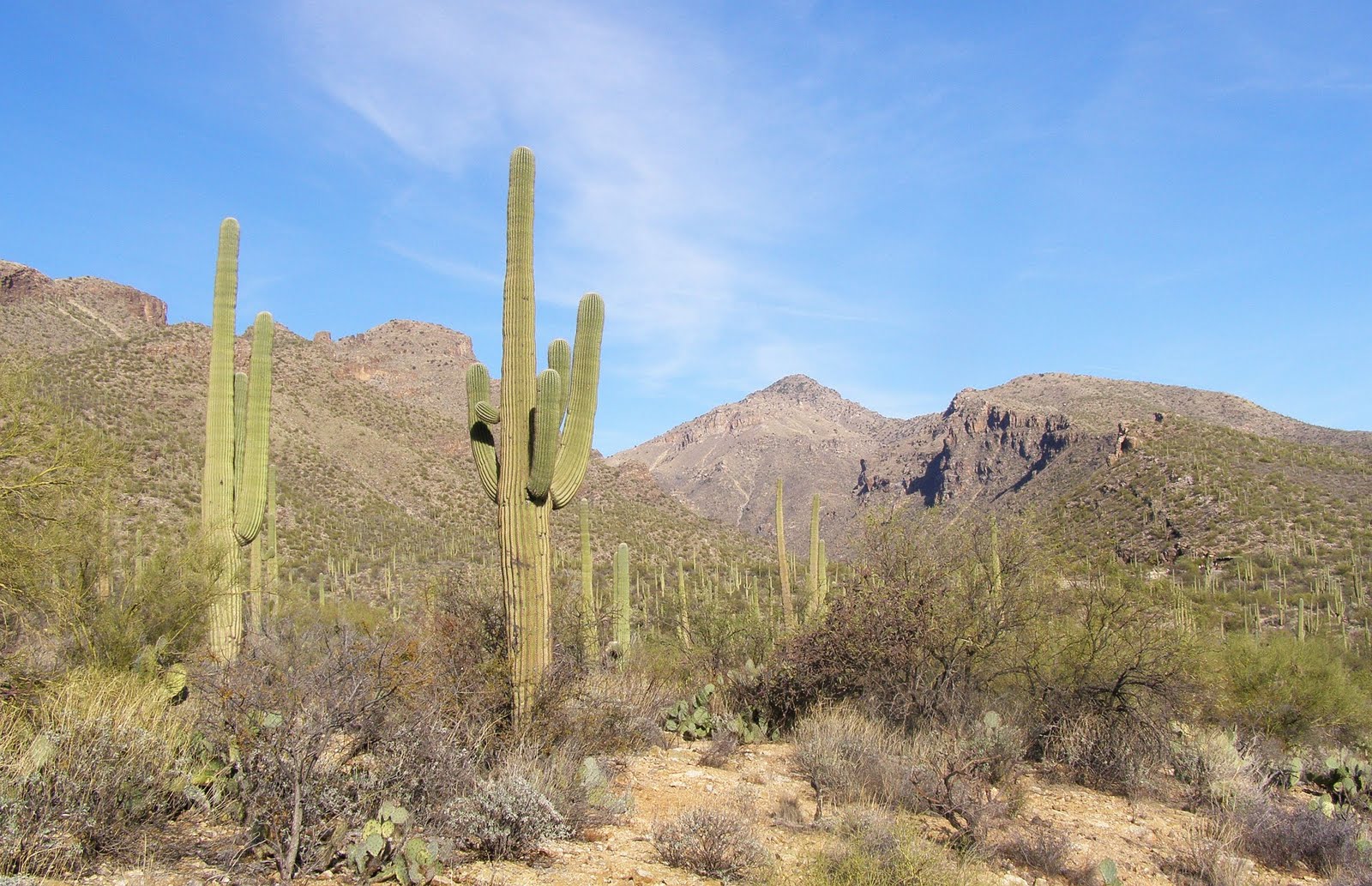
We hike Sabino Canyon
to see the great Saguaro.
The Tohono O’Odham call these persons.
And so they are, each one unique,
standing in the thousands
along the valleys of this canyon,
arrayed in the arroyos as sentinels,
their thick, spiny, slow-growing arms
pocked with nests for cactus wrens or
an occasional owl.
Ah, Saguaro, you live longer than the people
who measure their years
against the flowering and the fruiting,
the hungry times, the longest nights,
the coldest, shortest days.
The people come in the proper season
to make wine from your fruits,
to give thanks,
and to dance under your arms.
We hike Sabino Canyon
to see the great Saguaro.
The Tohono O’Odham call these persons.
And so they are, each one unique,
standing in the thousands
along the valleys of this canyon,
arrayed in the arroyos as sentinels,
their thick, spiny, slow-growing arms
pocked with nests for cactus wrens or
an occasional owl.
Ah, Saguaro, you live longer than the people
who measure their years
against the flowering and the fruiting,
the hungry times, the longest nights,
the coldest, shortest days.
The people come in the proper season
to make wine from your fruits,
to give thanks,
and to dance under your arms.
Sunday, December 26, 2010
#257 Manifesto
My manifesto is
just large enough
to scrawl
on the back of a leaf:
Balance in all things.
Sunday Scribblings this week asks us to write a manifesto.
When I think of a manifesto, I’m remembering demagogues through history who screamed at their followers; economies out of control, privation, suffering, and war became real demons to fear.
Our greatest religious teachers have distilled their insights to simple truths. Do not do to others what you would not want done to yourself. In the west, Ten Commandments, sacrifice and denial become a way of life. In the east, a search for nirvana based on meditation led people to act intentionally and to try to do no harm.
The tension between a dream and reality remains. I wish that all people lived in peace and harmony, safe from harm. But this speaks to a survival level. A larger dream would be for each soul to achieve its highest vision, whether that is to be a parent, an artist, a musician, a writer, even a politician. And, yes, I do believe that all actions are expressions of human creativity, even to making a simple meal, and that the best creative works have something uplifting, something good in them. So I would add: As your hand turns, work for the public good.
just large enough
to scrawl
on the back of a leaf:
Balance in all things.
Sunday Scribblings this week asks us to write a manifesto.
When I think of a manifesto, I’m remembering demagogues through history who screamed at their followers; economies out of control, privation, suffering, and war became real demons to fear.
Our greatest religious teachers have distilled their insights to simple truths. Do not do to others what you would not want done to yourself. In the west, Ten Commandments, sacrifice and denial become a way of life. In the east, a search for nirvana based on meditation led people to act intentionally and to try to do no harm.
The tension between a dream and reality remains. I wish that all people lived in peace and harmony, safe from harm. But this speaks to a survival level. A larger dream would be for each soul to achieve its highest vision, whether that is to be a parent, an artist, a musician, a writer, even a politician. And, yes, I do believe that all actions are expressions of human creativity, even to making a simple meal, and that the best creative works have something uplifting, something good in them. So I would add: As your hand turns, work for the public good.
Monday, December 20, 2010
2011 Resolutions?
I've never made specific writing resolutions, but I just joined a new online writers' group and found Joe Konrath's A Newbie's Blog for Publishing. He's been setting resolutions since 2006, so I thought I'd piggyback on just 4 (OK 5) of his resolutions.
Konrath's resolutions (and my commentary) follow:
1. "I will start/finish the damn book" (2006).2. I have finished STANDING STONES and have 3-4 ideas in the research/drafting stage (RIVERS OF STONE and YEARS OF STONE, both sequels at 40% planned, and MOTHERS DON'T DIE (85% drafted) and THE LAST TAPESTRY (10% drafted). I will work on two of these.
2. "I will always have at least three stories on submission, while working on a fourth" (2006) This is a biggie for me as I have a horrible track record at sending stuff out, whether poems, stories or subbing the current novel. So my take will be always have two out working while working on a third. That seems sustainable.
3. "I will create/update my website" (2006). Does every writer who keeps a blog have an identity crisis or worry about readers? (See resolution 4 below) I want to go back to simply writing about writing. Those who come here can just expect a little venting, an occasional poem, and updates on research and writing -- as well as appreciation for other writers.
4. "I will stop worrying" (2010). Konrath worries??? I will strive to write (and edit) my best every day, and then I will let it go. That's me in 2011. I will dig deeper, write more intensely, and stop worrying!
5. "I will self publish" (2011). Yes, I will, just as Amanda Borenstadt did with her short story to test the water and then her book, Syzygy, an acronym I cannot type without doublechecking. Smashwords, look out! I'm nearly ready to play!
If you are a writer, my mantra remains: May your own writing go well!
Konrath's resolutions (and my commentary) follow:
1. "I will start/finish the damn book" (2006).2. I have finished STANDING STONES and have 3-4 ideas in the research/drafting stage (RIVERS OF STONE and YEARS OF STONE, both sequels at 40% planned, and MOTHERS DON'T DIE (85% drafted) and THE LAST TAPESTRY (10% drafted). I will work on two of these.
2. "I will always have at least three stories on submission, while working on a fourth" (2006) This is a biggie for me as I have a horrible track record at sending stuff out, whether poems, stories or subbing the current novel. So my take will be always have two out working while working on a third. That seems sustainable.
3. "I will create/update my website" (2006). Does every writer who keeps a blog have an identity crisis or worry about readers? (See resolution 4 below) I want to go back to simply writing about writing. Those who come here can just expect a little venting, an occasional poem, and updates on research and writing -- as well as appreciation for other writers.
4. "I will stop worrying" (2010). Konrath worries??? I will strive to write (and edit) my best every day, and then I will let it go. That's me in 2011. I will dig deeper, write more intensely, and stop worrying!
5. "I will self publish" (2011). Yes, I will, just as Amanda Borenstadt did with her short story to test the water and then her book, Syzygy, an acronym I cannot type without doublechecking. Smashwords, look out! I'm nearly ready to play!
If you are a writer, my mantra remains: May your own writing go well!
Friday, December 10, 2010
An Unexpected Moment . . .
I have been sadly remiss in keeping my writing blog up. I'm in the research phase for the next book, RIVERS OF STONE, with some days going well, and other days, not so well. I've found some great stuff online and at the library, delved into history, worked on understanding the "real" structure of "plot", but the story has remained elusive. Until this morning.
Larry Brooks writes that the reader must discover a compelling reason to keep reading: An unexpected moment occurs when everything changes. Up to this point, you may be writing (or reading) about sympathetic characters, interesting situations, but the story doesn't really grab you. You're just as likely to put the book down and turn to other, more rewarding pursuits (Farmville, online Scrabble, sex), right before nodding off.
But as I was reading his post what readers must experience for a satisfying read, something clicked for my story. A true WHAT IF moment. And for the first time, the story I've been working on for the last two months felt like a story. Thank you, Larry. Thunder fingers is ready to roll.
Larry Brooks writes that the reader must discover a compelling reason to keep reading: An unexpected moment occurs when everything changes. Up to this point, you may be writing (or reading) about sympathetic characters, interesting situations, but the story doesn't really grab you. You're just as likely to put the book down and turn to other, more rewarding pursuits (Farmville, online Scrabble, sex), right before nodding off.
But as I was reading his post what readers must experience for a satisfying read, something clicked for my story. A true WHAT IF moment. And for the first time, the story I've been working on for the last two months felt like a story. Thank you, Larry. Thunder fingers is ready to roll.
Wednesday, October 06, 2010
October update . . .
I haven't blogged or written any poetry for what feels like months, yet the mantra of "perseverance furthers" pushes me forward most mornings. Today I started the edits on the last section of STANDING STONES. I wonder if this will be the last edit. Most likely not, but I have cut 15,000 words in about two months.
This kind of editing is rather fun. As I reread the story, the hunt for extra words and passive voice continues. I ask constantly: Is this wording, character, scene, or chapter essential to the story? Does this move the story forward? Words drop off the page as I read the dialogue aloud and and "hear" again how my characters talk.
Now and again, writing friends from several online writing communities share their works in progress, their ambitions, their tenacity, and I am encouraged. My characters seem a bit impatient, but come November 1, I will be ready for the first push into a draft of RIVERS OF STONE. Dougal, Colin, and Mary Margaret, disguised as a young boy, will travel the Atlantic as newly hired servants of the Hudson's Bay Company, join the Fur Brigade Express to trek across Canada and come to Fort Vancouver. It will be late spring, 1843, well before Mount St. Helens' eruption in 1847 or the discovery of gold. Perhaps Colin will sail to the Sandwich Islands or China. Perhaps Dougal will find a fiddle, and Mary Margaret, this woman who worked as a man, will discover herself in the Great Nor'West.
This kind of editing is rather fun. As I reread the story, the hunt for extra words and passive voice continues. I ask constantly: Is this wording, character, scene, or chapter essential to the story? Does this move the story forward? Words drop off the page as I read the dialogue aloud and and "hear" again how my characters talk.
Now and again, writing friends from several online writing communities share their works in progress, their ambitions, their tenacity, and I am encouraged. My characters seem a bit impatient, but come November 1, I will be ready for the first push into a draft of RIVERS OF STONE. Dougal, Colin, and Mary Margaret, disguised as a young boy, will travel the Atlantic as newly hired servants of the Hudson's Bay Company, join the Fur Brigade Express to trek across Canada and come to Fort Vancouver. It will be late spring, 1843, well before Mount St. Helens' eruption in 1847 or the discovery of gold. Perhaps Colin will sail to the Sandwich Islands or China. Perhaps Dougal will find a fiddle, and Mary Margaret, this woman who worked as a man, will discover herself in the Great Nor'West.
Saturday, August 21, 2010
Back to editing . . .
On July 24th, I stood in front of 450 people to receive the second place award in historical fiction for Standing Stones at the Pacific Northwest Writers Association literary contest.
I remember bouncing up out of my chair when my name was called with a sense of disbelief and joy. Some 1100 people entered back in February. Now just three names (Kendra Hall, for Joan of Arc, Gabriella's Story; Debra Carlson for Shakuhachi, and me) were announced in our category. At the "winners only" reception following the dinner, several agents invited me to send my work, but here I heard for the first time that 118,000 words is too long for a first novel by a new author.
Over the long weekend of August 6th, I attended the Willamette Writers annual conference in Portland. Robert Dugoni was an inspirational keynoter ("Begin your story with blood on the floor") and workshop leader. Charlotte Cook changed my perceptions of how to write back story with her comment:
"If you don't want to compromise the forward momentum of the story, integrate back story as you experience your past in your own life. Do we stop action in the present to retell ourselves a story from the past? In chronological order?"
But the real draw for me at Willamette Writers was to find out more about agents and the possibility of representation. Now I learned in earnest that Standing Stones was too long. But after a year of editing, I'm no longer intimidated by the challenge of chopping out 25,000 words or so. I'm not subbing to agents just yet. I'm not writing poetry or short stories. Each morning begins with editing. Each afternoon includes research, for the next two stories in this series are simmering and shimmering in my imagination. Summer now begins its turn to fall. May your own projects go well.
I remember bouncing up out of my chair when my name was called with a sense of disbelief and joy. Some 1100 people entered back in February. Now just three names (Kendra Hall, for Joan of Arc, Gabriella's Story; Debra Carlson for Shakuhachi, and me) were announced in our category. At the "winners only" reception following the dinner, several agents invited me to send my work, but here I heard for the first time that 118,000 words is too long for a first novel by a new author.
Over the long weekend of August 6th, I attended the Willamette Writers annual conference in Portland. Robert Dugoni was an inspirational keynoter ("Begin your story with blood on the floor") and workshop leader. Charlotte Cook changed my perceptions of how to write back story with her comment:
"If you don't want to compromise the forward momentum of the story, integrate back story as you experience your past in your own life. Do we stop action in the present to retell ourselves a story from the past? In chronological order?"
But the real draw for me at Willamette Writers was to find out more about agents and the possibility of representation. Now I learned in earnest that Standing Stones was too long. But after a year of editing, I'm no longer intimidated by the challenge of chopping out 25,000 words or so. I'm not subbing to agents just yet. I'm not writing poetry or short stories. Each morning begins with editing. Each afternoon includes research, for the next two stories in this series are simmering and shimmering in my imagination. Summer now begins its turn to fall. May your own projects go well.
Thursday, July 22, 2010
About what's next . . .
In northern Scotland today, here and there in the rolling green hills close to the sea, clusters of stones remain. Once these stones were cottages for crofters. For in the early 19th Century, rich landowners, inspired by the Industrial Revolution, sought to make this land more productive and evicted the people who had lived here in these hills for generations, to make way for sheep.
Mac MacDonnell , a fisherman, with his brothers Dougal, Colin, and Jamie, and his sister, Moira, lived in such a cottage. Suspicious when Lord Gordon took possession of the tiny island they lived on, Mac protested changes first to his fishing boat and then, when sheep were brought on the island and evictions began, Mac led protests to the lord’s manor house. When a child was trampled to death, the MacDonnell’s were evicted and their boat confiscated. Mac was arrested and sentenced to be transported to the penal colony at Port Arthur in Van Diemen’s Land. As Mac is taken to London to work in the prison hulks on the Thames, awaiting shipment to Tasmania, the remaining MacDonnell’s face the future alone.
Each struggles to decide whether to remain on their island home or to leave. Dougal and his sweetheart Mary Margaret disguised as a man, sign on as servants with the Hudson’s Bay Company. Colin is hired as well. Moira reluctantly takes Jamie, the youngest brother, with her to Inverness, searching for work and for Dhylan, her husband. And Diedre, fearful of leaving her family, yet more afraid of a life without Mac, follows Mac to Van Dieman’s Land, hoping somehow to be reunited.
This is the story of Standing Stones, a finalist in this year’s Pacific Northwest Writers Association literary contest. Critics called this story “a very promising work” with “excellent plot development” and “wide audience appeal for readers of “action/adventure, historical fiction and possibly romance.” My search for an agent begins as does the sequel.
I’m in the research phase for the next novel.
Should I tell the story of Dougal and Mary Margaret as they cross the wilds of Canada with the Hudson’s Bay Company’s famous fur brigades, perhaps traveling with artist Paul Kane west to Fort Vancouver? There, Mary Margaret’s disguise unravels, she is discharged from service and lives outside the Fort with a mélange of Native Americans, Hawaiians and Scots. Perhaps they’re hired by Paul Kane as he travels throughout the Willamette Valley and north again, documenting the “Great Nor-West” and painting the 1847 eruption of Mount St. Helens. And then in January 1848, gold is discovered at Sutter’s Mill. The Great Gold Rush of California begins.
Or should I continue the story of Mac, shipwrecked near Port Arthur, desperate to find Diedre among the survivors, and of their lives in the early days of the penal colony on Tasmania? Does Mac try to escape, past the vicious dog line and north into the bush? Are they befriended by the very few aboriginals or bushmen there? Does Mac survive his sentence? How does Diedre begin a new life in the wild saloon halls of Port Arthur? Is she befriended by the peripatetic Lady Franklin, wife of soon-to-be-disposed Governor Franklin (1843), the ill-fated explorer of the Arctic? And then, in May, 1851, gold is discovered. The Great Gold Rush in the Macquarie River country north of Sydney begins.
Yesterday I spent three hours researching in the Spokane library’s Pacific Northwest Room where materials cannot be checked out. But I will persevere. Each of the stories above is roughly a three-year project: one year to draft, two years to revise. Which story appeals most to you?
Mac MacDonnell , a fisherman, with his brothers Dougal, Colin, and Jamie, and his sister, Moira, lived in such a cottage. Suspicious when Lord Gordon took possession of the tiny island they lived on, Mac protested changes first to his fishing boat and then, when sheep were brought on the island and evictions began, Mac led protests to the lord’s manor house. When a child was trampled to death, the MacDonnell’s were evicted and their boat confiscated. Mac was arrested and sentenced to be transported to the penal colony at Port Arthur in Van Diemen’s Land. As Mac is taken to London to work in the prison hulks on the Thames, awaiting shipment to Tasmania, the remaining MacDonnell’s face the future alone.
Each struggles to decide whether to remain on their island home or to leave. Dougal and his sweetheart Mary Margaret disguised as a man, sign on as servants with the Hudson’s Bay Company. Colin is hired as well. Moira reluctantly takes Jamie, the youngest brother, with her to Inverness, searching for work and for Dhylan, her husband. And Diedre, fearful of leaving her family, yet more afraid of a life without Mac, follows Mac to Van Dieman’s Land, hoping somehow to be reunited.
This is the story of Standing Stones, a finalist in this year’s Pacific Northwest Writers Association literary contest. Critics called this story “a very promising work” with “excellent plot development” and “wide audience appeal for readers of “action/adventure, historical fiction and possibly romance.” My search for an agent begins as does the sequel.
I’m in the research phase for the next novel.
Should I tell the story of Dougal and Mary Margaret as they cross the wilds of Canada with the Hudson’s Bay Company’s famous fur brigades, perhaps traveling with artist Paul Kane west to Fort Vancouver? There, Mary Margaret’s disguise unravels, she is discharged from service and lives outside the Fort with a mélange of Native Americans, Hawaiians and Scots. Perhaps they’re hired by Paul Kane as he travels throughout the Willamette Valley and north again, documenting the “Great Nor-West” and painting the 1847 eruption of Mount St. Helens. And then in January 1848, gold is discovered at Sutter’s Mill. The Great Gold Rush of California begins.
Or should I continue the story of Mac, shipwrecked near Port Arthur, desperate to find Diedre among the survivors, and of their lives in the early days of the penal colony on Tasmania? Does Mac try to escape, past the vicious dog line and north into the bush? Are they befriended by the very few aboriginals or bushmen there? Does Mac survive his sentence? How does Diedre begin a new life in the wild saloon halls of Port Arthur? Is she befriended by the peripatetic Lady Franklin, wife of soon-to-be-disposed Governor Franklin (1843), the ill-fated explorer of the Arctic? And then, in May, 1851, gold is discovered. The Great Gold Rush in the Macquarie River country north of Sydney begins.
Yesterday I spent three hours researching in the Spokane library’s Pacific Northwest Room where materials cannot be checked out. But I will persevere. Each of the stories above is roughly a three-year project: one year to draft, two years to revise. Which story appeals most to you?
Monday, July 05, 2010
Standing Stones a finalist . . .
I'm thrilled to learn that Standing Stones was selected as a finalist in this year's Pacific Northwest Writers Association literary contest. Over 1100 writers entered with nearly 100 chosen as finalists in 12 categories. Results will be announced July 24 at an awards dinner in Seattle. I'm going!
C. C. Humphreys is the keynote speaker at the dinner. This accomplished writer gives his occupation as "writer, actor, and fight choreographer," so I'm sure to learn something new. He's on my reading list now, along with other research which pulls me in many different directions -- all 19th Century but in Tasmania, China, Hawai'i, and along the fur traders' routes in Canada west from York to Fort Vancouver.
 I found a gem in Paul Kane (1810-1871) who, inspired by George Catlin, painted to preserve the culture and images of the great wilderness of the West. Kane gained permission to travel with the Hudson's Bay Company fur brigades west and painted landscapes of Native peoples across Canada.
He left Toronto in May and arrived (after many adventures and misadventures) at Fort Vancouver in December, 1846. That's over 6 months on the road in far more rugged conditions we experience today, even when we go camping. He hunkered down at Fort Vancouver and then travelled throughout the Willamette Valley and north, including a stop at Fort Victoria.
 Somewhere along the way, Kane painted an eruption of Mt. St. Helens at night (1847, source Wikipedia). You'll note the eruption comes (accurately) from the side of the cone, so not as significant as the big blow-up in 1980, but this must have had an impact on the peoples living there at that time. I also learned that Kane visited the Whitman Mission just a few months before the massacre there. Ah, the links that research brings!
C. C. Humphreys is the keynote speaker at the dinner. This accomplished writer gives his occupation as "writer, actor, and fight choreographer," so I'm sure to learn something new. He's on my reading list now, along with other research which pulls me in many different directions -- all 19th Century but in Tasmania, China, Hawai'i, and along the fur traders' routes in Canada west from York to Fort Vancouver.
I found a gem in Paul Kane (1810-1871) who, inspired by George Catlin, painted to preserve the culture and images of the great wilderness of the West. Kane gained permission to travel with the Hudson's Bay Company fur brigades west and painted landscapes of Native peoples across Canada.He left Toronto in May and arrived (after many adventures and misadventures) at Fort Vancouver in December, 1846. That's over 6 months on the road in far more rugged conditions we experience today, even when we go camping. He hunkered down at Fort Vancouver and then travelled throughout the Willamette Valley and north, including a stop at Fort Victoria.
 Somewhere along the way, Kane painted an eruption of Mt. St. Helens at night (1847, source Wikipedia). You'll note the eruption comes (accurately) from the side of the cone, so not as significant as the big blow-up in 1980, but this must have had an impact on the peoples living there at that time. I also learned that Kane visited the Whitman Mission just a few months before the massacre there. Ah, the links that research brings!
Thanks to the library, I have Diane Eaton and Sheila Urbanek's book, Paul Kane's Great Nor-West with its wonderful commentary and diary excerpts to accompany his paintings. Now, back to work . . .
Friday, June 25, 2010
My Pantry . . .
Three things you'll always find in my pantry are garlic salt, rubber knuckles, and granddad's hand gun loaded with silver bullets. This is because I don't trust the garlic salt by itself, and garlic bulbs are too cumbersome to wear by themselves. I don't see them hanging around my neck. So, I just keep my garlic salt handy, right behind my old-fashioned breadbox, the one that Clem threw at me before he left. He didn't listen. He made it all the way out past the front picket fence before they got him. And they didn't leave anything behind to bury. Well, nobody's perfect.
I mostly stay inside now. Neither the TV nor the radio works. I'm thinking I may have to make a run to the city. Not sure how I'll make it past the front yard unless I wire the car up with garlic. I'm worried about my sister. She lives in a high rise with three cats. Clem never cared for her that much, so I haven't seen Sissy for three years. Last time I saw her, she was telling me to remember granddad's stories about when the moon turned red. That's when I started cooking with garlic salt.
Have you ever had oatmeal with garlic salt? It's not so bad if you mix it with raisins and peanuts. Clem didn't like my cooking after I saw my sister. He said I should watch the cooking channel and make some changes. I just kept my head down and kept on with what I wanted. We didn't ever fight exactly. He just threw things around, and I kept cooking with garlic salt. And, of course, the entire front yard and back yard is planted in garlic. Nothing bad is coming in here.
Did I say this just started the week before Halloween? I attribute it to the blood moon we saw all through September. Can't say I'm going to have much for the trick and treaters this year. Not even candy corn, my favorite. I'm keeping it for myself. Though this year, it tastes a bit salty. You know, like garlic.
I'm working on something a little different just now to open up some ideas along the theory that any writing takes me somewhere, as most of my attention is still focused on 19th Century research. So today's short story was inspired by a prompt from Jennifer's neat site Procrastinating Writers ("What three things are in your pantry . . . "), as well as Keith's Carry On Tuesdays (prompt: "Well, nobody's perfect").
I mostly stay inside now. Neither the TV nor the radio works. I'm thinking I may have to make a run to the city. Not sure how I'll make it past the front yard unless I wire the car up with garlic. I'm worried about my sister. She lives in a high rise with three cats. Clem never cared for her that much, so I haven't seen Sissy for three years. Last time I saw her, she was telling me to remember granddad's stories about when the moon turned red. That's when I started cooking with garlic salt.
Have you ever had oatmeal with garlic salt? It's not so bad if you mix it with raisins and peanuts. Clem didn't like my cooking after I saw my sister. He said I should watch the cooking channel and make some changes. I just kept my head down and kept on with what I wanted. We didn't ever fight exactly. He just threw things around, and I kept cooking with garlic salt. And, of course, the entire front yard and back yard is planted in garlic. Nothing bad is coming in here.
Did I say this just started the week before Halloween? I attribute it to the blood moon we saw all through September. Can't say I'm going to have much for the trick and treaters this year. Not even candy corn, my favorite. I'm keeping it for myself. Though this year, it tastes a bit salty. You know, like garlic.
I'm working on something a little different just now to open up some ideas along the theory that any writing takes me somewhere, as most of my attention is still focused on 19th Century research. So today's short story was inspired by a prompt from Jennifer's neat site Procrastinating Writers ("What three things are in your pantry . . . "), as well as Keith's Carry On Tuesdays (prompt: "Well, nobody's perfect").
Thursday, June 24, 2010
Valparaiso graffiti . . .
Down any cobbled street
in hilly Valparaiso, we see
butterflies, a prism
of light, a hand uplifted:
white doves take flight,
scrambled letters shape a poem,
a street musician plays sweet horn
for veiled women on a wall,
behind the garden
giant salamanders play.
Blue sea, blue sky,
my heart is far from home.
This poem comes from a melange of photos taken on a walk around Valparaiso (in Spanish, Valley of Paradise), in Chile, last year.
Valparaiso Chile
in hilly Valparaiso, we see
butterflies, a prism
of light, a hand uplifted:
white doves take flight,
scrambled letters shape a poem,
a street musician plays sweet horn
for veiled women on a wall,
behind the garden
giant salamanders play.
Blue sea, blue sky,
my heart is far from home.
This poem comes from a melange of photos taken on a walk around Valparaiso (in Spanish, Valley of Paradise), in Chile, last year.
Valparaiso Chile
Sunday, June 06, 2010
#217: Mantra . . .
I have no mantra. I resonate instead
with the four sacred directions and
feel nature to my bones,
the rise of sun,
the floating moon,
the moment I know that life begins
or that I die.
I walk in any forest attuned to bird cries,
sacred scrit written on air.
A cloud of yellow butterflies
crosses my path and I am at home.
If a poem appears,
I hold it in my hands,
so briefly,
as brief as my breath,
and let it go.
This week's poetry prompt from Sunday Scribblings is simply mantra. Read more of what others have written by linking to Sunday Scribblings. I read a definition of "mantra" to find that in the Upanishand belief system, each letter of a word is given spiritual meaning (that should be of interest to writers). Here's the quote from Wikipedia: "The mute consonants represent the earth, the sibilants the sky, the vowels heaven. The mute consonants represent fire, the sibilants air, the vowels the sun. The mute consonants represent the eye, the sibilants the ear, the vowels the mind"
Personally, I'm drawn to the moon and water, so I begin to think this system leaves out much -- the mute consonants representing earth (think mud as well as mountains), but no moon. The second level lists fire, air and sun, but no earth or water. The third level -- the body -- the eye, the ear, the mind, but where is the gut, the heart, the belly of life?
with the four sacred directions and
feel nature to my bones,
the rise of sun,
the floating moon,
the moment I know that life begins
or that I die.
I walk in any forest attuned to bird cries,
sacred scrit written on air.
A cloud of yellow butterflies
crosses my path and I am at home.
If a poem appears,
I hold it in my hands,
so briefly,
as brief as my breath,
and let it go.
This week's poetry prompt from Sunday Scribblings is simply mantra. Read more of what others have written by linking to Sunday Scribblings. I read a definition of "mantra" to find that in the Upanishand belief system, each letter of a word is given spiritual meaning (that should be of interest to writers). Here's the quote from Wikipedia: "The mute consonants represent the earth, the sibilants the sky, the vowels heaven. The mute consonants represent fire, the sibilants air, the vowels the sun. The mute consonants represent the eye, the sibilants the ear, the vowels the mind"
Personally, I'm drawn to the moon and water, so I begin to think this system leaves out much -- the mute consonants representing earth (think mud as well as mountains), but no moon. The second level lists fire, air and sun, but no earth or water. The third level -- the body -- the eye, the ear, the mind, but where is the gut, the heart, the belly of life?
Saturday, May 29, 2010
Benjamin Percy and the Southern Cross . . .
Tonight, I'm settled in with the latest issue of Poets & Writers, reading "Home Improvement," by Benjamin Percy. I was jolted right out of a quiet evening when I read what Percy had to say about the difference between beginning writers who revise and a professional writer who " . . . mercilessly lops off limbs, rips out innards like party streamers, drains away gallons of blood, and then calls down lightning to bring the body back to life" (26). Ah, passion.
So today was research again, no writing. And that's what's slowing me down. The not writing. I did find some interesting stuff on the Southern Cross, always visible at night in the Southern Hemisphere, south of 35 degrees, particularly useful to sailors as the southern sky lacks a pole star. The Southern Cross was/is honored by Australian aborigines through folktales of the Two Brothers and of totemic protectors.
In 1854, the Southern Cross inspired a banner raised by protesting gold miners in Ballarat, Victoria, Australia. The bloody battle that followed decimated the miners but their cry remains -- "We swear by the Southern Cross to stand truly to each other and fight to defend our rights and liberties." Many of the Irish transported to New South Wales were political prisoners, well versed with 18th Century American and French ideals of liberty and enfranchisement.
If I were sailing near Australia, I could find the southernmost pole now by tracing my finger down the stars of the Southern Cross. But I'm in my office, preparing to "lop off limbs" in one of my stories.
So today was research again, no writing. And that's what's slowing me down. The not writing. I did find some interesting stuff on the Southern Cross, always visible at night in the Southern Hemisphere, south of 35 degrees, particularly useful to sailors as the southern sky lacks a pole star. The Southern Cross was/is honored by Australian aborigines through folktales of the Two Brothers and of totemic protectors.
In 1854, the Southern Cross inspired a banner raised by protesting gold miners in Ballarat, Victoria, Australia. The bloody battle that followed decimated the miners but their cry remains -- "We swear by the Southern Cross to stand truly to each other and fight to defend our rights and liberties." Many of the Irish transported to New South Wales were political prisoners, well versed with 18th Century American and French ideals of liberty and enfranchisement.
If I were sailing near Australia, I could find the southernmost pole now by tracing my finger down the stars of the Southern Cross. But I'm in my office, preparing to "lop off limbs" in one of my stories.
Friday, May 28, 2010
Friday . . .
Just a bit of blue through the clouds. A promise of rain. Outside, a young man walks a bouncy lab in the field next door, disappearing into the pines, perhaps following the scent of yesterday's white-tailed deer. I peek out of our third floor apartment. All is quiet. Early morning. And yet today I sent my first query out. I won't promise not to whine, but for the foreseeable future, I'll be poised between two worlds, one, heavy into research for the next book, Years of Stone, the other, this search for an agent, also more research.
Today's research tidbit from Charles Bateson's classic study of convict ships to Australia (1787-1868): Prisoners were sent from all over the world, not just England and Ireland, but Canada, Bermuda, Mauritius, the Cape of Good Hope, and India. I'm thinking about India. Now there's a place that resonates with connections to historic Australia.
Today's research tidbit from Charles Bateson's classic study of convict ships to Australia (1787-1868): Prisoners were sent from all over the world, not just England and Ireland, but Canada, Bermuda, Mauritius, the Cape of Good Hope, and India. I'm thinking about India. Now there's a place that resonates with connections to historic Australia.
Sunday, May 23, 2010
On writing . . .
The greatest surprise is always when the words come. Today, challenged by Carol K. to write three pages, and stuck on that rock of what's next after Standing Stones, and after I told Allen I would not be continuing the story in Australia, the story began again, on a beach near Van Diemen's Land. It's 1842, the Brilliant, a sailing vessel bringing passengers and convicts to Port Arthur, has run aground. Mac and Diedre are safe. The working title: Years of Stone.
Friday, May 21, 2010
On subs and crits . . . and reading
I'm making the last round of changes on Standing Stones. By mid-June, I'll be finished and ready for a new writing project. I know I could keep working on this novel, adding layers of detail, nuances of setting or character, but, for now, it feels done, complete in itself, and I'm ready for the next phase. This next phase requires tenacity of a different order as I begin the agent search.
So the question before me is what is my next writing project? I have the proverbial folder with some ideas. Do I continue the saga of the MacDonnell's, following what's next for them, staying in the mid-19th Century in three different settings -- India, Australia, or Hawaii/the Pacific Northwest? I begin to feel that the "next" story that's closest to my understanding is here, in the Pacific Northwest. I've grown up with a sense of the wilderness and the history of early settlement right here. So maybe. But I have two other stories cooking -- one a quilting mystery and the other, Mothers Don't Die, a first draft novel of a serial killer's attempt to build family.
I sent off the first chapter of Mothers Don't Die to my critique group on the Internet Writing Workshop. I asked for the harshest criticism possible, figuring that would bring me a sense of whether this first novel had validity. Ouch! Within a week, seven faithful readers generously gave me their sharpest comments. And ouch again! I learned some new things about critiquing others' work, even as the harshest of the comments taught me humililty. I learned that even writers of very bad stuff want to hear something good. That whatever I've written, some readers will see what I intended. If I do pick up Mothers Don't Die, I have at least 6 months of revision ahead.
I'm reading Jeffery Deaver's Watchlist, a thriller written by a committee of 22 established writers (including Lisa Scottoline, Brett Battles, David Hewson). Found two typos so far, but the stylistic issues are fascinating as each author contributes a chapter to the story. And I'm reading Tracy Chevalier's Remarkable Creatures, a tale spun from the story of Mary Aning, an English woman who discovered fossils (and who is the woman behind the old tongue-twister, She sells sea shells . . . ). Here, I see shifting point of view as Chevalier changes the first person narrator chapter by chapter. Beautifully written. Interesting characters so sharply defined. This video on Amazon.com introduces Chevalier's book with a wonderful author interview (so much more here, writer's process, a look at a writer's workspace, and the setting itself in Lyme Regis). Very, very nice.
My last discovery comes from Ann Hite on Writer Woman Blog, who brought me to Natalie Goldberg's new book, Old Friend from Far Away: The Practice of Writing Memoir. Goldberg's book of writing exercises promises another way to explore "between".
So the question before me is what is my next writing project? I have the proverbial folder with some ideas. Do I continue the saga of the MacDonnell's, following what's next for them, staying in the mid-19th Century in three different settings -- India, Australia, or Hawaii/the Pacific Northwest? I begin to feel that the "next" story that's closest to my understanding is here, in the Pacific Northwest. I've grown up with a sense of the wilderness and the history of early settlement right here. So maybe. But I have two other stories cooking -- one a quilting mystery and the other, Mothers Don't Die, a first draft novel of a serial killer's attempt to build family.
I sent off the first chapter of Mothers Don't Die to my critique group on the Internet Writing Workshop. I asked for the harshest criticism possible, figuring that would bring me a sense of whether this first novel had validity. Ouch! Within a week, seven faithful readers generously gave me their sharpest comments. And ouch again! I learned some new things about critiquing others' work, even as the harshest of the comments taught me humililty. I learned that even writers of very bad stuff want to hear something good. That whatever I've written, some readers will see what I intended. If I do pick up Mothers Don't Die, I have at least 6 months of revision ahead.
I'm reading Jeffery Deaver's Watchlist, a thriller written by a committee of 22 established writers (including Lisa Scottoline, Brett Battles, David Hewson). Found two typos so far, but the stylistic issues are fascinating as each author contributes a chapter to the story. And I'm reading Tracy Chevalier's Remarkable Creatures, a tale spun from the story of Mary Aning, an English woman who discovered fossils (and who is the woman behind the old tongue-twister, She sells sea shells . . . ). Here, I see shifting point of view as Chevalier changes the first person narrator chapter by chapter. Beautifully written. Interesting characters so sharply defined. This video on Amazon.com introduces Chevalier's book with a wonderful author interview (so much more here, writer's process, a look at a writer's workspace, and the setting itself in Lyme Regis). Very, very nice.
My last discovery comes from Ann Hite on Writer Woman Blog, who brought me to Natalie Goldberg's new book, Old Friend from Far Away: The Practice of Writing Memoir. Goldberg's book of writing exercises promises another way to explore "between".
Tuesday, May 11, 2010
A love poem: Fractals
Most intricate,
the smallest part
mirrors the whole,
infinite shapes repeating,
linear, unexpected,
infinity.
Where is chaos here?
Footprints lost and then found,
and lost again.
I remember these
dimensions in your eyes,
your skin, your tongue.
Come, let us be butterflies
and fly against the grid.
the smallest part
mirrors the whole,
infinite shapes repeating,
linear, unexpected,
infinity.
Where is chaos here?
Footprints lost and then found,
and lost again.
I remember these
dimensions in your eyes,
your skin, your tongue.
Come, let us be butterflies
and fly against the grid.
Friday, April 23, 2010
Two Spring Poems . . .

Where were you
when the orchid cactus opened
its petals, yellow and red,
and the flower fell
of its own weight
across the spiked leaves
of spring?

Today I walked in a garden alone.
Two carp swam together, golden and black,
their shadow shapes floated
on the bottom of the pool.
Early rhododendron flowers
opened in the shade of bottlebrush pines.
The first cherry blossoms, palest pink,
shimmered against gnarled dark wood,
covering the signs of winter.
Wednesday, April 21, 2010
Your world explained in graphs and charts
Infinity:
I see no ending
to data sets, tea leaves that predict
your future bright and bold,
shown here on this graph in red,
time ascending, and, on the x-axis,
passion unfolding.
A friend sent me one of those funny e-mails and the subjectline alone called for a poem. The graphics in the e-mail were considerably darker, but I'm feeling hopeful. Outside my window the most beautiful white blossoms have sprouted up the limbs of a tree some 30 feet high. I think this tree may be an apple, but my search suggests it could also be a cherry tree, hawthorn, thorn, elder tree, and, most fascinating, a guelder-rose. In the early days of spring, today foggy, I will hope for a guelder-rose.
I see no ending
to data sets, tea leaves that predict
your future bright and bold,
shown here on this graph in red,
time ascending, and, on the x-axis,
passion unfolding.
A friend sent me one of those funny e-mails and the subjectline alone called for a poem. The graphics in the e-mail were considerably darker, but I'm feeling hopeful. Outside my window the most beautiful white blossoms have sprouted up the limbs of a tree some 30 feet high. I think this tree may be an apple, but my search suggests it could also be a cherry tree, hawthorn, thorn, elder tree, and, most fascinating, a guelder-rose. In the early days of spring, today foggy, I will hope for a guelder-rose.
Tuesday, April 20, 2010
Far from the Golden Arches
Day three of eating vegan:
that's brown rice, long grain,
mixed with wild,
then chopped spinach, carrots,
mushrooms, celery,
then chick peas for protein;
at the last, crushed garlic
that lingers on my fingers.
This savory supper just needs
a raw tomato, once a love apple,
sliced, the seeds spilling out.
Did I forget the nutritional yeast,
the tofu, the sunflower seeds?
My mouth tastes different.
I look out my window at spring
and think differently
about the growing season that comes
and harvest.
that's brown rice, long grain,
mixed with wild,
then chopped spinach, carrots,
mushrooms, celery,
then chick peas for protein;
at the last, crushed garlic
that lingers on my fingers.
This savory supper just needs
a raw tomato, once a love apple,
sliced, the seeds spilling out.
Did I forget the nutritional yeast,
the tofu, the sunflower seeds?
My mouth tastes different.
I look out my window at spring
and think differently
about the growing season that comes
and harvest.
Sunday, April 18, 2010
Walking to Stirling Castle, Scotland

People still stare out windows
in houses like these
built centuries ago,
towers and turrets,
defensive stone, arched windows,
and yet the poplar tree leans
against this wall,
a few yellow leaves cling
to its wintered branches,
like souls to history,
unforgettable, a few
where once many
shivered and burst into spring.
Writing a poem a day is challenging. This poem came from a photo I took during September's trip to Scotland, an unforgettable time. Here in Spokane, spring has finally arrived with 75 degree weather, cherry trees in bloom, green grass, and the very first tulips.
Wednesday, April 14, 2010
#6 Deadlines
No one saw the long hours.
I could never have done that, they said
and waited for more.
And more years passed,
each one a matter of balance
this with that,
an office without a window,
too many clocks,
too many meetings,
endless, then an end.
Pop.
Out.
Done.
I watch hummingbirds instead,
admire the yellow-crowned sparrow,
and make deadlines for myself.
I'm working without internet access this week and hope to keep up with April's poems. Sunday Scribblings' prompt this week is simply deadlines. My own writing comes along steadily; I'll begin sending queries out in May.
I could never have done that, they said
and waited for more.
And more years passed,
each one a matter of balance
this with that,
an office without a window,
too many clocks,
too many meetings,
endless, then an end.
Pop.
Out.
Done.
I watch hummingbirds instead,
admire the yellow-crowned sparrow,
and make deadlines for myself.
I'm working without internet access this week and hope to keep up with April's poems. Sunday Scribblings' prompt this week is simply deadlines. My own writing comes along steadily; I'll begin sending queries out in May.
Saturday, April 10, 2010
#5 Little sparrows . . .
Little sparrows rustle in the walls
of this apartment building. I can hear
them chirping, signs of spring,
the tree, poplar, redbud, I don't know,
sprigs of buds decorate its winter limbs.
Across the parking lot, another row of apartments
looks back at me, windows blank.
Only the birds that flit past this window,
and the pine trees clumped together,
the frogs croaking in the reeds,
and the sun that crosses the sky,
as the moon rises in the night,
as the earth twirls its elliptical round,
all these are finite,
temporary;
they move to some grand finale
I choose to not understand.
This morning's poem came as the birds did rustle in the wall just outside my office. We leave for Oregon sometime later today. Despite missing my internet connection (and Rachel and Nick), I will try to honor NaPoWrMo for National Poetry Month. Every day.
of this apartment building. I can hear
them chirping, signs of spring,
the tree, poplar, redbud, I don't know,
sprigs of buds decorate its winter limbs.
Across the parking lot, another row of apartments
looks back at me, windows blank.
Only the birds that flit past this window,
and the pine trees clumped together,
the frogs croaking in the reeds,
and the sun that crosses the sky,
as the moon rises in the night,
as the earth twirls its elliptical round,
all these are finite,
temporary;
they move to some grand finale
I choose to not understand.
This morning's poem came as the birds did rustle in the wall just outside my office. We leave for Oregon sometime later today. Despite missing my internet connection (and Rachel and Nick), I will try to honor NaPoWrMo for National Poetry Month. Every day.
Tuesday, April 06, 2010
#5 Coming to the mountains . . .
We drove up from the belly of Spokane
into pine-tree studded lakelands,
rolling grassy hills, saw a few cows,
turned west past Ritzville,
clipping along at 70 towards Seattle,
stopped for coffee twice,
then those cloud-shrouded hills came into view,
foothills of the Cascades,
flanked by just plowed fields with signs:
wheat, radishes,
more wheat, more radishes,
apple trees and cherry trees, tidy orchards
barely in bloom, into the Wenatchee Valley,
closer, always closer to the mountains,
unexpected triangles to the sky,
snow-covered, pine-dotted, sky-glazed,
this place
a home for the soul.
into pine-tree studded lakelands,
rolling grassy hills, saw a few cows,
turned west past Ritzville,
clipping along at 70 towards Seattle,
stopped for coffee twice,
then those cloud-shrouded hills came into view,
foothills of the Cascades,
flanked by just plowed fields with signs:
wheat, radishes,
more wheat, more radishes,
apple trees and cherry trees, tidy orchards
barely in bloom, into the Wenatchee Valley,
closer, always closer to the mountains,
unexpected triangles to the sky,
snow-covered, pine-dotted, sky-glazed,
this place
a home for the soul.
Monday, April 05, 2010
#4 April Haiku . . .
Late snow falls; three deer
graze the brown and white winter grasses.
Frogs rest hidden in reeds.
graze the brown and white winter grasses.
Frogs rest hidden in reeds.
Sunday, April 04, 2010
#4: Partly here . . .
My lips part, another breath,
I am partly here,
partly virtual, a presence
on the keyboard, shifting, tapping,
simply breathing.
Right next to my computer,
purple African violets pulse,
little buds on tiny stalks almost open,
stretch and float.
A few flowers now fold
in on themselves, their yellow anthers,
faintly dusted with yellow pollen,
still bright, their green fuzzy leaves
cup anticipation for sun, for water.
I turn the pot. Each part should have
what it needs in this new house.
Just now, I am content
with morning blooms.
This poem was inspired by Robert Lee Brewer's Challenge for Day 3 of National Poetry Month. He asks writers to consider “Partly . . .(blank)” as the title and then write the poem. I chose “Partly here . . .” for I'm still not sure I will be able to write a poem a day through the month of April. He wrote “Partly Dangerous”.
I am partly here,
partly virtual, a presence
on the keyboard, shifting, tapping,
simply breathing.
Right next to my computer,
purple African violets pulse,
little buds on tiny stalks almost open,
stretch and float.
A few flowers now fold
in on themselves, their yellow anthers,
faintly dusted with yellow pollen,
still bright, their green fuzzy leaves
cup anticipation for sun, for water.
I turn the pot. Each part should have
what it needs in this new house.
Just now, I am content
with morning blooms.
This poem was inspired by Robert Lee Brewer's Challenge for Day 3 of National Poetry Month. He asks writers to consider “Partly . . .(blank)” as the title and then write the poem. I chose “Partly here . . .” for I'm still not sure I will be able to write a poem a day through the month of April. He wrote “Partly Dangerous”.
Saturday, April 03, 2010
#209 Mentor . . .
This April afternoon,
sweeping sheets of sleet swirl
and cover this grassy field;
a young deer shelters under pines,
almost invisible.
I'm remembering a hike last summer.
Deep into a nature preserve,
we stood at the edge of the path
to watch a deer come fearlessly
towards us. Nose lifted,
she hesitated for long moments.
We held our breath.
Together we stood very still by the path.
Not a sound.
Not a bird.
Around us the warmth of summer,
the cool of the woods.
Come, trusted love, guide me into spring,
Let us begin anew.
This week's prompt from Sunday Scribblings is simply "mentor".
sweeping sheets of sleet swirl
and cover this grassy field;
a young deer shelters under pines,
almost invisible.
I'm remembering a hike last summer.
Deep into a nature preserve,
we stood at the edge of the path
to watch a deer come fearlessly
towards us. Nose lifted,
she hesitated for long moments.
We held our breath.
Together we stood very still by the path.
Not a sound.
Not a bird.
Around us the warmth of summer,
the cool of the woods.
Come, trusted love, guide me into spring,
Let us begin anew.
This week's prompt from Sunday Scribblings is simply "mentor".
Friday, April 02, 2010
Dialogue . . .
The moon rises in the night,
bright and sure, a temporary brightness
Somewhere
someone cannot fall asleep,
a thousand, thousand cry out,
in fear and pain, unheard.
And so my morning begins, a rising
of the most grave preparations, reflections,
dreams shaken, memories of
dusty seeds blown away
in the ordinary waking
to another day.
If even here poetry survives,
I can write again.
bright and sure, a temporary brightness
Somewhere
someone cannot fall asleep,
a thousand, thousand cry out,
in fear and pain, unheard.
And so my morning begins, a rising
of the most grave preparations, reflections,
dreams shaken, memories of
dusty seeds blown away
in the ordinary waking
to another day.
If even here poetry survives,
I can write again.
Thursday, April 01, 2010
Spring Song to Witches
All hail to the merry, merry month of May.
We're wayward dancers celebrating spring.
The moon shall rise,
e'en the night doth smell of sweet green grass,
and the frogs call from deep in the reeds.
We'll lift our skirts, insatiable;
we'll twist and twirl,
eyes closed to forget that last dance,
gibbets placed at every cross road.
Confess: Take back each word, every curse.
Undo Death. Ah, April Fools we.
Except the red bud blooms,
and my bare feet want to dance.
April begins National Poetry Month. Last night faint sleet fell, tiny bits of ice, and yet, the red bud does bloom here; a shimmering red haze covers bare trees. Crocus blossoms and the first iris leaves poke from the ground. For some reason I thought of the persecution of witches during the late middle ages, those thousands and thousands of people, primarily women, who were killed. That might have begun after a particularly hard winter.
We're wayward dancers celebrating spring.
The moon shall rise,
e'en the night doth smell of sweet green grass,
and the frogs call from deep in the reeds.
We'll lift our skirts, insatiable;
we'll twist and twirl,
eyes closed to forget that last dance,
gibbets placed at every cross road.
Confess: Take back each word, every curse.
Undo Death. Ah, April Fools we.
Except the red bud blooms,
and my bare feet want to dance.
April begins National Poetry Month. Last night faint sleet fell, tiny bits of ice, and yet, the red bud does bloom here; a shimmering red haze covers bare trees. Crocus blossoms and the first iris leaves poke from the ground. For some reason I thought of the persecution of witches during the late middle ages, those thousands and thousands of people, primarily women, who were killed. That might have begun after a particularly hard winter.
Tuesday, March 09, 2010
#205 Fluency . . .
Tell me of mermaids' tears turned to pearl,
or a grandfather's gnarled finger
pointing ways to read the sky.
Stephen Hawking, face and body frozen,
dreams a paradox of movement,
unfolding black holes, new trajectories of fluency.
Blonde dreadlocks swinging, a young singer's gritty voice
reinvents Joplin, her stubby fingers hover over strings,
the very lightness of being.
That was yesterday.
This week's Sunday Scribblings prompt is simply fluency.
or a grandfather's gnarled finger
pointing ways to read the sky.
Stephen Hawking, face and body frozen,
dreams a paradox of movement,
unfolding black holes, new trajectories of fluency.
Blonde dreadlocks swinging, a young singer's gritty voice
reinvents Joplin, her stubby fingers hover over strings,
the very lightness of being.
That was yesterday.
This week's Sunday Scribblings prompt is simply fluency.
Monday, February 15, 2010
This morning . . .
This morning, just a few mallards
nosed their way through the pond,
past fresh green marsh grasses
hinting at spring. I walked along
a suburban sidewalk,
houses shuttered, anonymous,
the wind hardly moving.
Yet the pine trees filled with sparrows,
and the sparrows huddled in the bushes,
scattered before me, then
gathered together again,
this February morning
all gladdened by their little bird songs.
nosed their way through the pond,
past fresh green marsh grasses
hinting at spring. I walked along
a suburban sidewalk,
houses shuttered, anonymous,
the wind hardly moving.
Yet the pine trees filled with sparrows,
and the sparrows huddled in the bushes,
scattered before me, then
gathered together again,
this February morning
all gladdened by their little bird songs.
Monday, January 25, 2010
#199 Yes . . .
Yes, I know the texture of your skin
without touching it.
Your left side
has gone somewhere else,
sending back messages,
electric flashes,
phantom signals,
like dolphins calling
each to each through a foggy sea.
Yes, I am here,
though now we invent
new ways to speak to each other;
our fears tumble underneath
our daily walk with each slow step.
I unpack boxes of books and wonder
where the mermaid sleeps,
and if the sun will rise tomorrow.
NOTE: This week's Sunday Scribblings's prompt is simply "yes". I'm not sure where the writing will go just now, for since Allen's mild stroke, all has changed. We've relocated to a new home on the west coast and happily are unpacking books we haven't seen for over two years, but I feel a great uncertainty about the future. Our new local library hasn't many books on recovering from a stroke, especially a mild one (for which we are daily grateful), we haven't seen the new neurologist yet, and although I'm working very slowly on Standing Stones, this new reality is my center.
without touching it.
Your left side
has gone somewhere else,
sending back messages,
electric flashes,
phantom signals,
like dolphins calling
each to each through a foggy sea.
Yes, I am here,
though now we invent
new ways to speak to each other;
our fears tumble underneath
our daily walk with each slow step.
I unpack boxes of books and wonder
where the mermaid sleeps,
and if the sun will rise tomorrow.
NOTE: This week's Sunday Scribblings's prompt is simply "yes". I'm not sure where the writing will go just now, for since Allen's mild stroke, all has changed. We've relocated to a new home on the west coast and happily are unpacking books we haven't seen for over two years, but I feel a great uncertainty about the future. Our new local library hasn't many books on recovering from a stroke, especially a mild one (for which we are daily grateful), we haven't seen the new neurologist yet, and although I'm working very slowly on Standing Stones, this new reality is my center.
Sunday, January 10, 2010
#197 Extreme . . .
Living in someone else's house,
I assume a second skin, eat
another person's food, sleep
in another person's bed,
feet off the end, covers tossed,
the heat set high.
The stairway creaks with losses mourned.
I could not name all those photos,
phone books to another time,
each cracked bowl comes
with its own story, Chinese willow,
the night all the dishes were thrown to the floor,
speakeasy times,
I methodically go through the refrigerator
check food labels and dates,
change the pages on calendars,
take out the garbage,
and fill my days
waiting for doctors,
watching snow fall.
When a crisis hits, nothing is more wonderful than family and friends. We're five days away from coming home and have stayed with family for the last four weeks as my dear husband recovers from a mild stroke. I feel my world has turned, pivoted, and changed irrevocably. Writing has always been my solace, but this is the first poem I've written since December 18. I would love to change what's happened, my confidence in the future is shaken, and even as I appreciate family support, I'm longing for our own place.
I assume a second skin, eat
another person's food, sleep
in another person's bed,
feet off the end, covers tossed,
the heat set high.
The stairway creaks with losses mourned.
I could not name all those photos,
phone books to another time,
each cracked bowl comes
with its own story, Chinese willow,
the night all the dishes were thrown to the floor,
speakeasy times,
I methodically go through the refrigerator
check food labels and dates,
change the pages on calendars,
take out the garbage,
and fill my days
waiting for doctors,
watching snow fall.
When a crisis hits, nothing is more wonderful than family and friends. We're five days away from coming home and have stayed with family for the last four weeks as my dear husband recovers from a mild stroke. I feel my world has turned, pivoted, and changed irrevocably. Writing has always been my solace, but this is the first poem I've written since December 18. I would love to change what's happened, my confidence in the future is shaken, and even as I appreciate family support, I'm longing for our own place.
Saturday, December 12, 2009
#193 Bravery . . .
Something so simple
as two boys riding a red wagon
down a hill, all the way down.
the sun shines brightly;
the air fills with their cries.
I think to myself:
This is the meaning of life,
no remembering, no forgetting, only this moment,
and they come down the hill again.
Something so simple
as two men riding a tank
down a hill, all the way down,
the sun shines brightly,
the air fills with their cries,
no remembering, no forgetting,
only this moment,
the objective, the target,
the result
plotted on a map,
and they come down the hill again.
Something so simple
as a man walking down a hospital hall,
thinking of red wagons and tanks,
The sun shines brightly,
the air fills with remembered cries,
no remembering, no forgetting,
only this moment.
He continues down the hall, out the door,
back in the world.
This is the meaning of bravery.
Read more of bravery at Sunday Scribblings, this week's prompt.
as two boys riding a red wagon
down a hill, all the way down.
the sun shines brightly;
the air fills with their cries.
I think to myself:
This is the meaning of life,
no remembering, no forgetting, only this moment,
and they come down the hill again.
Something so simple
as two men riding a tank
down a hill, all the way down,
the sun shines brightly,
the air fills with their cries,
no remembering, no forgetting,
only this moment,
the objective, the target,
the result
plotted on a map,
and they come down the hill again.
Something so simple
as a man walking down a hospital hall,
thinking of red wagons and tanks,
The sun shines brightly,
the air fills with remembered cries,
no remembering, no forgetting,
only this moment.
He continues down the hall, out the door,
back in the world.
This is the meaning of bravery.
Read more of bravery at Sunday Scribblings, this week's prompt.
Friday, December 11, 2009
Love Story
You came into my life as stragglers
flee a bar, not wanting to hear the clink
of glasses, smoke-filled vulgar
rooms where you sat reading
well past sundown.
You had my number,
with your gifts of apricot,
warmed within, past any sense of solar
burn, the color orange wearing
thin, your lips stretched to park
all the way to California,
and after, in the back seat, sandwiches,
greasy on our mouths, your ears
so tuned to my gray
stories, you so willing to walk
out with me. No felonies,
each step a cadence,
inconceivable,
I thought it was another episode.
You thought?
Here's a challenge from Sage Cohen's December Newsletter, Writing the Life Poetic . Her newsletter is not online and is delivered via e-mail, just once a month, well worth reading.
This month, Sage describes a poetic form that began as a game, Bouts-Rime, from the French, meaning "end rhymes". Someone gives you a list of words; these words must appear at the end of each line. The writer cannot even change the spelling or tense. So here's my bouts-rime and here are the words that Sage listed. Try this and post a link in comments, if you like!
1. stragglers 2. clink 3. vulgar 4. reading 5. sundown 6. number 7. apricots 8. solar 9. wearing 10. park 11. California 12. sandwiches 13. ears 14. gray 15. walk 16. felonies 17. cadence 18. inconceivable 19. episodes 20. ?
flee a bar, not wanting to hear the clink
of glasses, smoke-filled vulgar
rooms where you sat reading
well past sundown.
You had my number,
with your gifts of apricot,
warmed within, past any sense of solar
burn, the color orange wearing
thin, your lips stretched to park
all the way to California,
and after, in the back seat, sandwiches,
greasy on our mouths, your ears
so tuned to my gray
stories, you so willing to walk
out with me. No felonies,
each step a cadence,
inconceivable,
I thought it was another episode.
You thought?
Here's a challenge from Sage Cohen's December Newsletter, Writing the Life Poetic . Her newsletter is not online and is delivered via e-mail, just once a month, well worth reading.
This month, Sage describes a poetic form that began as a game, Bouts-Rime, from the French, meaning "end rhymes". Someone gives you a list of words; these words must appear at the end of each line. The writer cannot even change the spelling or tense. So here's my bouts-rime and here are the words that Sage listed. Try this and post a link in comments, if you like!
1. stragglers 2. clink 3. vulgar 4. reading 5. sundown 6. number 7. apricots 8. solar 9. wearing 10. park 11. California 12. sandwiches 13. ears 14. gray 15. walk 16. felonies 17. cadence 18. inconceivable 19. episodes 20. ?
Thursday, December 03, 2009
#191 Game . . .
The first time I seriously went hunting with my Grandfather, I was twelve. He taught me to shoot a rifle, his old 22, and to carry it, muzzle down. I nearly shot my foot off as I forgot about the safety catch, but I was game, the only girl in the family to go hunting.
He had started me on easy tasks at first, using his hunting knife to gut fish or strip game birds of their feathers. After I was grown and gone, he called me once to come over and help him with a deer. We worked through that hot October afternoon, peeling the hide off that deer, the fleas still jumping. My grandfather's gone now, though he lived to be 100. I could dress out a deer today if I had to. I still know how to use a knife.
When I was a kid, I only saw my grandfather excited once. We were camped in the Siskiyous. Early mornings, we two were the only ones awake, hiking through the trees, our feet crunching on pine needles, our breath coming out in little white puffs.
“Hush,” he said, and we took off as fast as I could walk, following the ridge line. He stopped suddenly and stared at the track in the path, pointing out the soft indentations in the muddy trail, and hand signalling me to follow.
We crested the hill and looked over the lake just in time to see an elk with a tremendous rack enter the water and then swim across the lake to an island. The mist rose above him. He walked up the beach, shook his mighty head, and disappeared into the brush. My grandfather said, “You don't see that often.” I knew he regretted that elk season hadn't opened, but I was glad. The lake was as still as if the elk had never come or gone.
Then the day came when my grandfather decided I needed to shoot the gun for real. We had been car-hunting along some backwoods road that twisted through the wooded hills, getting ready for deer season. He pulled the car over to the side, as close to the dropoff as he could. We looked out on a deep gully, a brushy hill on the other side.
“Think you can hit that?”
I was game. I nodded. I levelled the shotgun as good as I could, and squinted my eye down the sight. I could barely see the rabbit he wanted me to shoot. I took my time, waiting, following the rabbit's slow movements along the hill.
“Nah,” he said. “I don't think you'll do it. You're a girl, just like the rest of them.”
At that, I shot. I felt a thrill of exultation. I had done it. What he said I couldn't do. And then the rabbit started screaming. The shot wasn't a killing shot. The distance had been too long.
We were silent all the way back to camp. I remember everything my grandfather taught me, but I never went hunting again.
This week, Sunday Scribblings asks us to write on "game". This story came immediately to mind. I was raised in a family of women, so my grandfather was pretty important in my life. I still wonder if I could stand up to a hard task if I were needed. I completed a Police Academy training for citizens a few years ago. When we got to the firing range, I held that gun as if I knew every aspect of it and hit a bulls eye. I like to think my grandfather would have been proud of me, though there are no guns in my house and I hope never to use one.
He had started me on easy tasks at first, using his hunting knife to gut fish or strip game birds of their feathers. After I was grown and gone, he called me once to come over and help him with a deer. We worked through that hot October afternoon, peeling the hide off that deer, the fleas still jumping. My grandfather's gone now, though he lived to be 100. I could dress out a deer today if I had to. I still know how to use a knife.
When I was a kid, I only saw my grandfather excited once. We were camped in the Siskiyous. Early mornings, we two were the only ones awake, hiking through the trees, our feet crunching on pine needles, our breath coming out in little white puffs.
“Hush,” he said, and we took off as fast as I could walk, following the ridge line. He stopped suddenly and stared at the track in the path, pointing out the soft indentations in the muddy trail, and hand signalling me to follow.
We crested the hill and looked over the lake just in time to see an elk with a tremendous rack enter the water and then swim across the lake to an island. The mist rose above him. He walked up the beach, shook his mighty head, and disappeared into the brush. My grandfather said, “You don't see that often.” I knew he regretted that elk season hadn't opened, but I was glad. The lake was as still as if the elk had never come or gone.
Then the day came when my grandfather decided I needed to shoot the gun for real. We had been car-hunting along some backwoods road that twisted through the wooded hills, getting ready for deer season. He pulled the car over to the side, as close to the dropoff as he could. We looked out on a deep gully, a brushy hill on the other side.
“Think you can hit that?”
I was game. I nodded. I levelled the shotgun as good as I could, and squinted my eye down the sight. I could barely see the rabbit he wanted me to shoot. I took my time, waiting, following the rabbit's slow movements along the hill.
“Nah,” he said. “I don't think you'll do it. You're a girl, just like the rest of them.”
At that, I shot. I felt a thrill of exultation. I had done it. What he said I couldn't do. And then the rabbit started screaming. The shot wasn't a killing shot. The distance had been too long.
We were silent all the way back to camp. I remember everything my grandfather taught me, but I never went hunting again.
This week, Sunday Scribblings asks us to write on "game". This story came immediately to mind. I was raised in a family of women, so my grandfather was pretty important in my life. I still wonder if I could stand up to a hard task if I were needed. I completed a Police Academy training for citizens a few years ago. When we got to the firing range, I held that gun as if I knew every aspect of it and hit a bulls eye. I like to think my grandfather would have been proud of me, though there are no guns in my house and I hope never to use one.
Wednesday, December 02, 2009
Writing at the end of 2009 . . .
I wonder sometimes why it seems easier to write when I'm on the road, as if I need some separation from "normal" life. Today we landed in Costa Rica for the next three months, found our house, and I'm already looking forward to tomorrow morning. I will start with writing. Or, I should say revising.
Writer's Digest posted a link to this lovely summary of the 43 most inspiring posts for 2009, and so I shall begin reading.
This list of articles made me want to think back to what has been most inspirational for me this year: Allen's cheering and steady support that makes it easy for writing to begin my day, technology that brought me a tiny netbook, only 2.4 pounds, just right for writing on the road, Google, for starting Google-docs that allows me to back up daily work online, my friends who have read early drafts with kindness and helpful comments, including critters from Internet Writing Workshop, and finally, the characters I spend so much time with. They have grown this year, and for that I am deeply grateful.
Maybe 2010 will mark the completion of Standing Stones, as other stories are starting to crowd in as well. I'm not so overwhelmed by revision now, as I was just a year ago, and that feels good. The threads of the story are winding tighter and tighter. And so tomorrow, the writing continues.
Writer's Digest posted a link to this lovely summary of the 43 most inspiring posts for 2009, and so I shall begin reading.
This list of articles made me want to think back to what has been most inspirational for me this year: Allen's cheering and steady support that makes it easy for writing to begin my day, technology that brought me a tiny netbook, only 2.4 pounds, just right for writing on the road, Google, for starting Google-docs that allows me to back up daily work online, my friends who have read early drafts with kindness and helpful comments, including critters from Internet Writing Workshop, and finally, the characters I spend so much time with. They have grown this year, and for that I am deeply grateful.
Maybe 2010 will mark the completion of Standing Stones, as other stories are starting to crowd in as well. I'm not so overwhelmed by revision now, as I was just a year ago, and that feels good. The threads of the story are winding tighter and tighter. And so tomorrow, the writing continues.
Tuesday, November 24, 2009
Whistling girls and crowing hens . . .
I never understood
why I couldn't whistle
or strut.
I stuck my nose
as deep as anyone
into books,
even as my blonde hair
and breasts
labelled me bimbo.
And then I did
finally understand:
No woman on the moon.
no Amazon won my battles.
Stone by stone and
step by step,
I learned camoflage,
how to talk football,
how to run meetings,
how to push down walls
and rise to my own ends.
This prompt comes from Robert Lee Brewer's Poetic Asides. Choose an adage, make that adage the title of your poem. I instantly remembered hearing my mother tell me as a young girl that "Whistling girls and crowing hens come to bad ends." That wasn't quite as bad as "men don't make passes at girls who wear glasses," but I always felt I could whistle if I wanted to. This poem comes out of that rebellious time when I did have blonde hair, worked by day at a conservative bank, and at night, went to college.
why I couldn't whistle
or strut.
I stuck my nose
as deep as anyone
into books,
even as my blonde hair
and breasts
labelled me bimbo.
And then I did
finally understand:
No woman on the moon.
no Amazon won my battles.
Stone by stone and
step by step,
I learned camoflage,
how to talk football,
how to run meetings,
how to push down walls
and rise to my own ends.
This prompt comes from Robert Lee Brewer's Poetic Asides. Choose an adage, make that adage the title of your poem. I instantly remembered hearing my mother tell me as a young girl that "Whistling girls and crowing hens come to bad ends." That wasn't quite as bad as "men don't make passes at girls who wear glasses," but I always felt I could whistle if I wanted to. This poem comes out of that rebellious time when I did have blonde hair, worked by day at a conservative bank, and at night, went to college.
Monday, November 16, 2009
Patience
He carried out
his ablutions
with the aplomb
of someone
with more
than one bathroom.
I waited
in the hall,
magazine in hand,
dreams caught
in my hair,
poetry under my fingers,
carefully folded
over to morning.
This little poem is dedicated to my brother-in-law as the clan gathers in a one-bathroom-house, and is somewhat inspired by Dorianne Laux' column, "Poetry: Writing From a Lived Life" in Writer's Digest, February 2009. Laux (it turns out, also at one time from Oregon), wrote about Frank O'Hara's Lunch Poems, which he snatched at odd moments by writing every single day. I'm trying to catch up. Three Writer's Digests from the Library here in Philadelphia, and one more I just got from Borders. I make time for writing nearly every morning, novel first and hope for poetry. And then the blogging takes me to unexpected places. Check out the Frank O'Hara poem "Animals", written in 1950. Now, there's a poem.
his ablutions
with the aplomb
of someone
with more
than one bathroom.
I waited
in the hall,
magazine in hand,
dreams caught
in my hair,
poetry under my fingers,
carefully folded
over to morning.
This little poem is dedicated to my brother-in-law as the clan gathers in a one-bathroom-house, and is somewhat inspired by Dorianne Laux' column, "Poetry: Writing From a Lived Life" in Writer's Digest, February 2009. Laux (it turns out, also at one time from Oregon), wrote about Frank O'Hara's Lunch Poems, which he snatched at odd moments by writing every single day. I'm trying to catch up. Three Writer's Digests from the Library here in Philadelphia, and one more I just got from Borders. I make time for writing nearly every morning, novel first and hope for poetry. And then the blogging takes me to unexpected places. Check out the Frank O'Hara poem "Animals", written in 1950. Now, there's a poem.
Saturday, November 14, 2009
#189 Oracle . . .

What oracle speaks
from fading family photographs?
Even the handsome man
with a small dark bow tie,
his blond moustache
combed and curled,
has enigmatic eyes.
Who stands next to whom?
Who touches the loved one,
as if she or he would fly away
in a wind so unexpected
that stories need to be invented?
Generations later, what memories
do we breathe in,
what histories do we invent?
This week's Sunday Scribblings prompt is simply oracle. A lovely prompt. Visit the link to see what others have written.
Tuesday, November 03, 2009
On visiting Stirling Castle
What remains here at Stirling Castle:
a raven hops on a castle wall,
the sun glints on stone palaces and yellowing leaves,
a gargoyle's head,
two artisans weave a tapestry, mille-fleur,
a thousand flowers bloom red and blue and green,
the unicorn's legs picked in black and white.
Afternoons for cream tea and scones
with sultanas, plump and dark,
your hand shakes slightly as you add sugar,
pomp and subterfuge, processions,
the coming and the going,
the spring and the fall,
and winter ahead.

Stirling Castle, Scotland
Sometimes I feel flat, as if another poem will never come. And then one does. And I know why I feel sad, even as each day is beautiful, the sun shines, and the promise of another day is ahead. All is well in my world, and yet the days pass. No one lives forever, not even poets.
a raven hops on a castle wall,
the sun glints on stone palaces and yellowing leaves,
a gargoyle's head,
two artisans weave a tapestry, mille-fleur,
a thousand flowers bloom red and blue and green,
the unicorn's legs picked in black and white.
Afternoons for cream tea and scones
with sultanas, plump and dark,
your hand shakes slightly as you add sugar,
pomp and subterfuge, processions,
the coming and the going,
the spring and the fall,
and winter ahead.
Stirling Castle, Scotland
Sometimes I feel flat, as if another poem will never come. And then one does. And I know why I feel sad, even as each day is beautiful, the sun shines, and the promise of another day is ahead. All is well in my world, and yet the days pass. No one lives forever, not even poets.
Tuesday, October 20, 2009
About NaNoWriMo
 I don't really know if this is possible. We'll be in Philadelphia and Spokane for November, then to Costa Rica, but I've signed up for NaNoWriMo. This crazy and rapidly spreading writing scheme has thousands of participants, each writing 50,000 words in one month. That's one incredible draft. And we all start with word 1 on November 1. So, poetry to the side, revisions to the side, I'm taking the month of November off and plunging into . . . I don't know what yet! Any one else want to play? For more info, go to www.nanowrimo.org
Tuesday, October 13, 2009
The unicorn . . .
A maiden waits in leafy bower
in quiet repose, bound in terror,
long hours gone, her forehead gleams
white, her eyelids droop in dreams
asleep, her hand falls open.
The unicorn, of jeweled eye and jeweled horn,
approaches slowly. With bated breath,
hunters watch the maiden sleep, a little death.
Is she virgin, the hunter hisses. The unicorn
will know: Its nostrils flare,
he dips his head, once, twice he circles lady fair,
then settles down beside her thighs,
thus ensorceled to amazed cries.
As hunters rush the sacred circle,
the maiden wakes to dreams banished;
the unicorn's white, white flesh vanished.

Yesterday we visited the Palace of Holyroodhouse, the current residence of the Queen here in Edinburgh, and its exquisite abbey. As we walked into the central courtyard, a majestic fountain greeted us, embellished with mythical animals, a lion, griffin, deer, and a unicorn. This castle and accompanying abbey date from the 12th Century. The lion and the unicorn, their past history together uncertain, are paired everywhere, well washed with gold and glitter.
I've long been a fan of Tracy Chevalier's The Lady and the Unicorn, but her book leaves the relationship of the lion and the unicorn unsolved. Once we went to England, we saw the lion and the unicorn everywhere as symbols of royal power. I learned last night that Stirling Castle (just north of Glasgow) has a team of master weavers working on the Hunt of the Unicorn, a set of tapestries, perhaps inspired by the famed 14th Century tapestries currently at the Musee de Moyen Ages, or Cluny, in Paris, the Lady and the Unicorn. Legend suggests these tapestries once were at Stirling Castle. I hope we can go there before our last three weeks in Scotland end.
in quiet repose, bound in terror,
long hours gone, her forehead gleams
white, her eyelids droop in dreams
asleep, her hand falls open.
The unicorn, of jeweled eye and jeweled horn,
approaches slowly. With bated breath,
hunters watch the maiden sleep, a little death.
Is she virgin, the hunter hisses. The unicorn
will know: Its nostrils flare,
he dips his head, once, twice he circles lady fair,
then settles down beside her thighs,
thus ensorceled to amazed cries.
As hunters rush the sacred circle,
the maiden wakes to dreams banished;
the unicorn's white, white flesh vanished.

Yesterday we visited the Palace of Holyroodhouse, the current residence of the Queen here in Edinburgh, and its exquisite abbey. As we walked into the central courtyard, a majestic fountain greeted us, embellished with mythical animals, a lion, griffin, deer, and a unicorn. This castle and accompanying abbey date from the 12th Century. The lion and the unicorn, their past history together uncertain, are paired everywhere, well washed with gold and glitter.
I've long been a fan of Tracy Chevalier's The Lady and the Unicorn, but her book leaves the relationship of the lion and the unicorn unsolved. Once we went to England, we saw the lion and the unicorn everywhere as symbols of royal power. I learned last night that Stirling Castle (just north of Glasgow) has a team of master weavers working on the Hunt of the Unicorn, a set of tapestries, perhaps inspired by the famed 14th Century tapestries currently at the Musee de Moyen Ages, or Cluny, in Paris, the Lady and the Unicorn. Legend suggests these tapestries once were at Stirling Castle. I hope we can go there before our last three weeks in Scotland end.
Saturday, October 10, 2009
#184 Bump in the night . . .
Native American traditions say
We cannot tell someone else's story.
We can only tell the stories that belong to us.
Yet I stop in front of this spirit mask
in this glass case
in this museum,
remembering.
The mothers tell us, “Don't go into the woods alone.
Ghost woman waits for you,
her round mouth cooing,
her long hair drifting pine needles
as she walks
hunched over, singing.
The forest is dark.
I stayed on the beach;
you went into the woods and never returned.

This week's writing prompt comes from Sunday Scribblings.
We cannot tell someone else's story.
We can only tell the stories that belong to us.
Yet I stop in front of this spirit mask
in this glass case
in this museum,
remembering.
The mothers tell us, “Don't go into the woods alone.
Ghost woman waits for you,
her round mouth cooing,
her long hair drifting pine needles
as she walks
hunched over, singing.
The forest is dark.
I stayed on the beach;
you went into the woods and never returned.

This week's writing prompt comes from Sunday Scribblings.
Thursday, October 08, 2009
My very bones . . .
My very bones are tired
as we pass through the Great Glen.
Its trees shimmer yellow and
bow down, leaves on the ground.
Once green ferns now brown to bracken;
now the last flowering before winter,
purple heather covers the hills.
Here, Jacobite rebels
once fled into the hills,
no respite, no cover, no mercy.
All under seventy put to the sword.
The elders must have felt they lived too long
to see this, their sons and their sons' childer
all gone, their goods taken,
their homes scattered stone.
Today, tourists walk up and down the streets
of Fort William, past The Crofters' Bar,
the Jacobite Bakery, munching hot meat pies,
carrying packs, wearing the plaid,
and remembering the songs of long ago.

Picture: Rogie Falls, Scotland (Webshots)
The history of the "Forty-five" has followed us all through Northern Scotland, a history I'd only read romanticized versions of. Today we visit the Scottish Parliament, which has very definitely a complex history as an independent body functioning from the middle ages to 1707, when in merged with England, to 1998, when the Scottish people voted to restore a limited Scottish Parliament (I'm guessing much like the relationship of the United States state-level government to the national federal government in the United States), where certain powers are reserved for Scotland and certain powers retained by England.
Click these links to read more about the Jacobite rebellions and especially the story of the MacDonalds whose chief was late taking the oath of loyalty. The Campbells travelled to the MacDonalds, and asked for hospitality (this open door policy still exists today, with no doors locked in Orkney or Inverness or Fort William). In the middle of the night, the Campbells attacked the MacDonalds, killing 40, with the rest fleeing for safety to the rugged hills of Glencoe, to die there of cold and exposure. The Campbells still are scorned for their treachery, still some 300 years later. Read more of this history (and see more pictures of Glencoe here. In my poem I'm mixing two stories, that of Glen Coe (the MacDonalds and the Campbells) and the Duke of Cumberland's order to kill those under 70 following the battle of Culloden.
as we pass through the Great Glen.
Its trees shimmer yellow and
bow down, leaves on the ground.
Once green ferns now brown to bracken;
now the last flowering before winter,
purple heather covers the hills.
Here, Jacobite rebels
once fled into the hills,
no respite, no cover, no mercy.
All under seventy put to the sword.
The elders must have felt they lived too long
to see this, their sons and their sons' childer
all gone, their goods taken,
their homes scattered stone.
Today, tourists walk up and down the streets
of Fort William, past The Crofters' Bar,
the Jacobite Bakery, munching hot meat pies,
carrying packs, wearing the plaid,
and remembering the songs of long ago.
Picture: Rogie Falls, Scotland (Webshots)
The history of the "Forty-five" has followed us all through Northern Scotland, a history I'd only read romanticized versions of. Today we visit the Scottish Parliament, which has very definitely a complex history as an independent body functioning from the middle ages to 1707, when in merged with England, to 1998, when the Scottish people voted to restore a limited Scottish Parliament (I'm guessing much like the relationship of the United States state-level government to the national federal government in the United States), where certain powers are reserved for Scotland and certain powers retained by England.
Click these links to read more about the Jacobite rebellions and especially the story of the MacDonalds whose chief was late taking the oath of loyalty. The Campbells travelled to the MacDonalds, and asked for hospitality (this open door policy still exists today, with no doors locked in Orkney or Inverness or Fort William). In the middle of the night, the Campbells attacked the MacDonalds, killing 40, with the rest fleeing for safety to the rugged hills of Glencoe, to die there of cold and exposure. The Campbells still are scorned for their treachery, still some 300 years later. Read more of this history (and see more pictures of Glencoe here. In my poem I'm mixing two stories, that of Glen Coe (the MacDonalds and the Campbells) and the Duke of Cumberland's order to kill those under 70 following the battle of Culloden.
Monday, September 21, 2009
Mermaid's Purse . . .
Washed up on the strandline
between wave and rocky beach
that marks the furthest reach of the sea,
I find, half-buried in a bed of kelp,
a curious lucent closed pocket,
tendrils dangling from each corner,
so named a mermaid's purse.
Within, a tiny dogfish quivers alive,
waiting for the moon to rise,
the waves to return,
life to begin.

Photo taken at the Brough of Birsay, Orkney, Scotland, September, 2009.
between wave and rocky beach
that marks the furthest reach of the sea,
I find, half-buried in a bed of kelp,
a curious lucent closed pocket,
tendrils dangling from each corner,
so named a mermaid's purse.
Within, a tiny dogfish quivers alive,
waiting for the moon to rise,
the waves to return,
life to begin.

Photo taken at the Brough of Birsay, Orkney, Scotland, September, 2009.
Saturday, September 19, 2009
#180 The Mermaid Tattoo . . .
She resides on my left inside ankle,
a small mermaid, tail curling, her aura
like a string of bright green seaweed,
spilling runes I cannot read.
But I know you, Moira,
traveller of long journeys,
survivor of storms,
sister of the deep sea.
Last week's Sunday Scribblings asks us to write about a tattoo, imaginary or real. These days I'm deep in research here in the very beautiful stone city of Inverness, Scotland, and poetry comes slowly.
a small mermaid, tail curling, her aura
like a string of bright green seaweed,
spilling runes I cannot read.
But I know you, Moira,
traveller of long journeys,
survivor of storms,
sister of the deep sea.
Last week's Sunday Scribblings asks us to write about a tattoo, imaginary or real. These days I'm deep in research here in the very beautiful stone city of Inverness, Scotland, and poetry comes slowly.
Wednesday, September 09, 2009
Don't Speak . . .
Don't speak,
words will only steal the moment.
Lean instead toward this stone,
this standing stone
marked by yellow lichen.
Listen.
You may hear a mighty thrumming
4,000 years old, the earth tilts,
the elders sing the sun into rising.
All unfolds at the proper time,
even you here standing,
as silent as a stone.
 Written in response to a visit to the Ring of Brodgar, on the West Mainland of Orkney, a Neolithic circle of stones, originally 60 stones, of which 27 remain on raised ground overlooking the Loch of Harry. Written for Carry on Tuesday's prompt #17 from Peter Auster's poem, “Farewell.”
words will only steal the moment.
Lean instead toward this stone,
this standing stone
marked by yellow lichen.
Listen.
You may hear a mighty thrumming
4,000 years old, the earth tilts,
the elders sing the sun into rising.
All unfolds at the proper time,
even you here standing,
as silent as a stone.
 Written in response to a visit to the Ring of Brodgar, on the West Mainland of Orkney, a Neolithic circle of stones, originally 60 stones, of which 27 remain on raised ground overlooking the Loch of Harry. Written for Carry on Tuesday's prompt #17 from Peter Auster's poem, “Farewell.”
Tuesday, September 08, 2009
Kirkwall Crows . . .
As we trudge up Dundas Crescent at five o'clock,
one by one, the crows of Kirkwall flock
to land on eaves and roof lines,
their black wings tucked close to spines.
And on and on, still they fly down
to land along the rooftops, somehow bound
to this city of 6,000 souls near the sea,
as darkness falls, their calls a scree
of sound, nor sad nor sweet,
above these stone houses still so neat,
these narrow lanes, this quiet street.
Above all, North Sea winds push
clouds and rain to a blustery rush,
and yet we're home, inside and warm,
welcomed, cosseted,far from the swarm
of Kirkwall crows, their song long gone;
they'll ride the wind again at dawn.

one by one, the crows of Kirkwall flock
to land on eaves and roof lines,
their black wings tucked close to spines.
And on and on, still they fly down
to land along the rooftops, somehow bound
to this city of 6,000 souls near the sea,
as darkness falls, their calls a scree
of sound, nor sad nor sweet,
above these stone houses still so neat,
these narrow lanes, this quiet street.
Above all, North Sea winds push
clouds and rain to a blustery rush,
and yet we're home, inside and warm,
welcomed, cosseted,far from the swarm
of Kirkwall crows, their song long gone;
they'll ride the wind again at dawn.

Saturday, September 05, 2009
Homage to Robert Frost
Robert Frost would not like it here.
Stone walls abound,
stone houses too, green lawns
meticulously maintained.
And yet today we walked in Merdun Wood,
a ramble along muddy paths,
past ravens rising from the trees,
and rain-swollen streams,
past a woman with a large black dog
and a blank stare.
We follow the path less taken,
far from gardens or tea, or appointed times.
Out here, a stranger makes our breakfast,
familiar faces remain just out of reach.
We pass cold toast and jam
and dream of a field of wild bluebells,
growing on a forest slope,
mountains rising above,
and miles to go before we sleep.
Written in Edinburgh, second day in Scotland, cold rainy weather, jet lag, in a quiet room overlooking a proper garden, stone walls just high enough to hide the neighbors, apple tree heavily laden with fruit leans against the wall, leaves just hint at fall, barely turning red.
Stone walls abound,
stone houses too, green lawns
meticulously maintained.
And yet today we walked in Merdun Wood,
a ramble along muddy paths,
past ravens rising from the trees,
and rain-swollen streams,
past a woman with a large black dog
and a blank stare.
We follow the path less taken,
far from gardens or tea, or appointed times.
Out here, a stranger makes our breakfast,
familiar faces remain just out of reach.
We pass cold toast and jam
and dream of a field of wild bluebells,
growing on a forest slope,
mountains rising above,
and miles to go before we sleep.
Written in Edinburgh, second day in Scotland, cold rainy weather, jet lag, in a quiet room overlooking a proper garden, stone walls just high enough to hide the neighbors, apple tree heavily laden with fruit leans against the wall, leaves just hint at fall, barely turning red.
Thursday, September 03, 2009
Highwire Artist
She has already ascended the ladder,
above the makeshift stage.
Her attendant, white-suited, awaits,
red umbrella ready.
A wave of her hand,
the performance begins,
a delicate sliding forward of her foot,
legs decorously covered in blue silk,
she glides forward,
above them all, to dance
suddenly, improbably
in the air.
The ladies in the audience, long skirts
carefully arranged, sit at leisure,
their backs straight,
not an ankle showing.
They gasp at this moment of balance,
this arranged entertainment,
this stark leap
into the unknown,
facing down fear, embracing passion,
just before the fall,
the little death,
the abyss,
the end of what is known.

Written in response to William J. Glackens, Hammerstein's Roof Garden, c. 1901, currently in the collection of the Whitney Museum of American Art, as part of a month of writing poems for Postcard Poetry, and perhaps inspired by jumping into two months in Scotland. I found the postcard at John L. King's bookstore in Detroit. Image courtesy of Artchive
above the makeshift stage.
Her attendant, white-suited, awaits,
red umbrella ready.
A wave of her hand,
the performance begins,
a delicate sliding forward of her foot,
legs decorously covered in blue silk,
she glides forward,
above them all, to dance
suddenly, improbably
in the air.
The ladies in the audience, long skirts
carefully arranged, sit at leisure,
their backs straight,
not an ankle showing.
They gasp at this moment of balance,
this arranged entertainment,
this stark leap
into the unknown,
facing down fear, embracing passion,
just before the fall,
the little death,
the abyss,
the end of what is known.

Written in response to William J. Glackens, Hammerstein's Roof Garden, c. 1901, currently in the collection of the Whitney Museum of American Art, as part of a month of writing poems for Postcard Poetry, and perhaps inspired by jumping into two months in Scotland. I found the postcard at John L. King's bookstore in Detroit. Image courtesy of Artchive
Tuesday, August 25, 2009
If . . .
If I truly understood nature,
I would say all is mathematics,
the deepest blue of morning glory
balanced at day's end,
a summer night so hot,
I long to add
my own rhetoric
to crickets' endless call,
all intricately connected
in smaller and smaller
equations
until, as night falls still,
I see the stars
through heavy, humid trees.
This summer, access to internet is more than sporadic. I'm participating in Postcard Poetry, though, just for August, sending a poem a day out to people who've signed up. And we'll be in Atlantic City this weekend, ah, internet access for nearly three days straight!
I would say all is mathematics,
the deepest blue of morning glory
balanced at day's end,
a summer night so hot,
I long to add
my own rhetoric
to crickets' endless call,
all intricately connected
in smaller and smaller
equations
until, as night falls still,
I see the stars
through heavy, humid trees.
This summer, access to internet is more than sporadic. I'm participating in Postcard Poetry, though, just for August, sending a poem a day out to people who've signed up. And we'll be in Atlantic City this weekend, ah, internet access for nearly three days straight!
Tuesday, August 18, 2009
Famous . . .
I’m at the deli, entranced:
Whitefish salad, herring in cream,
chopped liver, knishes and fishes
smoked, kippered or Nova.
It’s crowded, the aisles too narrow;
behind the counter, five men in
white aprons: Who’s next?
Who wants salty black olives,
rye bread, seeded or plain,
Swiss cheese or American,
corned beef or fresh chicken.
Try the home-made coleslaw.
You won’t regret it.
The tomatoes, field corn still tasseled.
You wanted what, sweetie?
Ah, a litany of tastes:
Life could be simpler:
Whitefish salad on fresh rye, to go.
Yesterday we stopped at Famous, the only deli in Northeast Philadelphia I know. Famous IS famous in Philadelphia. It's always crowded, and no matter how many years pass, unchanged. I'm without internet for these three weeks in Philadelphia, and for some reason, the unseasonable heat means that even internet at the nearby coffee shop is tempermental.
Whitefish salad, herring in cream,
chopped liver, knishes and fishes
smoked, kippered or Nova.
It’s crowded, the aisles too narrow;
behind the counter, five men in
white aprons: Who’s next?
Who wants salty black olives,
rye bread, seeded or plain,
Swiss cheese or American,
corned beef or fresh chicken.
Try the home-made coleslaw.
You won’t regret it.
The tomatoes, field corn still tasseled.
You wanted what, sweetie?
Ah, a litany of tastes:
Life could be simpler:
Whitefish salad on fresh rye, to go.
Yesterday we stopped at Famous, the only deli in Northeast Philadelphia I know. Famous IS famous in Philadelphia. It's always crowded, and no matter how many years pass, unchanged. I'm without internet for these three weeks in Philadelphia, and for some reason, the unseasonable heat means that even internet at the nearby coffee shop is tempermental.
Sunday, August 09, 2009
#175: Osha's Star . . .
At 96, she remembers very clearly
the colors she chose, where the quilt was made
and when. Her fingers outline the pattern,
one of her own making.
She smoothes the coverlet
and notes a torn stitch that needs repair.
I start a fabric copy,
stitch and turn and stitch again,
making something new from this old quilt.
We talk of days far in the past, her life on
the oil fields of Michigan in the 1930s,
what the children said when they were small.
She smiles and remembers
and folds the quilt away.

Sunday Scribblings' prompt for something "new" seemed to fit this afternoon of talk, for this pattern will stay in my family now.
the colors she chose, where the quilt was made
and when. Her fingers outline the pattern,
one of her own making.
She smoothes the coverlet
and notes a torn stitch that needs repair.
I start a fabric copy,
stitch and turn and stitch again,
making something new from this old quilt.
We talk of days far in the past, her life on
the oil fields of Michigan in the 1930s,
what the children said when they were small.
She smiles and remembers
and folds the quilt away.

Sunday Scribblings' prompt for something "new" seemed to fit this afternoon of talk, for this pattern will stay in my family now.
Monday, August 03, 2009
Michigan in July . . .
Last night a thunderstorm,
covered the stars, darkness;
a crack of lightening sudden, complete.
I hid my weakness:
Nature doesn't patronize.
Out near Duck Lake,
I heard a loon cry this morning,
one small trill, then silence.
A barred owl sat on the fence for the longest time.
Under these Jack-pine trees, I feel safe,
safe from even the strongest rain.
NOTE: This poem is in response to Three Word Wednesday (darkness, patronize, weaken), and is the first poem I've written in a while. Perhaps it's because we've traveled across country, on our way to Philadelphia, then Scotland, and our car is loaded with boxes for three different kinds of journeys.
Today's quote on i-Google Literary Quotes widget highlights Gertrude Stein who says "In the portraits of really great writers, the mouths are always firmly closed." This made me smile. I'm a writer, not a great writer, but I'm deep in the midst of editing, editing, and even more editing. I could say the work goes reasonably well, that I'm on schedule, more or less. But every time I look at another photo of Inverness, Orkney, or Edinburgh, where we're headed in September, my heart feels lighter and lighter. I will really see these places where part of my story takes place. An amazing dream. So perhaps it's ok to hover a bit with my writing.
covered the stars, darkness;
a crack of lightening sudden, complete.
I hid my weakness:
Nature doesn't patronize.
Out near Duck Lake,
I heard a loon cry this morning,
one small trill, then silence.
A barred owl sat on the fence for the longest time.
Under these Jack-pine trees, I feel safe,
safe from even the strongest rain.
NOTE: This poem is in response to Three Word Wednesday (darkness, patronize, weaken), and is the first poem I've written in a while. Perhaps it's because we've traveled across country, on our way to Philadelphia, then Scotland, and our car is loaded with boxes for three different kinds of journeys.
Today's quote on i-Google Literary Quotes widget highlights Gertrude Stein who says "In the portraits of really great writers, the mouths are always firmly closed." This made me smile. I'm a writer, not a great writer, but I'm deep in the midst of editing, editing, and even more editing. I could say the work goes reasonably well, that I'm on schedule, more or less. But every time I look at another photo of Inverness, Orkney, or Edinburgh, where we're headed in September, my heart feels lighter and lighter. I will really see these places where part of my story takes place. An amazing dream. So perhaps it's ok to hover a bit with my writing.
Subscribe to:
Posts (Atom)