Saturday, April 11, 2015

J is for Just

As in . . . 
Just play me some of that
rock and roll music . . .
Any old way you choose it. 
Take me back to those Saturday night
concerts, hundreds of kids standing in line,
all of us hoping to get inside,
all of us wanting just to dance 
to the beat of Chuck Berry's thumping guitar,
not quite acid, but sliding that way, 
nonstop music, one hit after another,
everybody grinning
flower children, eyes shut, swinging,
grooving, dancing, just dancing.
Were we ever so young?
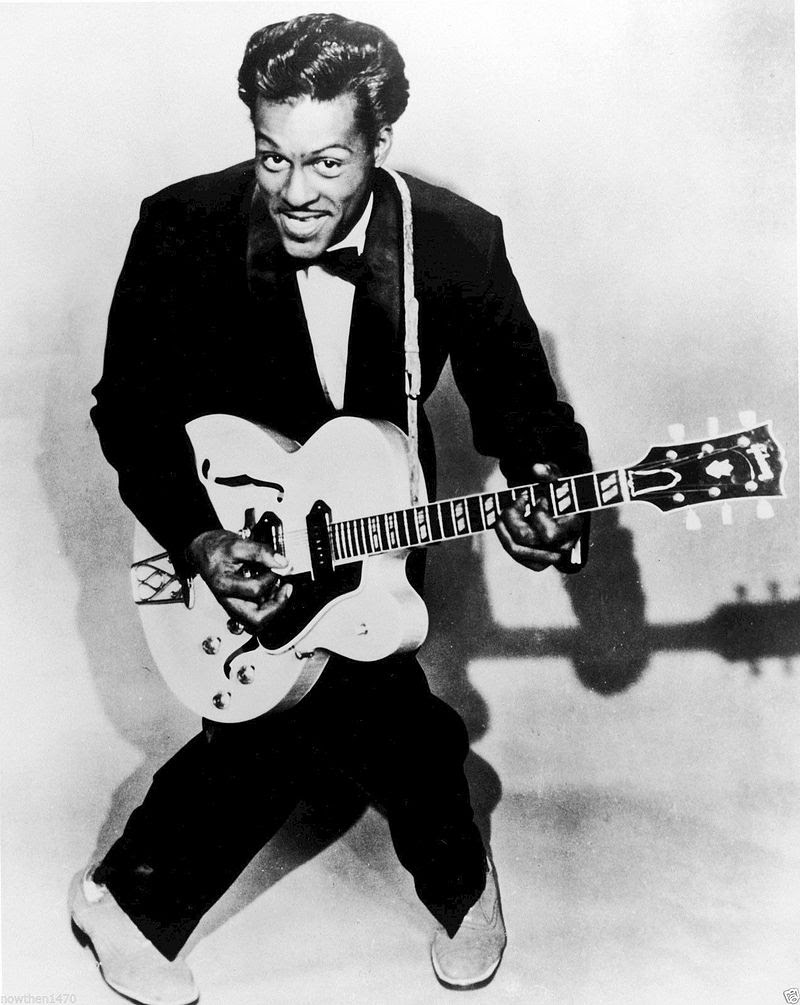

Chuck Berry, 1971 (Wikipedia)

Here's Chuck Berry's concert in Toronto in 1969, 45 minutes of fine music. Enjoy!


Check in to see what other bloggers are writing for the Blogging A to Z Challenge. Thank goodness tomorrow is a day off!

Friday, April 10, 2015

I is for Island . . .

I remember the floating gardens
of Xochimilco, just south of Mexico City,
once a retreat for Aztec rulers, now 
a respite for tourists and families on 
warm summer Sunday afternoons.

We came to celebrate a wedding
and sat smiling, on a great, flowered gondola
with our daughter and new son-in-law; 
our host poled slowly along the canals,
occasionally passing boats of musicians, their 
songs and guitar music lifting above the warm waters.

We ate grilled chicken with our sticky fingers,
purchased from an old woman in a dugout canoe,
her grill balanced in the bottom of her little boat 
as she darted between the gondolas.

Now I remember those sweet days of long ago
as I play with my grandchildren and sing the songs
of Xochimilco.


Our Gondola at Xochimilco 
Tomorrow, those writers posting for the Blogging A to Z Challenge with confront the letter "J" with Sunday a day of rest. Visit HERE to see what others have written.

Thursday, April 09, 2015

H is for Hummingbird . . .

This Costa's Hummingbird surprises me
as I walk in my sister's garden,
away from deadlines and unfinished stories.
It hovers, directly in my face,
blocking my path,
and darts to rest,
so still for a moment,
its throat purple with unsung song,
that I remember with certainty
each day is numbered,
a mystery, unknown, a gift
like this hummingbird
making its uncounted rounds
from bloom to bloom,
pollen on its little, hairy legs,
perhaps sentience in its beady, little eyes,
as it stops to stare,
not seeing me at all.

Costa's Hummingbird (Wikipedia)
Read what others have written for the Blogging A to Z Challenge. Tomorrow's challenge: "I" and I wonder what I will write.

Wednesday, April 08, 2015

G is for Good Morning . . .

Most days I wake up with words
ready to spill from my fingers.
Not today. Good grief! 
I'm driving over to Couer d'Alene
to meet with a group of writers,
about an hour east,
right into the sun before 
the commute begins.
I don't know these writers,
but my satchel is ready,
for there's something about mornings,
each day a new beginning,
a promise to slap over the roars
of yesteryear. I did survive a certain childhood,
night terrors notwithstanding,
I do have, as Virginia Woolf wrote,
finally, a room of my own,
an office cluttered with projects.
It is a good morning.
May it be so for you -- sweet
dreamer of dreams and maker of nests,
as you sleep late.

"Morning" by Stròlic Furlàn - Davide Gabino on Flickr 

Check out the Blogging A to Z Challenge and see what others have written on this month-long writ-a-thon. Many plan out what they will write around a theme. Mine are (surprise) morning thoughts. Tomorrow's challenge? Aha! "H".


Tuesday, April 07, 2015

F is for foraging . . .

Isn't that what writers do?
Forage for that hidden bit,
a seemingly easy turn of the wrist,
a sleight of hand
that brings a kind of certainty
about what comes next.
What do we know, after all,
about the stranger on the bus,
the bird on a wire?
Deadly dangers abound.
Even the weather is not reliable,
snow in April, fat flakes 
blot out daffodils and frail
pink cherry tree blossoms,
while south, snow packs melt
and drought eases into the land.


Arizona Spring by Jeffrey Stemshorn

Today's poem came from my sense that writers kind of pick over their reading, conversations and impressions as they write, with words floating up somewhat intuitively to build into the story that sense of 'truthiness' (a lovely word invented by Stephen Colbert). Certainly this week did bring snow, and yesterday I saw an amazing collection of before and after pictures of the California drought. 

One of the writers in my group constantly checks my use of metaphor, telling me no one talked that way in the 1840s, though many phrases have been in use since the middle ages. Now I routinely check. 

I thought 'bird on a wire' meant someone listening to a surveillance tape, maybe from that Goldie Hawn movie of the same name, but so far, I've only have found references to that opening phrase in Leonard Cohen's song ("Bird on the Wire"), or to an old practice of luring small birds by using lime on sticks or wires to snare them, a practice used again and again as metaphor by Shakespeare. Of course, the phrase could refer to those anonymous birds that line up on telephone wires at dusk.

Tomorrow we writers for the Blogging from A to Z Challenge will move on to "G".


Monday, April 06, 2015

E is for early . . .

Better early than late. 
If we were farmers up with dawn,
would we see the sun rise
with any anticipation?
Or would we lean exhausted 
into the task before us,
numb routine erasing each day?
I am a child of the city,
far from fields' tidy rows,
yet early to wake before the sun
lightens the sky,
my potted patio pansies a whimsy,
fragile as any bird's nest
snugged between a willow's branch
and April's winds.

Duck's Nest Under Willow,
St. James Park
by Renee Rosen-Wakeford (Flickr)

Join the blog hop for the Blogging A to Z Challenge or NaPoWriMo  -- both to celebrate April, National Poetry Month.

Saturday, April 04, 2015

D is for Dayflower

I've never seen a dayflower
but there's something about the name
that reminds me of spring walks in the woods,
and a glimpse now and then
of hardy survivors
who -- not sentient,
yet spread petals to the light,
Could we do less?

Dayflower
"C.communis after rain" by EHM02667 - Own work.
Licensed under CC BY-SA 3.0 via Wikimedia Commons
A short poem today -- Originally, I wanted to write about decisions we make, a version of those paths not taken, but a long list of 'to do' awaits, and just in the last few days, the cherry trees (in spite of Thursday's hail storm) have blossomed with pink. The first day of spring is long past, but finally, the seasons have turned. We have an amaryllis in our living room for the first time and admire its flashy red blooms, opening like a miracle. These small flowers, these dayflowers, are miracles as well.

Visit Blogging from A to Z Challenge and NaPoWriMo, both blog hops in honor of National Poetry Month. Why not write a little something to share?


Friday, April 03, 2015

C is for Close

I do like to sleep in a tent,
the night air fresh and sometimes cold,
full of sounds not easily dismissed,
the crack of a twig,
the rustle of some small animal foraging,
once or twice, truly a bear passed nearby,
its heavy tread easily fearsome,
and in the morning, the light
brings night mysteries clear, 
the outline of paw prints,
the routine of breakfast,
the comfort of hot tea.
Once we camped near a rock wall of petroglyphs,
those ancient marks a reminder
of those who long ago slept in that place,
high in the mountains.
Once we walked along the Street of the Tentmakers
in Cairo, where teen-aged boys
sat in lotus position in tiny open-air shops
to sew intricate applique panels
for wedding tents and tourists, 
in centuries past, they sewed for caravans 
travelling east on the Silk Road.
Keep those memories close
for that day when loved ones leave us,
and we face the long night,
as we all do, alone.

For all of April, I hope to celebrate with a month of poems for the Blogging from A to Z Challenge and NaPoWriMo, both blog hops in honor of National Poetry Month. 

Poetry has always been a scribble here and there, between 'real' writing. I read somewhere that writers write to experience life twice -- once in the moment, and once in reflection. 

So, join in! Check out the links to see what others have written. Write a poem. Share a memory with someone close. 

Here we visit a street stall,
one of many lining the Street of the Tentmakers
in the heart of Old Cairo.


An open air butcher in Old Cairo. Notice the large red tent hanging behind the butcher, all applique, all hand made.


Thursday, April 02, 2015

B is for Butter

Butter me up, babe.
I've got a bee in my bonnet
banging away,
that stinging belief is
always there, 
that I can,
you know,
bleed words on a page.

Last night, my writers' group met, four women who write in different genres, knuckling drafted words to final form. Usually I take a scene from Rivers of Stone, as I slog through research and try to add depth and detail to my story. But last night, I took something different, a beginning of another story, not historical fiction, but maybe a crime/thriller, an opening scene about a emergency room nurse and a shot-up police officer.

At the end of the day, I like to read stories far different from those I write. This week, I came across a paranormal novella. The premise sparked with edgy humor. Pure entertainment. This writer (he who shall remain nameless) wrote a great blurb and the opening chapter delivered. But very shortly, the characters began to dither, the plot dissolved, and after 27,000 words or so, the story ended, unresolved and with a plug for his next story. I was sorry I had downloaded this story, though the blurb remains a masterpiece.

Why did I take something different to my writers' group? Some writers say we should work on more than one project, so that if one stalls, another picks up. Maybe I'm so deep in research and editing just now, I wanted to feel again the thrill of simply writing.

Other writers ask how can you immerse yourself in a story with full attention if you are flitting from story to story, rather like a bee gorged with nectar, legs clogged with pollen?

Alas, the writing life is never simple. It all boils down to belief. And that's my "B."

This post is part of a month of poems and commentary for the Blogging from A to Z Challenge and NaPoWriMo, both blog hops and celebrations of National Poetry Month. Join in. Write a little something. Check out what others have written. Believe in your own sweet writing.

Spring at Manito Park, Spokane


Wednesday, April 01, 2015

A is for Anecdote

A is for anecdote, maybe an event or scene,
retold over dinner to strangers,
a short, perhaps obscure retelling 
of that moment historical,
or private and personal,
amusing, revealing, 
perhaps salacious, 
intimate.
I think stories begin this way:
a glimmer,
something observed, 
the smallest detail
the writer's heart
remembers.

Today begins a month of poems for the Blogging from A to Z Challenge. Join the fun to write a little something every day. Check out what others have written or hop over to NaPoWriMo (National Poetry Writing Month). 

My own historical fiction trilogy (Standing Stones, Years of Stone, and now, Rivers of Stone in editing phase), began with an old story of mermaids off the coast of Scotland.  Somehow, perhaps like all beginnings, even a word can take us to unexpected places. 

For me, that anecdote about a half-glimpsed mermaid led me to the 1840s and the McDonnell family as they experienced the Clearances in Scotland, and then Van Dieman's Land, a dreaded penal colony in present day Tasmania, off the coast of Australia.

What made me begin to write so long ago? That's another anecdote!


Spring Lilacs in Spokane

Friday, March 06, 2015

Drafting, revising, editing, and writing productivity? Oh, my!

When I'm writing, I begin with a germ of an idea, an image, something that pulls me away from this moment. But when I actually start, I feel invisible, the story unfolds. It's about getting to that place so that I can write. So that I care so much about the characters and what they are doing, that the story drives me forward and the scenes spill onto the page (even a virtual page). 

Yep, that's my workstation!
Revising is entirely different. Now I'm concentrating on so many things at once that it takes me many, many times to 'finish' the story -- the sentence, the paragraph, the scene, the chapter, the section, the book itself. 

I'm not the most logical person, but working this way on different levels of the book helps me organize exactly what my focus is. 

Editing at the micro level takes me to the words themselves, the exact word, phrase, sentence; to shape the paragraphs, test the dialogue, the energy, the images of the characters, setting, and the intensity of the writing. Some writers call this copy editing.

Revising is more structural, here I'm working at the macro level, considering how scenes fit together (transitions), whether characters' actions fit their personal arc, whether conflict is sufficient (always a problem for me. Like Victorian writers, I want the 'bad stuff' to happen off scene).  Then to the chapter itself: Does this chapter hold true to itself -- and to the overall story? Some writers call this developmental writing or structural editing.

Either editing or revising requires a very different mindset from drafting.Sometimes checklists help me, but I'm pretty much a random, nonsequential writer, jumping into what pulls me back into the story and/or how I'm feeling on this particular day. Checklists (like those in Elizabeth Lyon's remarkable book, Manuscript Makeover) remind me of writing strategies I've forgotten or inspire me to look at the story from another vantage. 

For me, writing does begin with me sitting in front of the computer, relatively early, every morning. This year, I'm concentrating on editing and revising Rivers of Stone. At this stage, I have no real deadline, though wouldn't it be nice to improve my writing productivity?

Yes, it would. So, here are a few goodies to prompt our thinking about writing productivity:

Kevin J. Anderson's engaging and useful Eleven Tips to Increase Your Writing Productivity got me thinking. His first tip: "Shut up and write!"

If you are looking for more tools to use, Bakari Chavanu's "From Idea to Final Draft: How To Increase Your Writing Productivity" dives into useful computer add-ons, starting off with, "You don't have to be Stephen King to be a productive writer . . . "

Susan Lenard's "Increasing Your Writing Productivity: The Productivity Pyramid" builds from her personal experience to introduce a productivity pyramid, with fascinating looks at how other writers work. 

All of these are well worth a read. Now, what tricks or strategies do you use to improve your writing productivity? Share?

Wednesday, February 25, 2015

Wednesday morning chuckle: Are you a Princess Author?

This morning began with a chuckle, as I read through The Book Designer's post about The Princess Author Syndrome. This singular author, male or female, exhibits the classic 'love me, take care of me" outlook on life, and is aghast at any hint of real work ahead. 

Drew Coffman, "Writers Block I" (Flickr)

Like any stereotype that gives comfort, the Princess Author simply wants his or her writing to be loved. Judith Briles' article, written from an editor's point of view, suggests that many authors don't really want to edit, revise, and re-vision their novels. My own experience in talking with other aspiring authors suggests that many times, she's right. 

A related but sharp contrast can be found in Karen Pashley's post, "Six Ways You Can Prepare Yourself and Your Manuscript for Success." I appreciated her thoughtful and practical suggestions on inspiration, networking, saving your work, entering contests, practicing your pitch, and managing your writing time with that old 80/20 rule (80 minutes of real writing/20 minutes devoted to all else). Pashley highlights the 'how to' that helps us move past that 'Princess Author' syndrome.

My favorite tip from Karen:  When your writing jogs to a complete stop, take a break to read a little writing from one of your favorite authors -- just enough to appreciate again his or her flair for storytelling. Then, get back to your own writing, refreshed and inspired by a writer you admire, or as Karen says, ". . . where words flow without self getting in their way, and where I again find my voice."

So, did I write any this morning? Yes, a little scene here, questions about a relationship there, a breakthrough on a key plot hole, and this rough, rough draft of Rivers of Stone advances.

People do ask me all the time if I pay an editor. At present, no. Maybe at some point, I will try an external editor. I do benefit immensely from the creative critters at NOVELS-L at The Internet Writing Workshop, an online draft exchange that works at the chapter level. But first I must have a good draft. That's at the heart of what I'm about this year.

Drew Coffman, "Writers Block II" (Flickr)

So, if you write, do you use a professional editor? Which ideas from Karen Pashley's article do you find most inspiring? Finally, how forgiving are you of an occasional typo when you are reading?

Wednesday, January 21, 2015

Conflict? Gotta love it.

Writing well remains my goal, but it's not enough to describe the setting vividly to give 'truthiness' to the story. Nor is it enough to bring characters to life with just the right description that tickles the imagination with a telling image. 

That main character is on her personal quest, and we, the readers, are right with her -- facing down dangers and opposition. CONFLICT remains the key to engaging the reader and telling good stories.

And here's my problem. I hate conflict. I've spent most of my life avoiding it, working around it, or plain pretending conflict doesn't exist. But what may work personally doesn't work in fiction. 

Our characters are larger than life. They inspire us with their tenacity, courage, and belief. And with their ability to resolve conflict.

Now I know the problem that lies behind my plotting. Let's begin with a definition. What is conflict? When two characters have motivations or goals that are in direct opposition. Do they physically fight? Are both characters good guys, or is one a black-hearted manipulator? Are they playing the short game . . . or the long one? 

Conflict can be external (between the main character and others or outside forces) or internal (inside the character, that battle to make the 'right' or 'best' decision).

Chuck Sambuchino, in "5 Ways to Increase Conflict," says we should always ask in every scene, "What would make this worse?" 

He reviews common conflict resolution strategies and then says, "turn them upside down." One example: Normally, we don't want to bring others into our arguments. But Sambuchino suggests what if we bring outsiders into the conflict between our characters? 

I could say more, but go read his article . . . each point he makes gives me a different slant on what I'm writing and revising this morning.  So, I'll leave you with a 'to-do' list, one of my favorite memes, and I shall have a rousing argument before lunch . . . between my two main characters.


Thursday, January 15, 2015

New Year thank you with a freebie!

To celebrate the turn to a new year, I took the plunge and signed up with BookBub to run a marketing promotion to hopefully find a few new readers. This promotion is going on RIGHT NOW as a thank you to past and future readers. 


For the next three days, 
from January 15 through January 18,
the Kindle version of
is available FREE.


When Lord Gordon threatens to destroy the only life that Mac McDonnell has ever known, Mac will need to decide what he is willing to risk to protect his family, his sweetheart, and his livelihood. 

So the first day of this promotion, at 6:30 am, 350 people had downloaded their free copy of Standing Stones. I was ecstatic. This jumped to 5,854 downloads by 9:30 am. It's pushing 10:30 pm now, with about 29,000 downloads. And that's the first day. Whew!

Everyone says becoming a successful indie writer is about connecting with readers. But to reach a small city of readers? That's a little overwhelming. 

Maybe some of these new readers will write a review. Maybe some will be interested in Book 2 of this series, Years of Stone. Or maybe they'll just enjoy the story. That's enough for me.

If you love historical fiction (or know someone who does), please consider checking out Standing Stones.  Thank YOU! 

Paul Arion, "Scotland Fjords" (Flickr)


Monday, January 12, 2015

Essential reading for self-published writers . . .

If ever I've stumbled on this path to self-publishing, marketing remains my biggest challenge. In today's post on her blog, Indie Adventures, Ruth Nestvold lays out concrete strategies we can consider to strengthen our marketing and our sales. 

I really admire Ruth Nestvold's straightforward advice, her willingness to test out what works for indie writers, and her generosity in sharing what she learns.

Just read this latest post from Ruth: 

"Why 'write the next book' isn't enough; 
                 or what to do if your book is not selling."

And I'm working on my blurbs tomorrow morning -- right after a good night's sleep!

"Do Not Disturb" by Alexander Yates
Flickr


Sunday, January 11, 2015

Writing historical fiction: Hudson Strait and ice . . .

Although it snowed this past week, and temperatures are dipping in the low 20s tonight, I'm cozy and warm in my office, peering out at the patches of snow and ice that remain in the drive.

In the 19th Century, for people traveling by sailing ship to the York Factory at the southern tip of Hudson's Bay in Upper Manitoba, conditions were definitely not cozy. 

Luckily for me, passengers of this time (though they weren't sleeping in steerage, like my characters) kept journals. Here they recorded what they saw, ate, how they slept and survived their 6-8 week journey through storms, heavy fog, and the tedium of crossing the ocean from northern Scotland, past Greenland, to Hudson's Bay.

Once the barque, the Prince Rupert, passed Cape Resolution and approached Hudson Strait, travelers saw whales and great icebergs. One such iceberg, described by Isaac Cowie as "a tall spire-like berg," capsized as the ship passed, "raising enormous rings of billows all round, into which our yardarms dipped" (88). Cowie writes of the absolute beauty of these icebergs seen in the light of the setting sun.

Magdalena Bay by François-Auguste Biard, 1840 (Wikipedia)

Read more about the expedition to the Arctic which Biard participated in the 1830s in an article by Mark Sample, "Art and Terror in the Arctic." 

Or read of Norwegian Jens Munk who traveled through Hudson Strait in his search for the Northwest Passage in 1619. Munk found much ice -- the result, scientists say, of a Little Ice Age. Mona Elizabeth Brother, in her article "Canada and Norway's Shared Polar History," writes that logbooks from the Hudson Bay Company (1750-1870) report "ice complicated travel through the strait for several centuries" past the Little Ice Age. Note: Scientists disagree about the dates of the Little Ice Age, though most say from about 1350 to about 1850 (Wikipedia).

Cowie in his very useful memoir, The Company of Adventurers, recounts the chief mate took joy in ramming these ice floes -- once crashing into ice "until we were nearly on our beam ends" (89). 

A reader of an early chapter of my current work in progress, Rivers of Stone, noted that he had traveled near Hudson Strait and encountered no ice. This has led me to ask: Was there ice in Hudson's Bay or in Hudson Strait at the time of my story, late summer, 1842? 

Finally, I can safely answer, "Yes!"


Saturday, January 10, 2015

Writing historical fiction: Of sailing ships and contracts . . .

I'm reading Isaac Cowie's very useful memoir, The Company of Adventurers: A Narrative of Seven Years in the Service of the Hudson's Bay Company during 1867-1874.  Not historical fiction. Not set in 1842 as my story, Rivers of Stone is. But a fascinating read for background close to the time of my story.

So far I've learned:

--The Prince Rupert, a three-masted sailing ship called a barque, had an iron-plated bow and oak-sheath at the waterline so that she could sail the icy waters of the Arctic.
--The captains of Hudson Bay Company ships ignored the fur-trading missionaries who sailed in smaller ships, seeing them as competition and close to pirates.
--All the foods taken aboard, from prime beef, to live pigs and sheep and chickens, and drink (rum, beer, wines, to brandy), would be distributed by rank. Those who ate very well in the cabin with the captain were teased that this was the last "civilized food" they would get. Once ashore in the wilderness of York Factory and upper Canada, their fare would be "bear and blubber, fish without bread or salt or vegetables in times of plenty, and leather and lichen off the rocks in time of want" (Cowie 77). 
--Those who signed the five-year contract as laborers slept in steerage and could lose all their pay if they did not work as assigned, with no promise of room or board, which included working aboard the ship. These laborers were recruited from all over northern Scotland and received half a year's pay before boarding. 
--The laborers recruited for the York Factory included blacksmiths, a boatbuilder, and a cooper along with a group of 24 very hardy young men who had been vetted by their parish minister and a local doctor. Apprentice clerks most likely were related to someone already employed by the Company.

There is also the matter of ice. Just how much ice did the Prince Rupert encounter as it sailed from Stromness in the Orkney Islands, past Greenland to Davis Strait and Hudson Strait near Baffin Island on its way to Hudson's Bay in August of 1842? This photo was taken in Davis Strait on September 3, 2014.

Towering Remnants of an Arched Iceberg 6 Davis Strait Canada
Photo by Ngaire Hart Lawson (Flickr)

The challenge ahead will be to continue research and decide how these facts affect my characters in Rivers of Stone. 

Dougal McDonnell, an Orkneyman, joined the Hudson's Bay Company because he dreamed of owning his own land one day, far from the capricious landowner who evicted his family, along with traditional farmers and fishermen, to replace them with sheep. 

Catriona disguised herself as a boy to travel to the wilds of Upper Canada with Dougal, her husband.

Both will be tested in a world they could barely imagine, but one I hope to bring to life.

Friday, January 09, 2015

Beta, Beta, Boom!

What makes a good beta reader? Whether you are self-published or seeking to query an agent or publishing house, a beta reader is rather like a 'last chance' reader.

A beta reader is that mythical, trusted soul, typically another writer who writes in your genre, and who, perhaps, has never read any of your drafts.

She or he will read your nearly final out-the-door draft to find . . . 

--egregious errors
--minor or major plot holes 
--misnamed characters (yes, that happened to me!)
--glaring typos or proofreading errors

Your beta reader will then send you comments that affirm the value of your story and motivate you to undertake a final pass of revision and editing. Sometimes your beta reader will talk about strategies for the blurb or query letter or suggest how to reach your target audience. 

I've had a few wonderful beta readers as final readers. Each time I was so pleased at the helpfulness of their comments. I did find it VERY difficult to ask someone to be a beta reader, but since I did not hire a developmental editor or a copy editor, two or three beta readers were essential for each of my books. 

How did I find my beta readers? I usually try to have someone well-versed in the history of the period I'm writing in, someone who reads in my genre, and a writer I know rather well -- even virtually. I must confess that I'm paranoid about giving an entire rough draft to someone who is a stranger.

When those comments come in from my beta reader, though, the real work begins. For we really have to evaluate whether each comment advances our story in a way that fits our vision. We may not act on all the suggestions our beta readers give us. That takes a different level of insight into the story, and sometimes, courage.

How is it possible to say thank you? You might consider a review of their work, a 'thank you' in your Author Note, or perhaps a blog interview. And you just might volunteer to be a beta reader for another writer.

"Readers" by Hartwig HDK (Flickr)

Here are some useful posts on beta readers: 

Belinda Pollard has written a series defining beta readers and how to find them.

Corina Koch MacLeod and Carla Douglas wrote "5 Things You Should Know about Working with Beta Readers," posted on Joel Friedlander's blog.

Jami Gold's article, "Introducing the Beta Reader Worksheet," which includes a downloadable worksheet which could be helpful for face-to-face or online critique groups as well.

May your own writing go well.


Wednesday, January 07, 2015

A Little About Plot Holes

On a white-water rafting trip down the Snake and Salmon Rivers in two-person boats, our guide told us how to paddle past sucking whirlpools. And then we set off. Our little boat skirted past a deep whirlpool. I couldn't see bottom, just the great green current circling. At speed. I knew we were too close. Our guide had said if we spilled here, we wouldn't come up until spring. If then. 

That's kind of how I feel about plot holes. They seem nearly invisible, just a ripple, until you're nearly upon them. 


Today marks my third session reading for deep revision. I'm happy to be taking notes and marking up the draft. Each reading brings me closer to the story -- and I'm beginning to spot those gaps in the story that may lead to new scenes or new understandings about this story. 

But something's starting to percolate along with those underlines of different colors and penciled notes. I'm starting to see those missing transitions and to get ideas for new scenes that would fill in those plot holes. I see glimmers . . . possibilities . . . and missing interactions. 

TIP FOR TODAY: Grab those sticky notes. Use one color to jot down ideas for missing scenes. Don't feel married to any ideas just yet. Just jot down the notes and move on. 

In this round of revision, my purpose is to 'see' the story. A sticky note will help me separate ideas for plot holes from the rest of the revisions I'm working with. And yes, I do expect another round of drafting and writing and revising.

In the words of Kait Nolan, facilitator for A Round of Words in 80 Days, keep in mind, "There is no one true way." Persevere. 

And tune in tomorrow for another report on this month-long meditation on revision.


Tuesday, January 06, 2015

On Revising

I've actually been revising a little every day since the great burst of energy with NaNoWriMo, but yesterday, I took the plunge. The novel, Rivers of Stone, historical fiction at 86,000 words, awaits in seriously lumpy form, research not complete, character arcs unclear, and plot holes along the way. Repeated words echo with each reading.

But finally, the underlying story line, that messy plot, is clear. Not exactly written down, but I know with certainty what motivates my character and what will happen.

So yesterday, I began by reading a motivational article by an editor/writer who feels like an old friend, Holly Lisle. I gathered pencils, the draft, and the notebook. And then I read another motivational article, made breakfast, tidied up a bit, then returned to my writing desk and finally began.


Day One: The Notebook
I did the silly thing, read aloud. I did what I was told not to do. I marked up at the word level now and then, but I persevered. At the end of two hours, I had read two chapters, made notes, and I was exhausted.

But I have truly begun. Participating in NOVELS-L, a subgroup of The Internet Writing Workshop, brings such a variety of comments from online critters. Committing to A Round of Words in 80 Days helps me to focus my goals, set deadlines and be accountable. And now, posting about the process for the next month for the Ultimate Blog Challenge . . . all moves me forward.

May your own writing (and reading) bring you joy.

Holly Lisle: "How to Revise a Novel"