Friday, April 17, 2020

April 17: On Visiting Giza

I have stood on the banks of the Nile
and stared into the eyes of the Sphinx,
wandered between the tumbled small pyramids
of the three queens, and watched the sun
change the colors of the three great pyramids:
Cheops, Khafre, Menkaure.
They all hoped for that divine sleep
that closed their eyes,
but kept their souls alive.
Each gold-framed jewel, each sarcophagus,
each mural painting, each ritual prayer,
a great preparation. The ka/soul
now wanders lost without its body,
their mummies now carted off to museums
for public display. All three tried to buy insurance –
Cheops had four solar boats to ferry his soul to the next life,
Tut’s three sarcophagi intended to hold and protect
his mummified remains, the innermost one of solid gold.
Oh, how the pyramids at Giza cry out for respect,
The most solemn prayers warn intruders away.
The size of the pyramids, a competition,
Each larger than the last, each one saying
Pick me! Pick me!
The grave robbers came almost before
the painted seals were dry, almost before
the closing rituals were complete,
before the concubine’s tears had dried.

Tourists wander this large complex,
ready with cameras to catch images of themselves,
standing in front of the Sphinx,
the ‘Horus of the Rising Sun,’
guardian at one with pharaohs and the gods.
Tourists line up to buy a memory of this moment:
postcards, a tabletop pyramid, calendars,
a bust of Nefertiti or Alexander the Great,
an Egyptian flute, its melody in minor key.
They line up to ride the Bedouin camels,
gaily decorated with tapestries 
of green, red, and yellow yarns.
All this – even the tourist buses
which pull up in a great flurry of dust,
all this seems dwarfed by simple reality:
I sit on a giant stone block next to
Khafre’s temple. The nearby causeway, still flat,
reaches down to the Sphinx, the clouds
shift above the three great pyramids.
Even my tears dry in the wind
as black-hooded falcons fly, and
camels race awkwardly, their unshod feet smack
the pavement, and their drivers’ cries echo.

Pyramids of Khafre and Menkaure, Giza
The Sphinx at Giza


At the base of a pyramid, Giza
Today's poetry prompt from Writer's Digest poet Robert Lee Brewer for National Poetry Month asks us to write -- an exotic poem. This could lead in so many directions. I chose to travel back in memory, to that wonderful month spent in Egypt doing research, when all seemed possible. This week, I'm starting a new writing project, a story set in Egypt, where once I saw the black-hooded falcons fly.




Thursday, April 16, 2020

April 16: The Last Breath

If I could imagine the last breath
life on this planet would take,
think underwater, 
that struggle for air, 
and then, truly, an ending.
Not even pandemic will alter
what we all must face at some point.

Not the time for joking
as family gathers by the window or 
an open door, unable to step near. 
I can only whisper, "Cherish each day,
for they are numbered."
What lies beyond is 
unknown and measured
by more than a gasp.

"Polar Bear" by Echoyan (Pixabay)
Today's prompt comes from Robert Lee Brewer who asks us to write a fill-in-the-blank poem that starts, 'the last . . . .' We're supposed to begin by filling in that missing word. I want to write positive poems just now that will affirm the beauty of each day, despite the effects and tragedies of coronavirus. But it's pretty hard to work around the implications of 'last'.

So, I'll tell you about today's first. I cleared my cork board off and posted 3x5 cards to seriously begin plotting for the next book. I only know 2-3 main characters and the setting -- Egypt. All else remains a mystery. Well, except the story will involve art crime, danger, and romance. Maybe a distraction for the days ahead!  Meanwhile, stay calm and safe. Cherish each day!

Wednesday, April 15, 2020

April 15: Dreaming

These days, we stay inside, quarantined,
except for that mandatory excursion
for groceries or prescriptions.
A daily walk is encouraged, ten blocks
up to the pond, a tally of birds just
beginning to nest, their mating colors
match their calls, vibrant, echoing.
Red-winged Blackbirds and
Yellow-headed Blackbirds argue over
who has possession of the reeds.

But, I want to fly,
not just in memory. I want to return
to the mountains, to sleep in a tent,
even if it’s raining, to hear night
rustles and to find a bear track in the morning.
I want to wander the Louvre once again,
drink café au lait sitting at a street-side cafe,
with you beside me, and fall in love
all over again.

"Girl on a Swing," by Composita (Pixabay
Today's prompt comes from Robert Lee Brewer who asks us to write about a dream. I'm hungry to just walk out of my apartment, visit friends really, and not virtually, and go somewhere else for a time, without thoughts of pandemic or worry about the world.

Tuesday, April 14, 2020

April 14: The marking of a moment

I have driven under a tornado, noting
its shifting form as we argued
whether to take shelter
under a bridge or to keep going,
the car lifting from the ground
with each gust of wind.

Nature follows laws, 
even when we do not know
their structure or form,
or how we are changed.
Doesn’t Nature’s beauty seem accidental,
the possession of artists, intuitive
and somehow intimate, a living poem,
a respite from our own commitment
to order, a commentary 
on the marking of a moment, 
or hours or days, or a life.

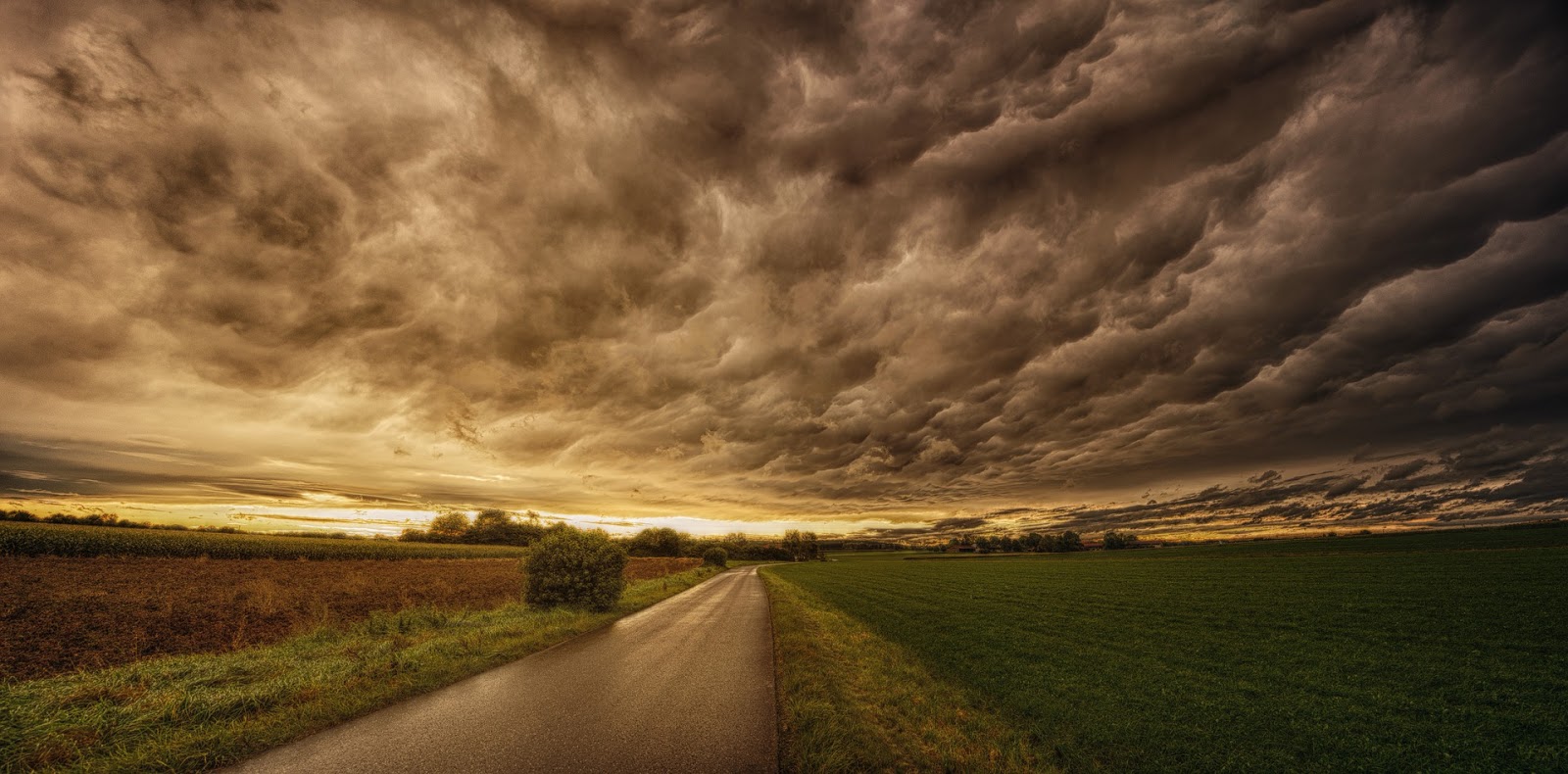
Cloudy Sky by jplenio (Pixabay)
Robert Lee Brewer, over at Writer's Digest, with his poetry prompts for National Poetry Month, asks us to consider/write about form or not form. That led to my thinking about how even the most chaotic objects around us have a form, even when we cannot see or understand it. This leads some philosophers to say (as they think about  molecular levels), "I am sitting upon a chair, but is it really a chair?"

Napowrimo's prompt suggests we write something about how we came to write, what other writer or person inspired us. I didn't want to return to that dark time but forever think of my aunt who invited me to come and live with her to go to college. That's when my writing began.

Monday, April 13, 2020

April 13: Don't Look

I read somewhere that when
you look at a gorilla with intention,
the gorilla, being a shy creature, may decide
you are a threat to his family 
and attack you in a flash, 
some 300 pounds of confrontation.
So, if you are traveling in gorilla country,
don’t look.

Once at a zoo with a large compound
for gorillas, I saw a male sitting quietly,
his back against a tree.
I looked at him and then away.
He looked at me and then away.
For just five minutes, we repeated
this dance of glances.
I wasn’t in danger.
Neither was he.
I wanted to communicate
but did not know his language.
Dismissing me, he wandered away.
I was obviously not a threat.
And then I wondered why this creature, 
capable of some level of thought, 
lived behind glass.
What had we taken from him?

Eastern Gorilla by Michael Bell, Pixabay 
Today's prompt comes from a mashup of Robert Lee Brewer's prompt to write about purpose (or lack of it), and napowrimo's prompt to not apologize for something you have taken, that is something that didn't belong to you. 

Not quite sure how that led to gorillas, but I did remember that trip we took to Tanzania where we saw herds of zebras and wildebeests, and mama lions at dawn taking their cubs to the watering hole. Time to get out the picture books on Day 36 of quarantine. Stay safe!


Sunday, April 12, 2020

April 12: If I were cavorting . . .

If I were cavorting, deep in the woods,
dancing where no one can see,
is my song filled with ‘coulds’ or ‘shoulds,’
or am I left simply to be
myself, under the dark green trees,
hearing birds sing their own nocturnes,
the rustle, the wings, a warm breeze,
even at night, I feel patterns
as simple as moss under my feet,
and joy in my heart, surprise at a vision
of trolls, ready to dance with me,
dancing where no one can see.

Efraimstochter on Pixabay
Today, I wanted something whimsical as it truly is Day 32 of self-quarantine. I wonder how many of us still dream of dancing.

Saturday, April 11, 2020

April 11: Who could control a flower?

Who could control a flower?
Yet I’ve seen it done – those
formal gardens in such regulated rows,
all blossoming in the proper season,
even a Japanese tea garden balances
order (those carefully raked stones)
with profusion.
Georgia O’Keefe knew something
about flowers, as did the Victorians,
coding each one, daisies for innocence,
gardenias, a secret passion,
purple hyacinths, their pungent smell
an apology.
I would rather walk alone in the woods
to find those hidden flowers
that speak of survival.

Anemones by Peggy Choucair (Pixabay)

NOTE: Today's prompt is a combo. For April 11, Robert Lee Brewer challenges us to write a poem about control, especially daunting since so much seems out of our control in these days of coronavirus. Napowrimo suggests we write a poem about flowers and that language of flowers (called floriography) from ancient times (think of Buddhists and the lotus flower) to the Victorians who sent bouquets with secret meanings. As you can see, on Day 32 of self-quarantine, I do not stray far from wishing I could walk in the woods.


Friday, April 10, 2020

April 10: And we shall dance . . .

We traveled to Mexico City
on a honeymoon trip, long ago
and far away from today,
a time of seclusion.
On that sun-filled day,
we wandered through the garden
close to Teotihuacan,
and came across five men,
dressed in costumes, red and white.
They climbed a wooden pole
roughly 100 feet in the air,
and sat, somewhat balanced,
on a tiny wooden platform.
The leader, for I know not what else
to call him, began to play his flute,
and the four men, one for each
sacred direction, banded in silk and ropes,
leaned back and began
the slow descent down to the ground,
circling the pole some thirteen times,
their arms spread wide,
a miracle, we thought, the flute's high notes
echoing, their measured flight,
something so beautiful,
so inexplicable, caught between
earth and sky, the notes repeating,
the men circling.

Later we learned
that high pole was the World Tree,
and this was the dance of the flying men,
la Danza de los Voladores,
an ancient Mesoamerican rite, so designed
to appease the gods.
What accident led us to witness this ancient dance?
Why does this memory cheer me now,
for surely our prayers still reach
the ears of the gods?
And we shall dance yet again.

NOTE: For some reason, memories of this ancient dance came to mind as I thought about today's poem on Day 31 of this coronavirus quarantine, when I'd rather be traveling.  Here are the pictures I took of Los Voladores at Teotihuacan in 2001.


Beginning the climb

Notice the rope ladder

At the top, the flute player plays the notes

The men begin their descent

The men circle

The dance
Safe on the ground


For more history of this ritual dance, please see Wikipedia.

Thursday, April 09, 2020

April 9: When all else fails, make pasta . . .

My daughter just got a pasta maker,
the old fashioned kind you
hunch over and crank the handle.
You slowly feed just-made dough through
this complicated machine.
Out the bottom
comes these rounded, fragile tubes,
lightly dusted with flour.

Toss into boiling water,
then dress the spaghetti with olive oil,
a little salt, and freshly-grated parmesan.
No need to measure.
Generations of cooks know who's
sitting down to eat.
Maybe sprinkle a few red pepper flakes,
and remember those Italian grandmothers
who taught us how to cook.


Pastamaker (Camp)
Maybe today, I thought, this poem will come easily. I have work to do, even if today marks 31 days we've stayed home and stayed safe as Governor Cuomo challenges us.

Robert Lee Brewer, of Poetic Asides at Writer's Digest, asks us to write an ekphrastic poem, that is write poem about a painting to dig deeper into its meaning, using any means you wish. As my mother would say, "Ooofta!" And then I remembered a photograph I found of an old woman making pasta, bent over, glasses askew, and my daughter's joy at making pasta with her new pasta maker.

Wednesday, April 08, 2020

April 8: If the shoe don't fit . . .

My mama used to say
"If the shoe don't fit,
pitch it." Reminds me
of an old song: "Hit the road,
Jack, and don't you come back
no mo', no mo' . . ."  Reminds me
of what could have been.
Maybe.

An' that's what I think about the future.
Ain't no past comin' after you.
Just keep goin'. You'll find that bright
fluttery rainbow some day.
Maybe.

Meanwhile, fish to fry. Good ones.
Caught them in the bayou this mornin'.
Sun rose early. Dogs a barkin' out there.
Somethin's on the move.
Maybe me.

Florida bayou (Camp 2008)
NOTE: I honestly don't know where today's post came from for Day 8 of National Poetry Month. I read prompts from Napowrimo and Robert Brewer's PAD for Writer's Digest (his was to write something about the future).

And I'm still thinking about yesterday's 'poem,' so depressing I can't forget that old sad story of betrayal. Maybe I'm in the storytelling mood as I get ready for today's writing session. Don't know. Maybe I saw yesterday's Wordless Wednesday post by Andrea Huelsenbeck of flowers, and in these days of pandemic and staying home, I wanted more. I wanted flowers too.

Instead, this 'poem' came along.  Yes, my mother truly used to say, "If the shoe doesn't fit, pitch it." She also said, "Don't let the bastards grind you down." And I loved her anyway. 

Here's Ray Charles singing as only he can, "Hit the Road, Jack."

Tuesday, April 07, 2020

April 7: The Murder Quilt

In 1915, near over 100 years ago,
on an October afternoon,
in rural Willamina, Oregon,
Anna left her daughter,
then twelve, and young son,
to walk to her mother’s house.
Anna didn’t know her husband, William,
jealous, followed her.

Someone else found his body.
He’d been shot. All the Sheriff’s men
hunted clues, to find nothing.
All the townspeople
gossiped. For another man,
another William, age 23, had been seen
talking to Anna. They must have
been lovers, neighbors whispered.

Taken into custody, Anna and William
were held in jail behind bars,
each alone, their lives upended. 
No one believed their stories.

At the first trial, the women of the town,
what did they know? They
filled the gallery, for they could not
serve on the jury or sit in the main floor.
Those women patched a crazy quilt from scraps,
raffled the finished quilt off to cover trial costs.

First trial, mistrial.
Second trial, both found guilty, but
a judge reversed the jury’s finding.
Third trial, William sentenced to life.
Anna pled manslaughter, only
one to fifteen years in jail.
She wanted to be with her children,
passed off to relatives.

Finally in 1920, someone else confessed,
Anna and William were released,
five years lost.
They remarried, each to someone else.
Only court records and the quilt remain.
The quilt, dubbed the murder quilt,
hangs at the Oregon Historical Society,
a testament to misunderstandings.

The Murder Quilt
Source: Mother's Day: The Murder Quilt
Today’s prompt from Napowrimo asks us to write a poem inspired by a newspaper article. I really felt at a loss since so much of the news just now is about the coronavirus. Then I remembered an article I read long ago that tickled my interest as it combined quilting with murder. Anna and William's story still makes me sad. 

More information about this case can be found:
3) George A. Thatcher: Why Some Men Kill (Chapter 3).

Monday, April 06, 2020

April 6: The Painter's Gift


I saw the painter’s gift when it arrived.
Two peasants carried the large triptych
Into Father’s private study where it hung on the wall.
Sometimes I would sneak there to stare
at a world within a curious globe
painted on the outside, realistic black clouds
moving in, as if to predict some dark change.
I knew not what.

At special feasts, I overheard the men laughing
as they drank. When Father opened the painting, 
they were stunned to silence.
He would announce, “There before you:
Heaven and Hell on either side, and, in the middle,
the Garden of Earthly Delights.”
The men murmured for a while.
Then, the laughter began again,
as they argued over sins of the flesh
and named the grotesque images they saw.

When I was older, still curious about what
was hidden behind the globe, I met the painter,
Hieronymous Bosch, an older, kind and crumpled man.
I wondered how could he paint
the horrors those men saw?

One day, our house was empty.
I could have chosen to stay in my room, but
drawn by curiosity, I slipped downstairs
to Father’s feasting room to stand
before the globe. The silver colors shimmered
as I slowly opened the triptych
to discover a riot of color:
Heaven on the left. I recognized Adam and Eve,
And on the right, Hell so black I shuddered,
repelled by creatures strange and ferocious.
In the center, Father said, Bosch had painted
a garden of earthly delights,
but this was no world I knew.

If I were in his painting, what
would I be? A fallen angel? Or tiny creature,
there, under the table next to Bosch himself,
forever fixed in his world of codes
I could not decipher.
I closed my eyes, but the colors remain,
the images of creatures so fantastic,
so horrific, I wished I had never opened
Bosch’s triptych. I wanted to scrub my eyes clean
and forget I ever wondered what he painted
behind the globe of some mysterious world.
My choice. My penance now
as I close the triptych and pretend
nothing has changed. 


Today’s prompt from Napowrimo asks us to write a poem from the point of view of one person/animal/thing from Hieronymous Bosch’s famous (and famously bizarre) triptych The Garden of Earthly Delights, painted sometime between 1460 and 1510.

If you'd like to learn more about this complex painting, you might read "Digging for Secrets in the Garden of Earthly Delights" or check out Wikipedia. This prompt was intriguing and not so easy to write!


Sunday, April 05, 2020

April 5: A Memory of Oranges

I am like an orange from Seville,
bitter yet sweet.
Always these oranges tease at my heart.
Even as a pungent memory,
the taste lingers; the tough peel resists,
then tears, and I pull the skin away
to reveal little sections
of bitter, yellow fruit, so loved
the trees line every street, and the fruit
lies on the ground, forbidden.

Just outside the Cathedral of Seville, I rest
in the Patio de los Naranjos, to admire
this place, once a mosque, built in 1172,
converted to a grand cathedral in 1511.
Yet history remains juxtaposed
against the murmured prayers,
tourists ramble through these aisles,
in awe of turrets and towers,
truly this edifice is the base of faith, recast as a tree,
upside down, that will transform us all,
or not, as they say:
Más vale pájaro en mano que cien volando,
But I don’t think a bird in hand is more
than one hundred flying free, for
far above this cathedral,
I see one hundred flying doves,
each one singing of peace and oranges.

Patio de los Naranjos, Seville, Spain (Camp, February 2019)
We spent a month in Seville last February, a magical month of history and culture, long walks, and amazing tapas and sangria at sidewalk cafes. Today’s prompt for National Poetry Month from NAPOWRIMO (delightfully detailed) led to this poem and the memory of an afternoon spent at the Cathedral of Seville.

And, yes, for us, it's Day 26 of staying at home. Be well. Write a poem?

Saturday, April 04, 2020

April 4: What do we learn from dreams?

Once I saw a witch, fearsome green
and fanged, sitting atop the window
in my bedroom. Was I eight then?
I didn’t believe in dreams, only
head down, follow the path, and survive,
holding close that sense one day,
I would travel beyond this horizon.

A decade later or so, my dreams filled
with the structure of an atom, 
me inside, the walls inexorably closing.
I could not breathe. 
When I woke that morning,
I knew it was time to leave.

Then, I met you. I saw my dreams
in your eyes and with your laughter.
For nearly fifty years, we’ve
danced our way around the world.
I haven’t seen that witch for a very long time,
not until I look in the mirror, and I realize
I am my dreams.

Photo by The Pixelman (Pixabay)
Today's prompt for National Poetry Month comes from NAPOWRIMO and asks us to remember/write about images in a dream. 

Friday, April 03, 2020

April 3: Ginger's Garden

Ginger’s garden is ranked by rows,
along each level something grows
in the garden slanting down
to a tall, wooden fence, all brown,
Separating hers from theirs.
She scatters seeds and refills
All the feeders just in time,
Songbirds come for respite,
and so do I, sitting on the back porch
in the spring sun for a bout of
desultory weeding.
Small conversations bloom
with first flowers, as she names
buttercup and yellow bells.
I learn where she hides her key.
She spies a baby quail, its little
topknot quivers. She shouts to scare away
a red-winged blackbird, one of my favorites,
but here, in her garden, too big, too greedy;
its zest brings no rest for songbirds or me.
Later, a dragonfly visits with wings of lace,
where birds, not words, do sanctify this space.

Garden Chairs by Terimakasiho (Pixabay)
With today's poem, I remember Ginger's garden. You might call it a simple, backyard garden, but it reflected her love of flowers and birds. She spent much time outside, coaxing flowers to bloom and appreciated every songbird that came her way. 

Consider jumping right into National Poetry Week. Poetry prompts can be found at the napowrimo website.

Thursday, April 02, 2020

April 2: Another poem and IWSG

This month, the Insecure Writer's Support Group poses its monthly challenge question straight to the gut: How are you doing?

Of course, the question is optional,
and I am a day late. Behind a little
on reading e-mail. Think I have an answer,
and then I don't. Distractions.

The pundits offer advice: Stick to a routine.
I am trying. Twelve years retired, I know
how to live simply. Begin each morning
with writing. I can be disciplined about that.

But these days, life's a bit more challenging.
Maybe we'll all have more empathy
for those who can't do what they wish to do.
Maybe I'll be like that little old lady, bent
slightly in front of empty grocery shelves,
or like a friend who's worried
her cancer medicine will run out, the same friend
who just bought twenty pounds of hamburger.
My car sits in the garage with gas enough
for 71 miles. Can I even go that far, if needed?

Just about a month ago, I caught a bad cold,
sitting next to a stranger on an airplane.
He was one of two wearing a mask.
Within a week, my husband began to sniffle;
now he has that raucous cough, just this side
of pneumonia. Yes, I worry.

Shouldn't we be volunteering somehow? I ask
my husband. "Honey," he replies,
"we're the group they're trying to protect."
I can't hug my daughter, her hubby,
those adorable grands. Trust me, FaceTime
is not a substitute.

Do the walls close in? Don't know.
We have downsized twice already.
Both DH and I have wanderlust.
Don't rattle those suitcases.
We'll go wherever, and I mean it.
Someone posted a game on Facebook
to list all the places you've lived. Ha!
How do I count eight months when we traveled those
countries that rim the Mediterranean? Or last month
in Tucson? Or when we first retired,
how we threw all into storage
and camped our way across country?
How do I count those moves, before I met DH,
into foster homes? I only remember six.
Or new schools with every move?
The walls don't matter. My home is here,
where we're together. Or at a library,
where he took me on our first date.

Once, traveling in Florida,
we stood in an airy, netted room with parakeets.
So innocent those colors. The birds fluttered
around us without thought. And I took
pure pleasure until that moment
when the parakeet perched atop my head
took a crap, that warm you-know-what
oozed down the back of my head.
We laughed and laughed and cleaned up
and went on, rather like now.
cherishing the moment.

Allen with Parakeets
IWSG NOTE: I want to say thank you to those clever folk who hosted April and who prod us writers into sharing our thoughts once each month: Diane Burton, JH Moncrieff, Anna @ Emaginette, Karen @ Reprobate Typewriter, Erika Beebe, and Lisa Buie-Collard.

But the April question was hard. Maybe others had an easier time of going down to the bone. You can read what others have written by going HERE. And I hope you do.

I also hope, wherever you are, that you and those you love are safe, reasonably comfortable, healthy, and loved. Our world may have changed, perhaps irrevocably, but our toughness and sense of community has not -- even with the news each day more challenging.


Wednesday, April 01, 2020

April 1: An Unplanned Path

Abandoned Railroad Tracks (robotonoid, Pixabay)
Where do I go when the path ends?
Deep in memory, I follow a deserted train track,
hoping to find direction, soothed by the
stirring of the wind in the hemlock 
and fir above me, the sounds muted.
A jay calls warning,
then silence reminds me that
everything has changed 
and yet remains the same.

Memories of walks in the woods
are now juxtaposed against the latest news,
a steady drum of voices announces  
quarantine. Each day, deaths increase,
yet I am grateful for memory, 
if nothing else remains,
of those days walking in the woods
along an unplanned path.

The first day of April begins a month of challenges to write a poem a day to honor National Poetry Month. Here at home, despite it being the 23rd day we've 'sheltered in place,' I tried to write a poem using a prompt from nanopowrimo (National Poetry Writing Month) and found myself thinking about the impact of the coronavirus.

Today's prompt was to write a self-portrait poem in which I could take a specific action and make it a metaphor for my life. Perhaps, being older than average, memory and reflection fit.  Go here to participate!

Sunday, March 29, 2020

Day 20: Lessons

Even with the sun shining outside this bright morning,
promising an early spring, I find myself asking:
What can I learn from the past
to prepare for COVID-19?
This new virus sweeps the country, masking us all,
frightening the elderly with statistics, new cases and death
spreading to nearly every state,
and the lack of testing, supplies, coherent policies,
panicking those who already are well-stocked,
leaving store shelves empty.
Last week, a few teenagers laughed, “We don’t need to worry.
The virus goes after the elderly.”
Today, some young men fought in a grocery store,
spilling beer and catsup on the floor.
What violence awaits us as we sit in our houses,
reluctant to go outside?

In the 1950’s, my grandfather built a bomb shelter
in his back yard. He dug the earth out under the house,
turned a bedroom into a library of bookshelves,
lined with cans of tomatoes and bags of flour.
At school, we learned
what to do when the bombs came.
We leaned over our desks, our right arms over our necks.
I was eight years old. I wondered how this would save me,
my face pressed against the wood.
Just as I wonder now how will we define community?
Who will care for us, the children locked out of school,
those who scrabble together a living from part-time jobs,
and those who are lost on the streets?

Isolation by Geralt (Pixabay)
Thanks to friends and family, near and far, who keep us connected. And to writers and poets Heather Carr-Rowe, Sue Eller, and Annette Drake for their encouragement.


Friday, March 27, 2020

Day 18: Winter Sparrows . . .

Winter sparrows and
an occasional finch still come
to the bird feeder every morning.
Already I’m forgiven for being gone a month.
Maybe for them, the seed
simply appears, and if not,
they move on.

Will we be like that when store shelves empty?
Will we move on to some unknown,
faraway place, maybe where the sky is blue,
and snow doesn’t fall in March.
Or will we simply stay
In this small apartment,
learning new ways to survive?
This morning, the birds are gone,
and the quiet is filled with doubt.

We're nearly in the last week in March, Day 18 of self-quarantine, and I'm finally back to writing -- or I should say reviewing and editing. Occasionally, I look for a poem in this land where snow falls in March. Today's poem came with watching the birds scrabble for seed.

Sparrows by suju on Pixabay
May you be well and at peace in these somehow quiet yet tumultuous days. Try not to watch too much news.


Wednesday, March 25, 2020

Day 16: Is staying at home just OK?

Finally nearly back to 'normal,' when nothing around us seems quite normal.

We flew back from Tucson to Spokane via Seattle on Friday, March 6, blissfully ready to be home. I was aware of the coronavirus, just enough to be a little nervous when I sat next to a man wearing a mask, one of only two on the crowded plane.

Saturday, we saw the kids and, since we'd been away for a month, did a massive restocking at a relatively normal Freddy's. I celebrated once again, knowing where the pancake turner (and other cooking utensils) in my kitchen were. Sunday, we stopped in at Trader Joe's to pick up a few favorites (chocolate bar, cinnamon bread), and were shocked by the long lines -- packed carts jumbled together at the checkout lines.

Monday, I got the cold. No high temperature, no shortness of breath, none of the other touted symptoms of coronavirus, but I had no stamina at all -- aside for grabbing for Kleenix and resting.

Tuesday, March 10, we began our stay-at-home, just a little ahead of everyone else. Just two-and-a-half weeks later, I'm beginning to feel almost normal, though dear hubby did catch the cold. He's about a week behind me. Then on Monday, March 23, Governor Jay Inslee issued a 'stay at home' order -- which leads me to today's question:

Is staying at home just OK?

My answer is except for worrying about people who're losing their jobs, those who are going hungry, and the spread of the coronavirus in general, we're doing fine. Even if the libraries are all closed. Some of my friends, though, are a little stir crazy.

Maybe writers have an advantage? So how are YOU doing? What are your strategies for coping just now? Once I recovered from my cold (which may or may not have been coronavirus), here's what's helped me:

1. ROUTINE. Follow my usual routine of up early, setting goals for the day (which have included filing taxes online, completing the Census online, rescheduling doctor appointments -- now 90 days out!). I still do keep a to-do list, one that just now is far too long.

2. WRITING. Work on some aspect of writing every day. The biggest completed yesterday was reviewing 57 chapters for the final audiobook before pushing that button, "Ready for Publication." Now I get back to work on my current wip and get ready for National Poetry Month, the goal to write a poem a day through April.

3. HOUSEKEEPING. We do order groceries online about every 2 weeks. Is anyone else doing the wipe-down on everything, including that mild soap and water wash for all fruits and vegetables? Aargh. There's always laundry and general upkeep, but not so much to worry about when we've downsized to a small 2-bedroom apartment.

4. NURTURING. Yes, we probably watch way too much news about the coronavirus. We do walk every day up to the pond and back. The redwinged blackbirds have returned. And I'm quilting as well. Finished enough blocks for another comfort quilt. We have movie night about every other day (free movies!), and we're reading. I'm also connecting with friends online and by phone, happy to hear their voices and to know, even when they struggle, they are all doing well.

This morning, a light snow blankets our patio, but the finches are happy. Their feeder is full. I wonder if this is the last snow before true spring and what our world will be like when winter rolls around again.

May you and yours be well. Cherish each day!


Wednesday, March 04, 2020

IWSG #3 March: Cactus and Commitment


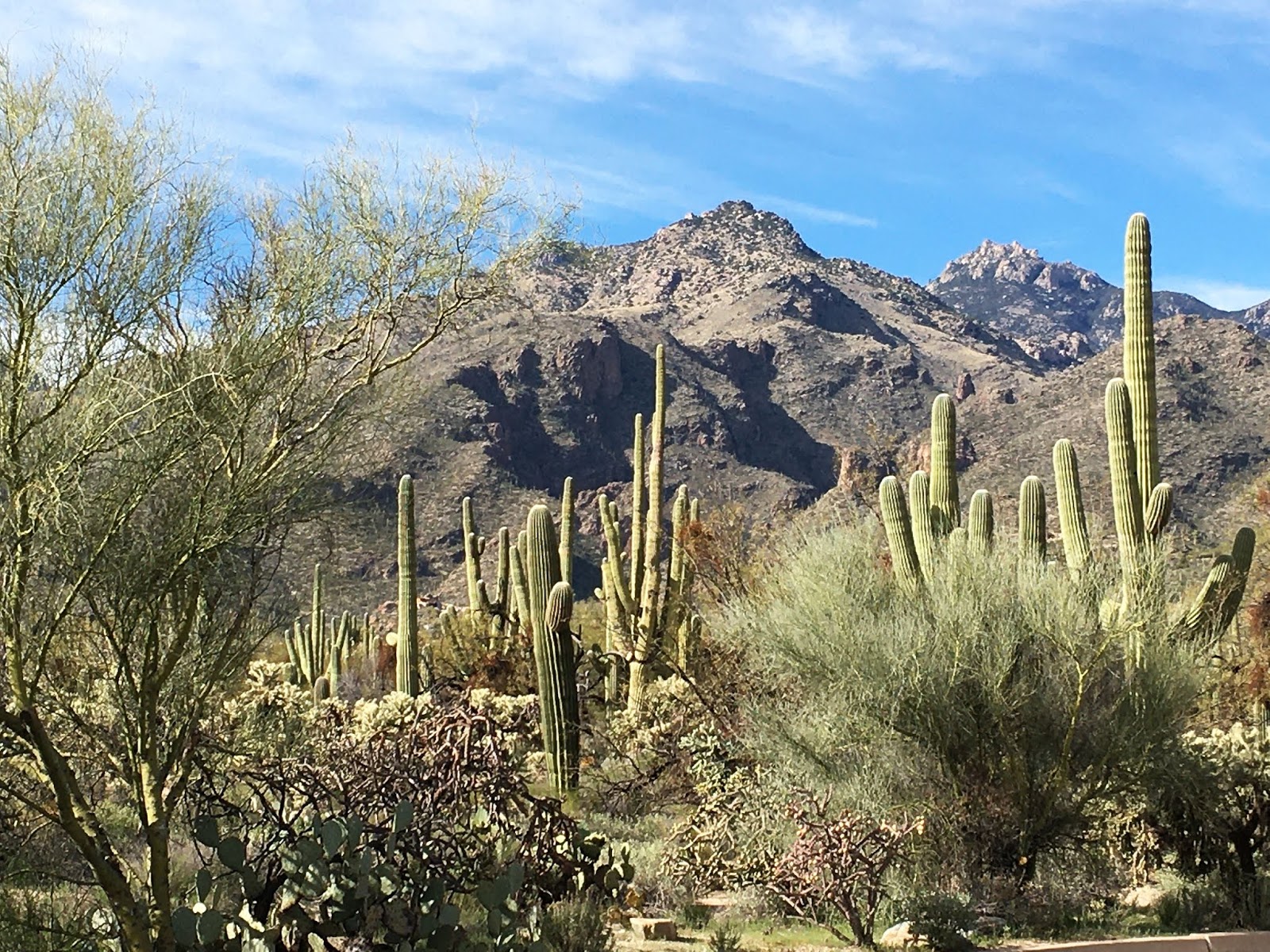
This last month, I’ve been in Tucson, surrounded by the Catalina Mountains and miles of cacti and hiking trails, museums, unforgettable restaurants (Greek, Iranian, ‘Mercian, and Mexican). A lovely vacation. We leave for home this coming Friday, back to the land of steady internet and concerns about Coronavirus. Snow is predicted for Saturday back in Spokane, a long stretch from 82F this Thursday.

Because of iffy internet connections, and hours of frustration, I’ve set aside my writing commitments. As a new owner of an iPad, I have learned I cannot work (that is draft AND save) on my wip unless I’m connected to the internet. So try revision on a first draft and skipping writing every other day. Doesn’t lead to consistency. I switched to writing scenes. That didn’t work either. How about by hand? Didn’t writers work this way BEFORE technology? And write great stuff? But where is that quiet corner, nearly impossible to find when traveling in a group.

I have renewed appreciation for — my writing room at home, an internet connection that works 24/7, and uninterrupted writing time each morning. DH doesn’t care if I get up at 5am to write. So, the muse has been on her own vacation — We learned of healing baskets, the quiet of the desert, and the surprise of sun and birdsong during the winter.

Lesson for this month not at all connected to IWSG? Remember, my daughter said, that when you fly long distances, you’ll need some time before your soul catches up with you. So, the muse and I will wait a few days after unpacking — and then, we’ll write!

The Insecure Writer’s Support Group offers a monthly challenge, to share our challenges, successes, and doubts — to encourage each of us with our writing. This month’s challenge (optional) was to write about how different holidays may have inspired our writing. Nearly 200 writers participate in this monthly challenge. Why not visit our HOME PAGE at www.insecurewriterssupportgroup.com to see what others have written — and to thank this month’s hosts!

May your writing go well. Or, at least, better than my iPad skills!

Near Sabino Canyon, Tucson


Friday, February 21, 2020

WEP Challenge: Cafe Terrace

Waiting for Van Gogh

Cobblestones make walking tricky as I wander far
from our hotel in this small town
under a dark, star-spangled sky.
I said I would not wait
for you. Your paintings shimmer in my memories,
like sad songs without promise, reminding me
of what we once had, precious friendship diluted
by screaming fights, the drinking, the slide
to oblivion. You laughed when you cut off your ear.
I could not hear your pain then.
Yet you painted again and again
what you saw around you, crows rising from a wheat field
and me.

NOTE: I’m writing this poem while on the road, far from home and with iffy internet on an iPad I don’t quite know how to use . . . which means I can’t post the lovely poster for this February writing challenge from WEP, Write—Edit—Publish.

Please go HERE to read what others have written for Cafe Terrace, inspired by Van Gogh’s painting, Cafe Terrace at Night (1888). Source: Wikipedia.


80 words. Any comments appreciated.


Wednesday, February 05, 2020

Feb IWSG: A little about critiques and stars


Wednesday night, and it's time to post on my blog as  part of  the Insecure Writer's Support Group's monthly challenge!

Have you ever felt overwhelmed by the scope of your writing project? perhaps deadlines? Today is a day to talk about those creeping insecurities that we somehow find a way to face down and persevere.

This pic shows dear hubby on an amazing hike trip we took in the Atacama Desert in Northern Peru a few years back. Our tour guide took us down sand dunes that stretched to the horizon and then to this narrow canyon. Before we began, though, two younger women looked at us and said, "They'll never make it. They'll hold us back." Guess who fell behind? Wasn't us. I'll never forget that sense of freedom as we rolled down those gigantic sand dunes.
Hiking the Atacama Desert, Chile

What does this have to do with writing? Well, we writers do so appreciate a good critique. But what happens when the crit doesn't inspire us to keep writing? In fact, what if a critique makes us stop writing?

Do we learn what we can from that critique, then let go and simply return to our writing? Sometimes.

A writing friend reminded me that we need to recognize that we are telling OUR story, the story we love, the story that won't let us go. This may be the story that we can't finish in a few months or even a year. Maybe our characters talk to us -- and maybe they don't. But something keeps pulling us back to this story. We can circle around, study our favorite writing gurus, and recognize we may never make every reader happy. We can simply persevere with our writing.

So, this month, I've worked through those critiques, done some research, and revised for more effective use of inner dialogue, and now I'm setting those critiques aside and focusing on the story itself. BTW, here's a short summary of what I learned about inner dialogue:

1) Not everyone thinks in their head!
2) Shorter is better, especially when my character is under stress.
3) Watch out for narrator's intrusion AKA back story!
4) It's ok to use italics for inner dialogue. Some very famous writers do -- and many others don't.

Just so you know, I'm back to writing . . . and happy to be here, talking to you as part of this month's IWSG.

Here's IWSG's February 5 question - Has a single photo or work of art ever inspired a story? What was it and did you finish it?

When I lived in San Francisco, I stood in line for four hours to see a traveling exhibit of Van Gogh's work. I can't say his paintings inspired a specific story of mine, but his life and work have affirmed the importance of creativity to each of us. I cannot watch this wonderful video of Don McLean's "Starry, Starry Night," illustrated with Van Gogh's work, without tears.


So, no matter what form it takes, poetry, short stories, novels, or painting, I wish you a joyful end-of-the-winter month ahead to explore YOUR creativity.

Part of participating in the Insecure Writer's Support Group's monthly challenge is to check in, find out what others are thinking about. Why not click on over!

Thanks go to co-hosts for the February 5 posting of the IWSG are Lee Lowery, Ronel Janse van Vuuren, Jennifer Hawes, Cathrina Constantine, and Tyrean Martinson!  And a special thank you to Alex J.  Cavanaugh for starting this all.


Wednesday, January 08, 2020

IWSG: On the Road Again . . .

We're on the road again, traveling from snow zone to sun, a wonderful way to begin the new year, sharing time with old friends and then, suitcases in hand, jumping onto a plane, south to Mexico.

We're a little older, walking not quite as fast or as far, but still ready to appreciate the ambiance of some place that's totally new, this January to the west coast of Mexico, a tourist destination: Puerto Vallarta, a small condo walking distance to the beach and sunny days of 85F.

Part of the pleasure of leaving is simply letting go of what is non-essential, those tangible 'gifts' that surround us, pictures, books, quilt-making supplies. I asked Allen if I should leave my netbook at home since our trip is only 14 days. His reply, "What! Are you nuts?" I have my travel journal, but I do love looking out the window at a strange vista and writing into the morning. That means I'll have my current story with me and, as always, hope for insight and progress.

Part of the pleasure of returning home is understanding anew what is good about this home and this place, for at some point, we won't travel at all.

Casa de Pilatos, Seville
Begun in 1492
I regret nothing about the trips we've taken, the worlds of art and culture we've seen and tasted and dreamed of, most recently, last spring, a month in Seville, a city that brings Moorish and Christian history alive, a tradition of sitting on companionable little patios, enjoying tapas ('little bites') with sangria.

At home, we're nurtured through the seasons by closeness to family -- and the hope of the next journey -- with netbook!

Each decade presents us with questions: What is essential? What requires courage or change? What will we continue to embrace? What will we let go of?

IWSG's January question asked us to explore how we began writing -- if we always knew one day we'd write, regardless of challenges along the way. I choose to focus on what's ahead, for after a lifetime of writing poetry, telling stories, and, at retirement, finally, finally writing novels, I realize that what once began as a vow to myself when I was 10, is now a reality.

Happy New Year ahead! May all your dreams come true! May you cherish each day.

Thank you to the intrepid group of writers, including host Alex J. Kavanaugh, and co-hosts for the January 8 posting of the Insecure Writer's Support GroupT. Powell Coltrin, Victoria Marie Lees, Stephen Tremp, Renee Scattergood, and J.H. Moncrieff!

Wednesday, December 04, 2019

IWSG December: Living the Dream

November's National Novel Writing Month is now over, as is Thanksgiving as we tunnel through winter to the end of the year.

Outside my apartment window, rain, instead of snow, pelts an amazing pile of abandoned furniture next to the community garage, a stranger's untold story.

Today, this Wednesday, as part of IWSG's monthly challenge, we're asked to describe our future writer's self -- what it looks and feels like -- IF we are living the dream. Or, we could talk about what our life as a writer is like IF we are already there. And what would we change or improve?

I'm never sure about these questions or where they'll take me. As an older than average writer, I am, like many, poised between becoming a better writer and being, that is, practicing the craft of writing every day.  Simply put, that's my dream, and I'm living it.

Last month's NaNoWriMo pushed me to face stories I've never told as I took a mini-break from my current novel to begin a memoir. Some 35K words later, I'm pleased by my start, to look critically at those events I've wrestled with in my fiction, but never easily talked about.

Yes, I read pretty voraciously. Do you? This week, I forced myself to finish a book that will remain nameless, for it disgusted me. The novel, this month's selection for a book club, read as if it were a memoir, but without grace or insight. The main character divulged an atrocious childhood and then transformed into a money-grubbing, amoral, self-obsessed individual. The book ended with no transformation of the character's many flaws, no hint of change or redemption, but promised this was Book 1 of more to come.

Aargh! I may not know where my writing will take me, but please, I hope to write stories that encourage us to face evil with courage, despite many obstacles within and without.

For many writers, the dream is recognition and perhaps more than a livable wage. I'm retired with few wants. Do you remember Hemingway's very famous short story, "A Clean, Well-Lighted Place"?  Hemingway shows us, with bare prose, the value of simple acts. How we choose to live with empathy and courage. For we know, don't we, that some -- even us, at times -- despair, and this leads us right back to bedrock: that regardless of circumstance, we have the freedom to choose how we live and what we do. 

That's my dream: To live and write with a sense of harmony and grace, regardless of circumstance. I think I'm living the dream. That could be an illusion, but it's one that sustains me.

That's me with my cousin,
Bainbridge Island,
about 1953
One last note: It's too close to Thanksgiving not to truly be thankful for much -- my family and friends, my life companion, and, not least, those readers, primarily from the States, Scotland, Australia, and Canada, who read my stuff.

And a special thank you to the  co-hosts for the December 4 posting of the IWSG are Tonja Drecker, Beverly Stowe McClure, Nicki Elson, Fundy Blue, and Tyrean Martinson!

May you all live your dream in the year ahead.


Wednesday, November 06, 2019

IWSG November: Researching the Unimaginable . . .

Each month, the Insecure Writer's Support Group posts a question for writers to ponder and write about. This November's question: What's the strangest thing you've ever Googled in researching a story?

I've done my fair share of researching serial killers, the mafia, how quickly rigor mortis takes effect, and royal intrigue, among many other topics. Today's response is inspired by Google research about a bar in Edinburgh and about a fish that lives on the bottom of the sea.

BACKGROUND: While living in Edinburgh to research Standing Stones, we lived in a 5th floor walk-up apartment overlooking a 16th Century Writer's Museum, located in the  courtyard in Lady Stair's Close. About half a block away, on the corner, we passed by many times a very famous bar called Deacon Brodie's Tavern. Sadly, we never visited there until I began my current romantic suspense novel.

From The Seventh Tapestry

So, I'll let my hero, Neil McDonnell, art crimes investigator, describe the history of this very special tavern, as he meets with my heroine, Sandra Robertson, curator at an Edinburgh medieval arts museum, over lunch at Deacon Brodie's Tavern:
---
   “Ah,” said Neil. “Now, we enjoy. So, did I tell you about Deacon Brodie?” 
    Sandra shook her head, too busy with her salad to talk. The scallops, embellished with crunchy bacon and a light vinaigrette, were perfectly cooked and chilled.
    “Brodie lived in this neighborhood back in the 1700’s, a pretty well-respected cabinet maker and locksmith. At least by day. At night, he gambled. Got into debt. Turned his locksmith skills into copying keys to mansions.” Neil paused. “Rather like today. Somebody at your museum might have been tempted for some easy money. Maybe got in over his or her head with gambling, just like Brodie. ‘Tis as much a problem today as it was then.”
    He nudged his oatcake with a fork. “Anyway, Brodie continued to steal for the next twenty years, hiding in plain sight. Until he was finally discovered and then hanged. Pretty gruesome talk for lunch.” He smiled. “Did you notice the slogan on the front of the bar?”
    “No, too noisy and too many people. But it’s nice and quiet up here.”
    “Well, the slogan is one that every Scot knows. ‘In love and life I hath no fear, as I was born of Scottish blood.’”
    “‘In love and life, I have no fear.’ I like that. I think my father would like it too.”
-----

And now a grim, little poem, inspired entirely by research! I no longer remember why I researched hagfish. Perhaps I found a mention somewhere, but here's the resulting poem.

Hagfish

Almost as long as my thigh bone,
she burrows into the bottom of the ocean floor.
Spineless, she circles and scavenges
her way into the bodies of the dead and dying
and eats her way out.
She sucks life through her skin;
at the same moment she swallows,
her cartilage-teeth move horizontally in and out
on two plates, and her whiskers quiver,
catfish-like, her pink skin deepens to purple,
her skull defined as if some sluggish, evolutionary
brain were trapped within,
some mindless, predestined intelligence
behind her eyespots.
She carries her eggs casually.
If caught, she covers herself with gill-clogging slime
and twists herself into knots to escape.
I would say this hagfish is a survivor,
550 million years old,
with dark lessons for us all.

May November bring you good reading and good writing!

Why not visit what other writers have written this month, for the purpose behind the Insecure Writer's Support Group  is for writers at all stages and genres to connect with each other, sharing our doubts and celebrating the writing life.

Special thanks go to November's co-hosts: Sadira Stone, Patricia Josephine, Lisa Buie-Collard, Erika Beebe, and C. Lee McKenzie!