I came to my writing this week not wanting to admit that I was disenchanted with my main character, Deidre. In Standing Stones, Book 1, Deidre was brave. She followed Mac to Van Dieman's Land, flaunting convention, at a time when women had few resources. She became a teacher through her own will, and stood up to her mother and her minister to pursue her own destiny. Yet in Years of Stone, Book 2, once in Tasmania, she deflates, overwhelmed by bustling Hobart Town, unsure of her place, easily cowed by the upper class. No wonder I don't like her any more. This wasn't Deidre.
So when Deidre lands in Tasmania in 1842, would she be less overwhelmed? Is her feeling of ineffectualness really a mirror to my own sense of “Gosh, where am I?” in this not-so-clearly-understood colonial past? She’s not bowed over by convention. In common with Mac, she has the courage to stand up to those in power.
In Standing Stones, both Mac and Deidre suffered for their stand. In Years of Stone, they would not change. They will fight for something, and, they will succeed.
Lady Jane Franklin, the wife of Lieutenant-Governor John Franklin, is a powerful figure in Tasmanian history, but Deidre does not seek approval from her, nor does she aspire to the upper class. So I need to discover what Deidre and Mac are likely to stand for and to defend. That's at the macro level and will help me "see" the resolution of Deidre's initial decision to follow Mac to this faraway land where so many were transported.
Deidre is strong-willed. Her first goal is to get established in rough and tumble Hobart Town of 1842. Does she find a job, a place to stay, a boarding house? Is her money stolen (following the shipwreck, she has some sewn into her clothing). Does she get attacked? Does she walk down the street alone, with men catcalling after her? BY HER OWN EFFORTS, SHE NEEDS TO PUSH THROUGH HER OWN OBSTACLES.
How is she accepted by the middle tier (that’s her true home, not the upper class). Will she be geographically pushed away? If I am to develop CONFLICT, Deidre can never be safe in a place made safe by others. She has to create her own place through her will power and her courage.
After spending three years with this character, I'm still wondering if she sees the forest or the trees? What is her wider vision? What is her fatal flaw? Does she remain worthy of Mac? Is he worthy of her? What I do know now is that she is feisty and courageous, and I care about her again.
Some writers go about telling their stories after resolving these questions. They use any combination of character studies, plot outlines, note cards, even computer-generated programs that help to keep the process organized. I just try to sit down each day and work on the story. Deidre and Mac. Mac and Deidre.
This piece of scrimshaw, carved by some nameless sailor, shows such a sweet couple, perhaps the yearning of this sailor so long ago, perhaps an archetype of Deidre and Mac. The scrimshaw is dated 1840, Tasmania, and held at the Queen Victoria Museum and Gallery.
Beth Camp Historical Fiction
Thursday, September 15, 2011
Thursday, September 08, 2011
'Fire Sisters' is up at Fiction365 . . .
Today, my flash fiction, "Fire Sisters" is up at Fiction365.
The story began in response to a writing prompt from the "Practice" group at the online Internet Writing Workshop back in March. The prompt was fire. My first thought was of those women factory workers who walked up nine flights of stairs to be locked into a shirtwaist factory sweatshop in New York City. The Triangle Shirtwaist Factory fire of 1911 was an unforgettable tragedy and provoked changes in union and occupational safety laws.
You can read a summary of the fire at Wikipedia or my story at Fiction365.
Otherwise, I'm still drafting and researching Years of Stone, just now reading a lot about women in prison in 1840, most recently, Kay Daniels' Convict Women. Interestingly, not everything you read in a book is true, but more about that later.
Today, I'm just celebrating.
The story began in response to a writing prompt from the "Practice" group at the online Internet Writing Workshop back in March. The prompt was fire. My first thought was of those women factory workers who walked up nine flights of stairs to be locked into a shirtwaist factory sweatshop in New York City. The Triangle Shirtwaist Factory fire of 1911 was an unforgettable tragedy and provoked changes in union and occupational safety laws.
You can read a summary of the fire at Wikipedia or my story at Fiction365.
Otherwise, I'm still drafting and researching Years of Stone, just now reading a lot about women in prison in 1840, most recently, Kay Daniels' Convict Women. Interestingly, not everything you read in a book is true, but more about that later.
Today, I'm just celebrating.
Friday, August 26, 2011
And more research . . .
I just finished reading Alan Brennert's fascinating Honolulu, a tale of Korean immigrant life in Hawai'i in the 1920s and 1930s, the scope of the book from the point of view of an imported picture bride who experiences plantation life, Honolulu's red light district, the stigma of divorce, and a slow climb out of poverty. Brennert's book helps me see Hawai'ian history more clearly and the rich blended ethinic mix we take for granted today. Also, rare for me, I forgot he was writing from a female point of view. An excellent read.
I also found his 'Author's Note' at the end of the book entrancing. For Alan Brennert does not stint on his research or in telling us how real people (from Somerset Maugham to the original Charlie Chan -- Chang Apana) inspired him. He lists at least 60 books that were helpful in developing a "true" sense of Hawai'ian culture.
Makes me feel a little better about the piles of books that surround me yet -- and thankful for interlibrary loan (two books in now, Kay Daniels, Convict Women, and Deborah Oxley, Convict Maids: The Forced Migration of Women to Australia). Today was a good day. Over 500 words, new plot twists, and outside, a hummingbird sips at our new bird feeder.
I also found his 'Author's Note' at the end of the book entrancing. For Alan Brennert does not stint on his research or in telling us how real people (from Somerset Maugham to the original Charlie Chan -- Chang Apana) inspired him. He lists at least 60 books that were helpful in developing a "true" sense of Hawai'ian culture.
Makes me feel a little better about the piles of books that surround me yet -- and thankful for interlibrary loan (two books in now, Kay Daniels, Convict Women, and Deborah Oxley, Convict Maids: The Forced Migration of Women to Australia). Today was a good day. Over 500 words, new plot twists, and outside, a hummingbird sips at our new bird feeder.
Friday, August 05, 2011
Research continues . . .
This week, I balance between writing and research, at times buoyed by Wesley Dean Smith's comments that if you can't find the answer to your research question within three clicks on Google, your readers won't give a damn. But my heroine is a teacher in 1842, Hobart Town, Tasmania. And let me tell you, I couldn't find info within three clicks. In fact the search was so convoluted that I don't think I could even reconstruct it.
But, here is the earliest school I can find, Ellinthorpe (see Marjorie R. Theobald's book, Knowing Women). The school was established in 1823 by a most intrepid woman, Hannah Maria Davice, who emigrated with a friend, Elinor Binfield, and a younger relative, Susannah Darke Purbrick in June, 1823. Hannah opened her school in rented buildings in Hobart Town within a month of arriving. She married George Carr Clark in December 1824 and continued to teach, changing locations to Carr Field House opposite the Post Office in Hobart, and then to Ellinthorpe in September 1827, described as a rural Victorian estate. Apparently, Lady Jane Franklin, wife of the Lieutenant Governor of Tasmania, was not too supportive, having educational projects of her own, but the Australian Dictionary of Biography reports Ellinthorpe was the most prestigious school in the colony, serving about 40 girls.

Hannah closed her school in 1840, taking her 6 children back to England for further education and leaving her husband behind. But Susannah Purbrick (Mrs. John Knight) opened her own school, Carr Villa, near Launceton in 1848 until 1866. I'm on the hunt for more details about how these schools worked and who the students were. That gap in 1842 might very well be useful for my story. And back to work it is, with more than three clicks!
Source of picture of Ellenthorpe Hall.
But, here is the earliest school I can find, Ellinthorpe (see Marjorie R. Theobald's book, Knowing Women). The school was established in 1823 by a most intrepid woman, Hannah Maria Davice, who emigrated with a friend, Elinor Binfield, and a younger relative, Susannah Darke Purbrick in June, 1823. Hannah opened her school in rented buildings in Hobart Town within a month of arriving. She married George Carr Clark in December 1824 and continued to teach, changing locations to Carr Field House opposite the Post Office in Hobart, and then to Ellinthorpe in September 1827, described as a rural Victorian estate. Apparently, Lady Jane Franklin, wife of the Lieutenant Governor of Tasmania, was not too supportive, having educational projects of her own, but the Australian Dictionary of Biography reports Ellinthorpe was the most prestigious school in the colony, serving about 40 girls.

Hannah closed her school in 1840, taking her 6 children back to England for further education and leaving her husband behind. But Susannah Purbrick (Mrs. John Knight) opened her own school, Carr Villa, near Launceton in 1848 until 1866. I'm on the hunt for more details about how these schools worked and who the students were. That gap in 1842 might very well be useful for my story. And back to work it is, with more than three clicks!
Source of picture of Ellenthorpe Hall.
Thursday, July 21, 2011
Road Trip Day 2
This hotel room looks empty as we leave.
I repacked the cooler and day bags.
Everything goes in the same place
even as all routines dwindle to
today’s Tour de France:
Updates stream
on the laptop.
The clocks change
as we cross state lines,
drive past pine-covered mountains,
lines of July snow on the highest ridges.
At a rest stop, the song of an unseen bird echoes.
Tonight we’ll sleep deeply,
perhaps dreaming of home, that bird,
and the road south.
We are on the road to Tucson, a 1,600 drive down past Yellowstone. Yesterday we crossed Idaho and reached Missoula MT. Place names along the way reminded us of the Lewis and Clark expedition, and we wondered what it was like to cross this mountain country in the 1840s. Early roads routinely washed out. Not many people live in this land of snow, but as we reach Missoula, the land flattens to valleys and a sense of respite. The mountains remain a presence, though. Today's prompt came from Robert Lee Brewer, #141 "empty".
I repacked the cooler and day bags.
Everything goes in the same place
even as all routines dwindle to
today’s Tour de France:
Updates stream
on the laptop.
The clocks change
as we cross state lines,
drive past pine-covered mountains,
lines of July snow on the highest ridges.
At a rest stop, the song of an unseen bird echoes.
Tonight we’ll sleep deeply,
perhaps dreaming of home, that bird,
and the road south.
We are on the road to Tucson, a 1,600 drive down past Yellowstone. Yesterday we crossed Idaho and reached Missoula MT. Place names along the way reminded us of the Lewis and Clark expedition, and we wondered what it was like to cross this mountain country in the 1840s. Early roads routinely washed out. Not many people live in this land of snow, but as we reach Missoula, the land flattens to valleys and a sense of respite. The mountains remain a presence, though. Today's prompt came from Robert Lee Brewer, #141 "empty".
Sunday, July 03, 2011
On writing . . .
I'm digging into the research for Years of Stone. The saga continues as Mac, arrested for protesting evictions and transported by sailing ship to Tasmania from Scotland, confronts 19th Century Van Dieman's Land, Britain's dumping ground for criminals. Deidre follows him into an uncertain future.
Today I found that Tasmania has its own "Southern Lights", and I'm reading Ken McGoogan's Lady Franklin's Revenge, not a romance but nonfiction backstory on Sir John Franklin, famous Arctic explorer who served as Governor in Van Diemen's Land 1837-1843. McGoogan includes photos, maps, and rich detail of the life in Hobart Town of that time.
But as I balance between writing and researching, I'm also motivated by Dean Wesley Smith's advice: "Your job is to tell the story and make things up." My characters move the story forward. So finally, I'm writing. As Dean says, "If you carve out writing time, spend it on creating new words."
As many articles that I've read that give writers various kinds of advice, Dean's words resonate. Yes, sometimes a story needs to marinate. Yes, writers need to master all kinds of technical skills, not the least being a sense of "truthiness" in writing historical fiction. Even for those days when words don't come easily, I'm still making progress, and that feels good.
Today I found that Tasmania has its own "Southern Lights", and I'm reading Ken McGoogan's Lady Franklin's Revenge, not a romance but nonfiction backstory on Sir John Franklin, famous Arctic explorer who served as Governor in Van Diemen's Land 1837-1843. McGoogan includes photos, maps, and rich detail of the life in Hobart Town of that time.
But as I balance between writing and researching, I'm also motivated by Dean Wesley Smith's advice: "Your job is to tell the story and make things up." My characters move the story forward. So finally, I'm writing. As Dean says, "If you carve out writing time, spend it on creating new words."
As many articles that I've read that give writers various kinds of advice, Dean's words resonate. Yes, sometimes a story needs to marinate. Yes, writers need to master all kinds of technical skills, not the least being a sense of "truthiness" in writing historical fiction. Even for those days when words don't come easily, I'm still making progress, and that feels good.
Tuesday, June 14, 2011
The Next Step . . .
What is slipping through my fingers?
Each heavy book, its pages
promise an idea or image that lingers,
for inspiration comes in stages,
Alas, my eyes want to stop
reading, my body to flop.
What library have I forsook,
freighted with tiny print?
The next step: Kindle or Nook,
no browsing, no out of print squint,
just the pure joy of reading a book?
All else falls away, even rhyme, it has went
the way of all words for my doubts now dwindle.
Outside my window, sparrows chirp.
I, at last, am writing.
All is well in my world.
P.S. I bought a Kindle.
Today's writing was inspired by Carry On Tuesday's Prompt 109: Slipping through my fingers, Sunday Scribblings prompt 271: The Next Step, and something new, a Tuesday Blog Hop from Gladiator's Pen on Inspiration.
You may notice a new page here. I finally learned how to add a page to my blog. So, this new page, called Beth's Reader's Corner, will highlight some short fiction (the first one, a flash fiction about quilting), maybe an excerpt from Standing Stones. Yes, I'm still in the research phase on Australia, such a rich history. But each book I read, each picture I find, will take me there one day.
Each heavy book, its pages
promise an idea or image that lingers,
for inspiration comes in stages,
Alas, my eyes want to stop
reading, my body to flop.
What library have I forsook,
freighted with tiny print?
The next step: Kindle or Nook,
no browsing, no out of print squint,
just the pure joy of reading a book?
All else falls away, even rhyme, it has went
the way of all words for my doubts now dwindle.
Outside my window, sparrows chirp.
I, at last, am writing.
All is well in my world.
P.S. I bought a Kindle.
Today's writing was inspired by Carry On Tuesday's Prompt 109: Slipping through my fingers, Sunday Scribblings prompt 271: The Next Step, and something new, a Tuesday Blog Hop from Gladiator's Pen on Inspiration.
You may notice a new page here. I finally learned how to add a page to my blog. So, this new page, called Beth's Reader's Corner, will highlight some short fiction (the first one, a flash fiction about quilting), maybe an excerpt from Standing Stones. Yes, I'm still in the research phase on Australia, such a rich history. But each book I read, each picture I find, will take me there one day.
Sunday, June 05, 2011
Travel Plans . . .
I sink into myself, pushed by so little time,
so much to do. All is illusion and yet
I find joy in watching an African violet bloom,
purple fat flowers, so delicate,
each day the tiny head of a new bloom lifts
and faces the sun.
The Great Migration calls.
Each spring, several hundred thousand wildebeests
sweep over African grassy plains to a birthing.
I will see elephants and tree-climbing lions.
I will travel across two oceans
to the Great Rift,
that place prehistoric peoples called home,
another moon rising,
another mystery fragmented through time.
Let the sun burn away my doubt.
Ride the crocodile into deep waters.
We are never not broken;
we are always whole.
This poem comes from several sources, Sunday Scribblings Prompt #270 Sweet (which I misread as Joy), Carry on Tuesday Prompt #107 So little time, so much to do, and then this interesting and lovely article by Julie C. Peters about a Hindu goddess named Akhilandeshavari. Her story illustrates that somehow even when we lie on the floor, overwhelmed by any of an amazing number of traumatic events, that we are never not broken, that we are ready for change, a kind of persistent quest, perhaps more than survival, that is unique to each of us.
so much to do. All is illusion and yet
I find joy in watching an African violet bloom,
purple fat flowers, so delicate,
each day the tiny head of a new bloom lifts
and faces the sun.
The Great Migration calls.
Each spring, several hundred thousand wildebeests
sweep over African grassy plains to a birthing.
I will see elephants and tree-climbing lions.
I will travel across two oceans
to the Great Rift,
that place prehistoric peoples called home,
another moon rising,
another mystery fragmented through time.
Let the sun burn away my doubt.
Ride the crocodile into deep waters.
We are never not broken;
we are always whole.
This poem comes from several sources, Sunday Scribblings Prompt #270 Sweet (which I misread as Joy), Carry on Tuesday Prompt #107 So little time, so much to do, and then this interesting and lovely article by Julie C. Peters about a Hindu goddess named Akhilandeshavari. Her story illustrates that somehow even when we lie on the floor, overwhelmed by any of an amazing number of traumatic events, that we are never not broken, that we are ready for change, a kind of persistent quest, perhaps more than survival, that is unique to each of us.
Thursday, June 02, 2011
Let's get serious . . .
No one can say what will happen
to Mother’s handkerchief embroidered in blue,
the journals, the drawings, scraps of poems,
love letters tucked in favorite books,
packed and unpacked again and again,
the dried flowers from my daughter’s wedding,
the quilt blocks begun and nearly finished,
a favorite cup with yellow cats.
No one can predict
who will come to take all this away,
not even with the most careful preparations,
not even with the most trusted friends.
I’m remembering an old Greek woman
who lay in state on the floor in an empty house.
I only hope for kindness
even from strangers on that final day.
This poem began with Robert Lee Brewer's Wednesday Poetry Prompt 134. His prompt reminded me of a scene from Kazantzakis’ film, “Zorba the Greek”(1964). A wealthy woman dies in a small Greek village. The priest, learning of her death, finds the house ravaged by hordes of villagers who took even her bed, leaving the house empty and the woman laying on the floor. This happens here, though in more civilized ways.
to Mother’s handkerchief embroidered in blue,
the journals, the drawings, scraps of poems,
love letters tucked in favorite books,
packed and unpacked again and again,
the dried flowers from my daughter’s wedding,
the quilt blocks begun and nearly finished,
a favorite cup with yellow cats.
No one can predict
who will come to take all this away,
not even with the most careful preparations,
not even with the most trusted friends.
I’m remembering an old Greek woman
who lay in state on the floor in an empty house.
I only hope for kindness
even from strangers on that final day.
This poem began with Robert Lee Brewer's Wednesday Poetry Prompt 134. His prompt reminded me of a scene from Kazantzakis’ film, “Zorba the Greek”(1964). A wealthy woman dies in a small Greek village. The priest, learning of her death, finds the house ravaged by hordes of villagers who took even her bed, leaving the house empty and the woman laying on the floor. This happens here, though in more civilized ways.
Saturday, April 09, 2011
Killdeer . . .
Out on the mud flats, a killdeer with red eye ring
plucks his way along the water-soaked land.
He’s alone in this wide field as dusk falls.
He runs forward in short bursts,
a few steps and then he stops.
He turns away invisible,
his feathers blend brown and gray with the land.
We wait. In a moment or two, he runs forward again,
bobbing his head slightly,
his black double-banded breast a beacon,
his sharp cry piercing the silence.
We walk on, a simple Sunday walk
and stop for birding now and then.
The days pass, grasses grow,
a killdeer returns and nests,
but how that cry lingers.
plucks his way along the water-soaked land.
He’s alone in this wide field as dusk falls.
He runs forward in short bursts,
a few steps and then he stops.
He turns away invisible,
his feathers blend brown and gray with the land.
We wait. In a moment or two, he runs forward again,
bobbing his head slightly,
his black double-banded breast a beacon,
his sharp cry piercing the silence.
We walk on, a simple Sunday walk
and stop for birding now and then.
The days pass, grasses grow,
a killdeer returns and nests,
but how that cry lingers.
Sunday, April 03, 2011
The Bowerbird
In the spring, the bowerbird gathers leaves and flowers.
We suppose, being male, he doesn’t have a nest in mind.
He brings a certain rock or mushroom in his beak,
found or stolen from another bowerbird nearby,
and lays in pattern all those elements of art --
color, texture, line -- to entice her eye.
And once she comes, he sings and
dances while she watches.
She may return.
They may mate.
Then she moves on alone to
build a nest, the bower abandoned,
in the forest or the field, a singular work:
he tidies up; he preens for the next female.
We marvel at these elaborate patterns here,
for what if the artful bower just does not appeal?
What if she doesn’t come, drawn by some strange mix
of biologic chemistry and art made by birdy eye and birdy beak?
Even in the deepest forest, art is created, unknown to human eye.
We make our nests, and sing and dance,
And believe all is left to chance.
April begins National Poetry Month where some writers commit to writing a poem a day (see NaPoWriMo). I may not post every day, but I will be writing a poem a day and sharing some.
National Geographic had an article by Virginia Morrell on bowerbirds last year. The images of their precisely arranged "bowers" are fascinating. These are not nests. The male bowerbirds of New Zealand and Australia make them to attract the females for mating. The bowers are just lovely, intricate, a mix of materials. One photograph from the article shows a bowerbird painting sticks in his "nest" with "paint" the bird actually made himself. Sorry the line breaks don't come out properly here; I wanted the shape of the poem to be like a bower . . .
We suppose, being male, he doesn’t have a nest in mind.
He brings a certain rock or mushroom in his beak,
found or stolen from another bowerbird nearby,
and lays in pattern all those elements of art --
color, texture, line -- to entice her eye.
And once she comes, he sings and
dances while she watches.
She may return.
They may mate.
Then she moves on alone to
build a nest, the bower abandoned,
in the forest or the field, a singular work:
he tidies up; he preens for the next female.
We marvel at these elaborate patterns here,
for what if the artful bower just does not appeal?
What if she doesn’t come, drawn by some strange mix
of biologic chemistry and art made by birdy eye and birdy beak?
Even in the deepest forest, art is created, unknown to human eye.
We make our nests, and sing and dance,
And believe all is left to chance.
April begins National Poetry Month where some writers commit to writing a poem a day (see NaPoWriMo). I may not post every day, but I will be writing a poem a day and sharing some.
National Geographic had an article by Virginia Morrell on bowerbirds last year. The images of their precisely arranged "bowers" are fascinating. These are not nests. The male bowerbirds of New Zealand and Australia make them to attract the females for mating. The bowers are just lovely, intricate, a mix of materials. One photograph from the article shows a bowerbird painting sticks in his "nest" with "paint" the bird actually made himself. Sorry the line breaks don't come out properly here; I wanted the shape of the poem to be like a bower . . .
Wednesday, March 23, 2011
Where does inspiration come from?
If ever a photo carried stories, they're here in this image of an abandoned house, left to the sand for 50 years in Kolmanskop, once a diamond mining town in Namibia. The photo is by Marsel von Oosten, just published in National Geographic (April 2011). More later . . .
Thursday, January 20, 2011
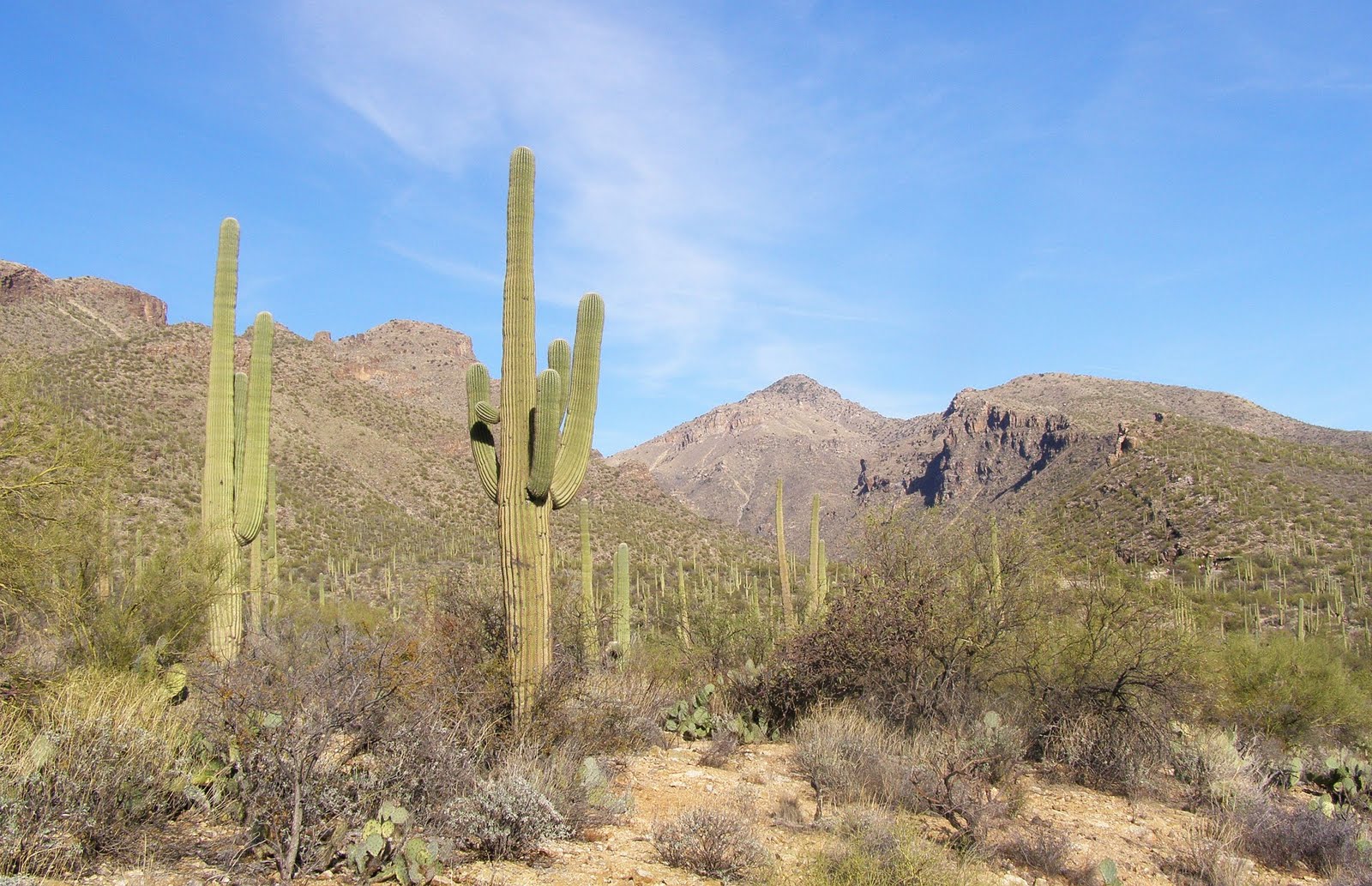
Song to the Saguaro Cactus
(pronounced sah-wha-ro)

We hike Sabino Canyon
to see the great Saguaro.
The Tohono O’Odham call these persons.
And so they are, each one unique,
standing in the thousands
along the valleys of this canyon,
arrayed in the arroyos as sentinels,
their thick, spiny, slow-growing arms
pocked with nests for cactus wrens or
an occasional owl.
Ah, Saguaro, you live longer than the people
who measure their years
against the flowering and the fruiting,
the hungry times, the longest nights,
the coldest, shortest days.
The people come in the proper season
to make wine from your fruits,
to give thanks,
and to dance under your arms.

We hike Sabino Canyon
to see the great Saguaro.
The Tohono O’Odham call these persons.
And so they are, each one unique,
standing in the thousands
along the valleys of this canyon,
arrayed in the arroyos as sentinels,
their thick, spiny, slow-growing arms
pocked with nests for cactus wrens or
an occasional owl.
Ah, Saguaro, you live longer than the people
who measure their years
against the flowering and the fruiting,
the hungry times, the longest nights,
the coldest, shortest days.
The people come in the proper season
to make wine from your fruits,
to give thanks,
and to dance under your arms.
Sunday, December 26, 2010
#257 Manifesto
My manifesto is
just large enough
to scrawl
on the back of a leaf:
Balance in all things.
Sunday Scribblings this week asks us to write a manifesto.
When I think of a manifesto, I’m remembering demagogues through history who screamed at their followers; economies out of control, privation, suffering, and war became real demons to fear.
Our greatest religious teachers have distilled their insights to simple truths. Do not do to others what you would not want done to yourself. In the west, Ten Commandments, sacrifice and denial become a way of life. In the east, a search for nirvana based on meditation led people to act intentionally and to try to do no harm.
The tension between a dream and reality remains. I wish that all people lived in peace and harmony, safe from harm. But this speaks to a survival level. A larger dream would be for each soul to achieve its highest vision, whether that is to be a parent, an artist, a musician, a writer, even a politician. And, yes, I do believe that all actions are expressions of human creativity, even to making a simple meal, and that the best creative works have something uplifting, something good in them. So I would add: As your hand turns, work for the public good.
just large enough
to scrawl
on the back of a leaf:
Balance in all things.
Sunday Scribblings this week asks us to write a manifesto.
When I think of a manifesto, I’m remembering demagogues through history who screamed at their followers; economies out of control, privation, suffering, and war became real demons to fear.
Our greatest religious teachers have distilled their insights to simple truths. Do not do to others what you would not want done to yourself. In the west, Ten Commandments, sacrifice and denial become a way of life. In the east, a search for nirvana based on meditation led people to act intentionally and to try to do no harm.
The tension between a dream and reality remains. I wish that all people lived in peace and harmony, safe from harm. But this speaks to a survival level. A larger dream would be for each soul to achieve its highest vision, whether that is to be a parent, an artist, a musician, a writer, even a politician. And, yes, I do believe that all actions are expressions of human creativity, even to making a simple meal, and that the best creative works have something uplifting, something good in them. So I would add: As your hand turns, work for the public good.
Monday, December 20, 2010
2011 Resolutions?
I've never made specific writing resolutions, but I just joined a new online writers' group and found Joe Konrath's A Newbie's Blog for Publishing. He's been setting resolutions since 2006, so I thought I'd piggyback on just 4 (OK 5) of his resolutions.
Konrath's resolutions (and my commentary) follow:
1. "I will start/finish the damn book" (2006).2. I have finished STANDING STONES and have 3-4 ideas in the research/drafting stage (RIVERS OF STONE and YEARS OF STONE, both sequels at 40% planned, and MOTHERS DON'T DIE (85% drafted) and THE LAST TAPESTRY (10% drafted). I will work on two of these.
2. "I will always have at least three stories on submission, while working on a fourth" (2006) This is a biggie for me as I have a horrible track record at sending stuff out, whether poems, stories or subbing the current novel. So my take will be always have two out working while working on a third. That seems sustainable.
3. "I will create/update my website" (2006). Does every writer who keeps a blog have an identity crisis or worry about readers? (See resolution 4 below) I want to go back to simply writing about writing. Those who come here can just expect a little venting, an occasional poem, and updates on research and writing -- as well as appreciation for other writers.
4. "I will stop worrying" (2010). Konrath worries??? I will strive to write (and edit) my best every day, and then I will let it go. That's me in 2011. I will dig deeper, write more intensely, and stop worrying!
5. "I will self publish" (2011). Yes, I will, just as Amanda Borenstadt did with her short story to test the water and then her book, Syzygy, an acronym I cannot type without doublechecking. Smashwords, look out! I'm nearly ready to play!
If you are a writer, my mantra remains: May your own writing go well!
Konrath's resolutions (and my commentary) follow:
1. "I will start/finish the damn book" (2006).2. I have finished STANDING STONES and have 3-4 ideas in the research/drafting stage (RIVERS OF STONE and YEARS OF STONE, both sequels at 40% planned, and MOTHERS DON'T DIE (85% drafted) and THE LAST TAPESTRY (10% drafted). I will work on two of these.
2. "I will always have at least three stories on submission, while working on a fourth" (2006) This is a biggie for me as I have a horrible track record at sending stuff out, whether poems, stories or subbing the current novel. So my take will be always have two out working while working on a third. That seems sustainable.
3. "I will create/update my website" (2006). Does every writer who keeps a blog have an identity crisis or worry about readers? (See resolution 4 below) I want to go back to simply writing about writing. Those who come here can just expect a little venting, an occasional poem, and updates on research and writing -- as well as appreciation for other writers.
4. "I will stop worrying" (2010). Konrath worries??? I will strive to write (and edit) my best every day, and then I will let it go. That's me in 2011. I will dig deeper, write more intensely, and stop worrying!
5. "I will self publish" (2011). Yes, I will, just as Amanda Borenstadt did with her short story to test the water and then her book, Syzygy, an acronym I cannot type without doublechecking. Smashwords, look out! I'm nearly ready to play!
If you are a writer, my mantra remains: May your own writing go well!
Friday, December 10, 2010
An Unexpected Moment . . .
I have been sadly remiss in keeping my writing blog up. I'm in the research phase for the next book, RIVERS OF STONE, with some days going well, and other days, not so well. I've found some great stuff online and at the library, delved into history, worked on understanding the "real" structure of "plot", but the story has remained elusive. Until this morning.
Larry Brooks writes that the reader must discover a compelling reason to keep reading: An unexpected moment occurs when everything changes. Up to this point, you may be writing (or reading) about sympathetic characters, interesting situations, but the story doesn't really grab you. You're just as likely to put the book down and turn to other, more rewarding pursuits (Farmville, online Scrabble, sex), right before nodding off.
But as I was reading his post what readers must experience for a satisfying read, something clicked for my story. A true WHAT IF moment. And for the first time, the story I've been working on for the last two months felt like a story. Thank you, Larry. Thunder fingers is ready to roll.
Larry Brooks writes that the reader must discover a compelling reason to keep reading: An unexpected moment occurs when everything changes. Up to this point, you may be writing (or reading) about sympathetic characters, interesting situations, but the story doesn't really grab you. You're just as likely to put the book down and turn to other, more rewarding pursuits (Farmville, online Scrabble, sex), right before nodding off.
But as I was reading his post what readers must experience for a satisfying read, something clicked for my story. A true WHAT IF moment. And for the first time, the story I've been working on for the last two months felt like a story. Thank you, Larry. Thunder fingers is ready to roll.
Wednesday, October 06, 2010
October update . . .
I haven't blogged or written any poetry for what feels like months, yet the mantra of "perseverance furthers" pushes me forward most mornings. Today I started the edits on the last section of STANDING STONES. I wonder if this will be the last edit. Most likely not, but I have cut 15,000 words in about two months.
This kind of editing is rather fun. As I reread the story, the hunt for extra words and passive voice continues. I ask constantly: Is this wording, character, scene, or chapter essential to the story? Does this move the story forward? Words drop off the page as I read the dialogue aloud and and "hear" again how my characters talk.
Now and again, writing friends from several online writing communities share their works in progress, their ambitions, their tenacity, and I am encouraged. My characters seem a bit impatient, but come November 1, I will be ready for the first push into a draft of RIVERS OF STONE. Dougal, Colin, and Mary Margaret, disguised as a young boy, will travel the Atlantic as newly hired servants of the Hudson's Bay Company, join the Fur Brigade Express to trek across Canada and come to Fort Vancouver. It will be late spring, 1843, well before Mount St. Helens' eruption in 1847 or the discovery of gold. Perhaps Colin will sail to the Sandwich Islands or China. Perhaps Dougal will find a fiddle, and Mary Margaret, this woman who worked as a man, will discover herself in the Great Nor'West.
This kind of editing is rather fun. As I reread the story, the hunt for extra words and passive voice continues. I ask constantly: Is this wording, character, scene, or chapter essential to the story? Does this move the story forward? Words drop off the page as I read the dialogue aloud and and "hear" again how my characters talk.
Now and again, writing friends from several online writing communities share their works in progress, their ambitions, their tenacity, and I am encouraged. My characters seem a bit impatient, but come November 1, I will be ready for the first push into a draft of RIVERS OF STONE. Dougal, Colin, and Mary Margaret, disguised as a young boy, will travel the Atlantic as newly hired servants of the Hudson's Bay Company, join the Fur Brigade Express to trek across Canada and come to Fort Vancouver. It will be late spring, 1843, well before Mount St. Helens' eruption in 1847 or the discovery of gold. Perhaps Colin will sail to the Sandwich Islands or China. Perhaps Dougal will find a fiddle, and Mary Margaret, this woman who worked as a man, will discover herself in the Great Nor'West.
Saturday, August 21, 2010
Back to editing . . .
On July 24th, I stood in front of 450 people to receive the second place award in historical fiction for Standing Stones at the Pacific Northwest Writers Association literary contest.
I remember bouncing up out of my chair when my name was called with a sense of disbelief and joy. Some 1100 people entered back in February. Now just three names (Kendra Hall, for Joan of Arc, Gabriella's Story; Debra Carlson for Shakuhachi, and me) were announced in our category. At the "winners only" reception following the dinner, several agents invited me to send my work, but here I heard for the first time that 118,000 words is too long for a first novel by a new author.
Over the long weekend of August 6th, I attended the Willamette Writers annual conference in Portland. Robert Dugoni was an inspirational keynoter ("Begin your story with blood on the floor") and workshop leader. Charlotte Cook changed my perceptions of how to write back story with her comment:
"If you don't want to compromise the forward momentum of the story, integrate back story as you experience your past in your own life. Do we stop action in the present to retell ourselves a story from the past? In chronological order?"
But the real draw for me at Willamette Writers was to find out more about agents and the possibility of representation. Now I learned in earnest that Standing Stones was too long. But after a year of editing, I'm no longer intimidated by the challenge of chopping out 25,000 words or so. I'm not subbing to agents just yet. I'm not writing poetry or short stories. Each morning begins with editing. Each afternoon includes research, for the next two stories in this series are simmering and shimmering in my imagination. Summer now begins its turn to fall. May your own projects go well.
I remember bouncing up out of my chair when my name was called with a sense of disbelief and joy. Some 1100 people entered back in February. Now just three names (Kendra Hall, for Joan of Arc, Gabriella's Story; Debra Carlson for Shakuhachi, and me) were announced in our category. At the "winners only" reception following the dinner, several agents invited me to send my work, but here I heard for the first time that 118,000 words is too long for a first novel by a new author.
Over the long weekend of August 6th, I attended the Willamette Writers annual conference in Portland. Robert Dugoni was an inspirational keynoter ("Begin your story with blood on the floor") and workshop leader. Charlotte Cook changed my perceptions of how to write back story with her comment:
"If you don't want to compromise the forward momentum of the story, integrate back story as you experience your past in your own life. Do we stop action in the present to retell ourselves a story from the past? In chronological order?"
But the real draw for me at Willamette Writers was to find out more about agents and the possibility of representation. Now I learned in earnest that Standing Stones was too long. But after a year of editing, I'm no longer intimidated by the challenge of chopping out 25,000 words or so. I'm not subbing to agents just yet. I'm not writing poetry or short stories. Each morning begins with editing. Each afternoon includes research, for the next two stories in this series are simmering and shimmering in my imagination. Summer now begins its turn to fall. May your own projects go well.
Thursday, July 22, 2010
About what's next . . .
In northern Scotland today, here and there in the rolling green hills close to the sea, clusters of stones remain. Once these stones were cottages for crofters. For in the early 19th Century, rich landowners, inspired by the Industrial Revolution, sought to make this land more productive and evicted the people who had lived here in these hills for generations, to make way for sheep.
Mac MacDonnell , a fisherman, with his brothers Dougal, Colin, and Jamie, and his sister, Moira, lived in such a cottage. Suspicious when Lord Gordon took possession of the tiny island they lived on, Mac protested changes first to his fishing boat and then, when sheep were brought on the island and evictions began, Mac led protests to the lord’s manor house. When a child was trampled to death, the MacDonnell’s were evicted and their boat confiscated. Mac was arrested and sentenced to be transported to the penal colony at Port Arthur in Van Diemen’s Land. As Mac is taken to London to work in the prison hulks on the Thames, awaiting shipment to Tasmania, the remaining MacDonnell’s face the future alone.
Each struggles to decide whether to remain on their island home or to leave. Dougal and his sweetheart Mary Margaret disguised as a man, sign on as servants with the Hudson’s Bay Company. Colin is hired as well. Moira reluctantly takes Jamie, the youngest brother, with her to Inverness, searching for work and for Dhylan, her husband. And Diedre, fearful of leaving her family, yet more afraid of a life without Mac, follows Mac to Van Dieman’s Land, hoping somehow to be reunited.
This is the story of Standing Stones, a finalist in this year’s Pacific Northwest Writers Association literary contest. Critics called this story “a very promising work” with “excellent plot development” and “wide audience appeal for readers of “action/adventure, historical fiction and possibly romance.” My search for an agent begins as does the sequel.
I’m in the research phase for the next novel.
Should I tell the story of Dougal and Mary Margaret as they cross the wilds of Canada with the Hudson’s Bay Company’s famous fur brigades, perhaps traveling with artist Paul Kane west to Fort Vancouver? There, Mary Margaret’s disguise unravels, she is discharged from service and lives outside the Fort with a mélange of Native Americans, Hawaiians and Scots. Perhaps they’re hired by Paul Kane as he travels throughout the Willamette Valley and north again, documenting the “Great Nor-West” and painting the 1847 eruption of Mount St. Helens. And then in January 1848, gold is discovered at Sutter’s Mill. The Great Gold Rush of California begins.
Or should I continue the story of Mac, shipwrecked near Port Arthur, desperate to find Diedre among the survivors, and of their lives in the early days of the penal colony on Tasmania? Does Mac try to escape, past the vicious dog line and north into the bush? Are they befriended by the very few aboriginals or bushmen there? Does Mac survive his sentence? How does Diedre begin a new life in the wild saloon halls of Port Arthur? Is she befriended by the peripatetic Lady Franklin, wife of soon-to-be-disposed Governor Franklin (1843), the ill-fated explorer of the Arctic? And then, in May, 1851, gold is discovered. The Great Gold Rush in the Macquarie River country north of Sydney begins.
Yesterday I spent three hours researching in the Spokane library’s Pacific Northwest Room where materials cannot be checked out. But I will persevere. Each of the stories above is roughly a three-year project: one year to draft, two years to revise. Which story appeals most to you?
Mac MacDonnell , a fisherman, with his brothers Dougal, Colin, and Jamie, and his sister, Moira, lived in such a cottage. Suspicious when Lord Gordon took possession of the tiny island they lived on, Mac protested changes first to his fishing boat and then, when sheep were brought on the island and evictions began, Mac led protests to the lord’s manor house. When a child was trampled to death, the MacDonnell’s were evicted and their boat confiscated. Mac was arrested and sentenced to be transported to the penal colony at Port Arthur in Van Diemen’s Land. As Mac is taken to London to work in the prison hulks on the Thames, awaiting shipment to Tasmania, the remaining MacDonnell’s face the future alone.
Each struggles to decide whether to remain on their island home or to leave. Dougal and his sweetheart Mary Margaret disguised as a man, sign on as servants with the Hudson’s Bay Company. Colin is hired as well. Moira reluctantly takes Jamie, the youngest brother, with her to Inverness, searching for work and for Dhylan, her husband. And Diedre, fearful of leaving her family, yet more afraid of a life without Mac, follows Mac to Van Dieman’s Land, hoping somehow to be reunited.
This is the story of Standing Stones, a finalist in this year’s Pacific Northwest Writers Association literary contest. Critics called this story “a very promising work” with “excellent plot development” and “wide audience appeal for readers of “action/adventure, historical fiction and possibly romance.” My search for an agent begins as does the sequel.
I’m in the research phase for the next novel.
Should I tell the story of Dougal and Mary Margaret as they cross the wilds of Canada with the Hudson’s Bay Company’s famous fur brigades, perhaps traveling with artist Paul Kane west to Fort Vancouver? There, Mary Margaret’s disguise unravels, she is discharged from service and lives outside the Fort with a mélange of Native Americans, Hawaiians and Scots. Perhaps they’re hired by Paul Kane as he travels throughout the Willamette Valley and north again, documenting the “Great Nor-West” and painting the 1847 eruption of Mount St. Helens. And then in January 1848, gold is discovered at Sutter’s Mill. The Great Gold Rush of California begins.
Or should I continue the story of Mac, shipwrecked near Port Arthur, desperate to find Diedre among the survivors, and of their lives in the early days of the penal colony on Tasmania? Does Mac try to escape, past the vicious dog line and north into the bush? Are they befriended by the very few aboriginals or bushmen there? Does Mac survive his sentence? How does Diedre begin a new life in the wild saloon halls of Port Arthur? Is she befriended by the peripatetic Lady Franklin, wife of soon-to-be-disposed Governor Franklin (1843), the ill-fated explorer of the Arctic? And then, in May, 1851, gold is discovered. The Great Gold Rush in the Macquarie River country north of Sydney begins.
Yesterday I spent three hours researching in the Spokane library’s Pacific Northwest Room where materials cannot be checked out. But I will persevere. Each of the stories above is roughly a three-year project: one year to draft, two years to revise. Which story appeals most to you?
Monday, July 05, 2010
Standing Stones a finalist . . .
I'm thrilled to learn that Standing Stones was selected as a finalist in this year's Pacific Northwest Writers Association literary contest. Over 1100 writers entered with nearly 100 chosen as finalists in 12 categories. Results will be announced July 24 at an awards dinner in Seattle. I'm going!
C. C. Humphreys is the keynote speaker at the dinner. This accomplished writer gives his occupation as "writer, actor, and fight choreographer," so I'm sure to learn something new. He's on my reading list now, along with other research which pulls me in many different directions -- all 19th Century but in Tasmania, China, Hawai'i, and along the fur traders' routes in Canada west from York to Fort Vancouver.
I found a gem in Paul Kane (1810-1871) who, inspired by George Catlin, painted to preserve the culture and images of the great wilderness of the West. Kane gained permission to travel with the Hudson's Bay Company fur brigades west and painted landscapes of Native peoples across Canada.
He left Toronto in May and arrived (after many adventures and misadventures) at Fort Vancouver in December, 1846. That's over 6 months on the road in far more rugged conditions we experience today, even when we go camping. He hunkered down at Fort Vancouver and then travelled throughout the Willamette Valley and north, including a stop at Fort Victoria.
Somewhere along the way, Kane painted an eruption of Mt. St. Helens at night (1847, source Wikipedia). You'll note the eruption comes (accurately) from the side of the cone, so not as significant as the big blow-up in 1980, but this must have had an impact on the peoples living there at that time. I also learned that Kane visited the Whitman Mission just a few months before the massacre there. Ah, the links that research brings!
C. C. Humphreys is the keynote speaker at the dinner. This accomplished writer gives his occupation as "writer, actor, and fight choreographer," so I'm sure to learn something new. He's on my reading list now, along with other research which pulls me in many different directions -- all 19th Century but in Tasmania, China, Hawai'i, and along the fur traders' routes in Canada west from York to Fort Vancouver.
I found a gem in Paul Kane (1810-1871) who, inspired by George Catlin, painted to preserve the culture and images of the great wilderness of the West. Kane gained permission to travel with the Hudson's Bay Company fur brigades west and painted landscapes of Native peoples across Canada.He left Toronto in May and arrived (after many adventures and misadventures) at Fort Vancouver in December, 1846. That's over 6 months on the road in far more rugged conditions we experience today, even when we go camping. He hunkered down at Fort Vancouver and then travelled throughout the Willamette Valley and north, including a stop at Fort Victoria.
Somewhere along the way, Kane painted an eruption of Mt. St. Helens at night (1847, source Wikipedia). You'll note the eruption comes (accurately) from the side of the cone, so not as significant as the big blow-up in 1980, but this must have had an impact on the peoples living there at that time. I also learned that Kane visited the Whitman Mission just a few months before the massacre there. Ah, the links that research brings!Thanks to the library, I have Diane Eaton and Sheila Urbanek's book, Paul Kane's Great Nor-West with its wonderful commentary and diary excerpts to accompany his paintings. Now, back to work . . .
Subscribe to:
Comments (Atom)