Monday, May 30, 2016

Monday Musings on Memorial Day


Charlton Bruce Camp
1917-1989
I have very few memories of my father who served in the Navy during World War II. I remember a kind man with a quirky sense of humor, quick to laugh, and equally quick to flashes of temper. He was a Hollywood stuntman and part-time bartender. My parents divorced when I was 5. Maybe because he gambled. We left post-war Los Angeles behind.

Allen Dorfman, 1968
Fast forward a few decades or so to San Francisco where I met Allen in the 1970s. He was a year back from serving as a front-line grunt in Vietnam. We were inseparable from the beginning and married a year after we met. At that time, he struggled with night terrors. He told me a few stories and he wrote. But then we had our precious baby girl. After a time, he stopped writing.

Last year, for his 70th birthday, our daughter and I published his novel based on his experiences in Vietnam. His book, Reaching, is available on Amazon. 

Here, in memory of those he served with, is one of those stories he told me. 


"Trapped"
by Allen Dorfman

I remember being trapped while serving as a sergeant in Viet Nam.

My unit was sent out to a hot zone. The helicopter was packed with soldiers, and there wasn’t enough room, so several of us lay on the floor. I couldn’t see anything but blackness around me. The floor rattled and shook under me. My helmet vibrated against the bulkhead, and I could feel my pack and gun against my back. No one yelled over the noise, for we were going into battle.

The helicopter in front of us exploded. The captain screamed, “We’re going down. God protect us.” We somehow landed in a blast of hot air, gunfire, and shrapnel. We laid down a round of intense fire. The helicopter got off safely, but we were trapped along a tiny treeline, surrounded by Viet Cong. Outnumbered.

Snipers picked at us. Our young Lieutenant told my buddy Timmy to send out probing fire. He stood up to fire. A shot pierced his forehead, and he fell back into our hole.

“Listen, men,” cried the Lieutenant. “I want us to move across the field to that treeline.”

I felt Timmy’s hand grow cold in mine. “You’re going to lead us across that empty field?”

“Men, move out,” he replied. “I’m staying here with the radio.”

“We’re not going,” I said. “When you want to lead us, we’ll go.”

“When do you think we should go?”

“I’ll tell you,” I said.

We waited until dusk and then low-crawled over the open field. When we reached the treeline where the enemy had peppered fire at us all day, they were gone. Someone said they were probably afraid we were going to bring in cluster bombs. We radioed for a helicopter. 


Some 100 men went in, less than forty returned. Eight of us walked out uninjured, carrying body bags, the others hobbled behind, but we were still in Viet Nam.

Friday, May 27, 2016

Friday: Just fooling around with videos . . .

Today, thought I would try a new video for Standing Stones, my first book in the McDonnell saga to see which might work best to support my overall marketing.

I could use Vimeo or Youtube. Here are the results of both. Which do YOU like better?

VIMEO: Set up with Vimeo for a "lite" (free) account. Limited to 6 frames and 30 seconds. Took me about 1.5 hours to figure out how to draft, edit and create the following. Cons: No direct link to my Amazon page for Standing Stones.


Standing Stones, Book 1

YOUTUBE. Here's the 30 second version on YouTube. It's been awhile since I used YouTube's uploading/editing features, but I found some neat music from their free music library (Celtic) and liked how I could add more than 3-5 words to support each slide. One negative: I didn't have good control over what would be the 'bookmark' image. 

What took me so long (about 3 hours) is creating the PowerPoint slide show (edit, edit), then figuring out how to export it in video format so I can easily upload the finished 30-second product to YouTube!


TAKE 2 for YOUTUBE. This wonderful two minute version was created by Sandy Brown Jensen as a surprise for me and features beautiful Celtic music by Mairead Nesbitt, "The Butterfly."


So now I'm wondering, of the two YouTube videos, which is easier -- the 30-second version or the 2-minute version?

And of the two 30-second versions, do you like the Vimeo format OR the YouTube format?

Thank YOU for commenting! 


Monday, May 23, 2016

Monday Morning Musings: Book Reviews

Frank Henry, c. 1918
My grandfather used to scan the sky for weather changes, the way dark clouds might hug the horizon or riffles suggest a coming storm. 

He was a cowboy, well used to what could happen if he were out checking fence on horseback, miles from shelter.

My most physical labor is keyboarding. I glance at the sky occasionally, when deciding which shoes to wear if it's raining or when to time that dash to the supermarket or those walks in my suburban neighborhood.

As a self-published writer, I confront daily that challenge to balance writing with marketing. Two weeks ago, I signed up for an online marketing class and have been inundated by e-mailed workshops, marketing tips for writers, and exhortations. I should have seen that coming.

My mantra? Divide and conquer. Pick one or two marketing suggestions each week. Try them. See what worked. Rinse and repeat. For the coming week, my focus will be on reviews. 

Why write a review or ask for one? 

Apparently people are swayed by reviews. Most of the time, I read the blurb, jump to scanning the writer's storytelling skills inside the book (whether picking up that book physically or online), and then make a decision. My husband is guided by all those "best of . . . " and reads literary fiction. I read everything else.

But I do subscribe to several e-mails (including from my local library) that send me suggested titles to read in historical fiction. 

Last week's e-mail brought an invitation to vote in this year's "Best Blog Review Blog Award" competition. 

Some 25 blogs and websites were suggested as this year's best. I read through these blogs, considering content, sophistication of setup (some were formal websites; others were rolling blogs), genres covered (and likely audience), clarity of instructions on subbing for reviews, and relevance to my writing. 

And despite that avalanche of incoming e-mail, I found a few new sites to subscribe to and added three more books to my TBR list.

What's next? My goals currently include writing at least one review a month, preferably for an indie or self-published writer. This week, I'm also going to request a review for my books from two of my favorite sites. And, yes, I voted. Will you?  

Have you ever asked someone to write a review? Or written a review -- for an indie writer? Was this difficult? 

Here's my favorite meme of the week from Steven Malone's Google+ site along with a link to this neat article (also from Steven) on "Book Reviews: A Casual Readers' Guide to Reviewing." Anthony Eichenlaub will have you laughing and rethinking how you write reviews.

If you would like to review any one of my books, send me an e-mail letting me know which one, and I'll send you an e-book!  Make it a good week.


Sunday, May 22, 2016

Tracking down Archie

My quest this month and last has been to research those people Canadian artist Paul Kane met on his trip from the wilds of Canada down to the Willamette Valley around 1842-1847, during the fur trading era.

Kane's journal, Wanderings of an Artist, introduced  a "Mr. Mackenlie'" as a chief trader in Oregon City. Following the winter holidays at Fort Vancouver, the two traveled down the Columbia River to Oregon City, Kane's mission being to see and paint as much of native life as possible.

"Oregon City" painted by Henry James Warre 1845 (Wikipedia)

Kane goes on to write that he spent some three weeks with "Mr. Mackenlie," well entertained by his "stories of Indian life." In one tale, a three-pound caret of tobacco went missing from the store. "Mr. Mackenlie" suspected an Indian had taken it, so had the Chiefs assemble everyone. He told them of the theft and "wished everyone present would place his mouth to the muzzle of the gun and blow into it, assuring them that it would injure no one innocent of the theft," but it would kill the thief (132). "Mr. Mackenlie" began the process, followed by every other person in the room, except one man who said, "he would not tempt the Great Spirit" (133).

That's all the information I had about "Mr. Mackenlie," so I turned to Diane Eaton and Sheila Urbanek's Paul Kane's Great Nor-West to learn that when they left Fort Vancouver, the temperature hovered around 7 below zero. And "Mackenlie" was Archibald McKinlay. Now the fun begins, and I am very grateful for Google searches. Here's what I've learned about Archie, for each little snippet takes me deeper into what life was like back in the 1840s.

Scottish Archibald McKinlay (1805-1891) came to Canada in 1830 with his sister Ellen who had married James MacMillan.  He began work as an apprentice clerk for the Hudson's Bay Company at York Factory in 1832 and also served at Red River in 1834. Archie was tall, had ginger-colored hair, weighed about 200 pounds, and was by several accounts quite chatty with a flair for solving problems diplomatically.  

In 1835, Archie was transferred west of the Rockies, where he met up with Alexander Caulfield Anderson at Jasper House; they became lifelong friends, later serving together on the Indian Reserve Commission together in the 1870's. 

Archie served as a trader at several different Hudson Bay Company posts, the last being Fort Nez Perces (now Walla Walla). He never went home again. After the Oregon Treaty of 1846, he moved to Oregon City. commenting, "It's no surprise we lost Fort Vancouver. Every year, the Americans came out on the trail, as thick as mosquitos."

On June 15, 1840, Archie married Julia Sarah at Fort Vancouver, one of the daughters of Peter Skene Ogden -- who was Chief Factor at Fort Vancouver at the time. 

Archie and Julia had 10 children, though one report suggests they had 5 children. Large families were not unusual during this time of no birth control. The first, a daughter, was born in 1837 at Red River (a footnote suggests she might have been a foster child), but given that Archie was a favorite of Peter Skene Ogden, and traveled widely, more research would be needed. It was not uncommon for marriages to occur years after the couple married 'in the style of the country.' Julia traveled with her husband, so she would have been at Oregon City when Paul Kane stayed there.
Source: Branwen Christine Patenaude Trails to Gold, Volume 2, page 60.
I also discovered that Archibald McKinlay loved books -- of a certain kind. In 1842, he ordered $100 worth of books through Dr. Marcus Whitman, though these books did not arrive at Fort Vancouver until June of 1845. The books traveled from Boston around the Horn with a stop in Hawaii before arriving on the Columbia River. Mostly religious in nature, the crate of 60 books did not include Shakespeare or any popular fiction! (PDF article by J. Orin Oliphant, Washington Historical Quarterly, 1933).

Interested in reading more? See Paul Kane's Wanderings of an Atist Among the Indians of North America; Nancy Marguerite Andeson's The Pathfinder: A. C. Anderson's Journeys in the West; Diane Eaton and Sheila Urbanek's Paul Kane's Great Nor-West; Nichole St-Onge, Carolyn Podruchny, Brenda Macdougall, eds.Contours of a People: Metis Family, Mobility, and History; and Branwen Christine Patenaude Trails to Gold, Volume 2. 

And just one last link: Nancy Marguerite Anderson, consistently writes about the fur trade era on her blog, with much good excerpts from letters and journals. 


Tuesday, May 17, 2016

Volcanoes and my current work-in-progress

When I first started thinking about what Rivers of Stone might include and that connection between the fur trading era, Hawaii, and the Great Pacific Nor'west, I thought about volcanoes and the clouds of ash that fell on Oregon City during Mount St. Helens' massive eruption in 1980, just before we moved to Oregon.

For on March 27, 1847, Mount St. Helens did erupt, and Canadian painter Paul Kane did paint a fiery plume coming out of her left side at night.


Paul Kane, "Mount St. Helens Erupting at Night," 1847
Source Wikimedia

Perhaps this 'fiery eruption' was partly created by the artist's imagination. Volcanologists report that between 1840 and 1850 before entering a long period of dormancy, Mount St. Helens did erupt in 1844, 1845, and 1846, with smoke plumes being most common, as spotted by British spy Henry Warre.  

Paul Kane wrote in his Wanderings of an Artist: "There was not a cloud visible in the sky at the time I commenced my sketch, and not a breath of air was perceptible: suddenly a stream of white smoke shot up from the crater of the mountain, and hovered a short time over its summit; it then settled down like a cap. This shape it retained for about an hour and a-half, and then gradually disappeared." 

Kane further notes: "About three years before this the mountain was in a violent state of irruption [sic] for three or four days, and threw up burning stones and lava to an immense height, which ran in burning torrents down its snow-clad sides."

But it doesn't sound like Kane directly observed that fiery 'irruption.' I did find a fascinating aside reported by Warre in his journals about an Indian, tribe unknown, who told of trying to jump over a strange river of hot stones when he was hunting near Mount St. Helens. He miscalculated the jump and badly burned his leg, which was later treated by a Dr. Barclay at Fort Vancouver. Warre's story contradicts Kane's report that the natives refused to go near Mount St. Helens.

Dr. Forbes Barclay
Source: Oregon Health & Science University
As research threads unravel, I followed this lead to find that Dr. Forbes Barclay, born in the Shetland Islands in Scotland, was a surgeon and fur trader at Fort Vancouver from 1840 to 1850, just the time my characters would have visited there. 

So, Paul Kane would have known Dr. Barclay. 

Further, Dr. Barclay moved to Oregon City, about the time that John McLoughlin, the Chief Factor at Fort Vancouver, moved there. Both men married Métis women, and Dr. Barclay built his house next door to McLoughlin in 1849. He married Marie Pambrun at Fort Vancouver in 1843.


Richard Matthews, a National Park Service volunteer at the Barclay House, was interviewed for a series of videos about the Oregon Trail. This five-minute video focuses on Dr. Forbes Barclay.


Maybe I won’t have fiery volcanoes or clouds of ash in my story, but now I’m thinking Dr. Barclay will make an appearance in Rivers of Stone. 

Another surprise: I’ve also been on the hunt for a quilt to put in my story and just discovered that a 200-year-old quilt is housed today in the museum that was once John McLoughlin’s home in Oregon City. Aha! More research is needed. 

Yesterday, a friend wanted to know when Rivers of Stone would be available. I'm still editing but hoping for this year. Sign up for my newsletter HERE to find out exactly when.  

Questions? Comments?


Wednesday, May 04, 2016

IWSG: The Power of a Writing Community

Most days, the writing itself is its own reward. I know when my scenes work and when further editing/writing is needed. And, most of the time, I can catch those grammatical errors. 

I'm most interested in critiques that help me dig deeper into my stories, spot structural problems, character missteps, plot holes, misplaced images, flat writing, and, perhaps most challenging, straggling or struggling story lines.

But I haven't found a face-to-face writing group that gives this kind of feedback. Yet.

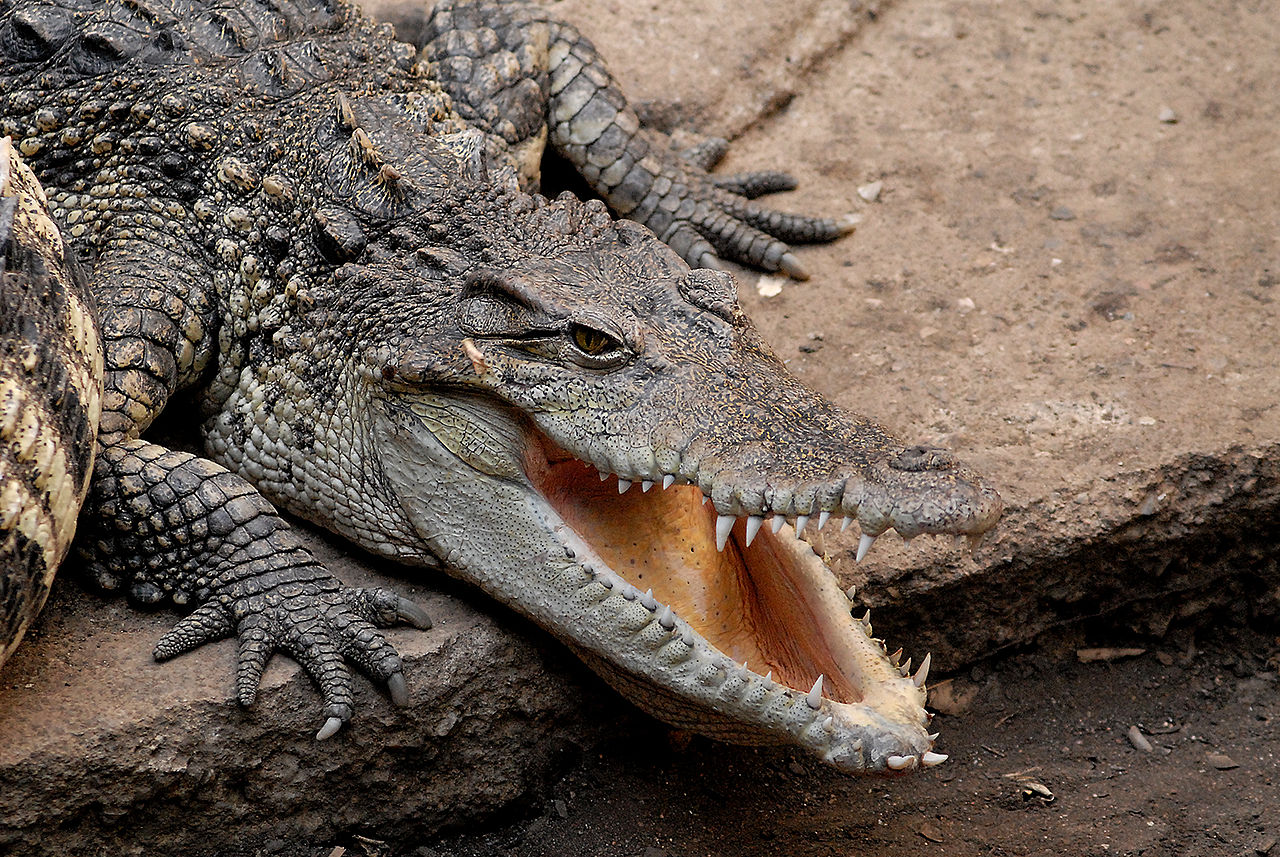
Nile Crocodile (Wikipedia)
I've been in groups where at the end of the evening, I've felt somewhat eviscerated. And in other groups where everyone smiled and told me how wonderful my story was. 

Neither advances my cause. The criticisms that cut to the bone leave me doubting, and the fans who wave pompoms also cause me to doubt my storytelling skills.

What about online writing groups that critique work-in-progress? 

The Internet Writing Workshop offers a listserv exchange for people interested in getting feedback on novels. For every one of your own chapters you post for review, you need to critique two chapters by other writers. I've met other serious writers this way, read and critiqued some wonderful work, and gained immensely from very thoughtful critiques. The sheer volume of subs can be daunting, but I'm nearly ready to join again those colleagues of the pen in NOVELS-L, one chapter at a time.

Just as the Facebook group, 10-Minute Novelists, has helped me write in little bites, so too the Facebook group, Insecure Writer's Study Group has helped me feel connected to other writers. 

Manito Park (Camp 2014)
Writing is a solitary pursuit. I'm OK with that most of the time. But I do want critical feedback, perhaps from beta readers by the end of the summer.

That's my writing goal for 2016. Finish the draft. Find a few good readers for critical feedback. Publish Rivers of Stone this year.

It's spring, the season for optimism. May your own writing and editing go well. 

Find out what other IWSG writers are thinking about this month on the Insecure Writer's Study Group website or on the Facebook page. 


Saturday, April 30, 2016

Ze End . . .of April's A to Z Blogging Challenge

Here we are, once again at the path of accomplishments behind us, farewells for today, and ahead, who knows what awaits?

This last month for April's A to Z Blogging Challenge, I've revisited the research underlying my current novel-in-progress, Rivers of Stone, now in the editing stage. In the process, I've made some discoveries, dug a little deeper into what affects my characters, and reaffirmed my nerdish love of books.

A few discoveries:

--Dr. John Rae, that Arctic explorer who discovered the last remains of Sir John Franklin's ill-fated party lost in the ice, actually wintered over at York Factory in 1845, the time of my book. Because he dared to report his findings, that Franklin's crew resorted to cannibalism in their desperate efforts to survive, he was ostracized and his exploration of Arctic areas unrecognized until very recently. I visited his tomb at St. Magnus Cathedral and saw his house when we visited the Orkney Islands.

Dr. John Rae's Tomb at St. Magnus Cathedral (Camp 2009)


--Country wives were protected somewhat, but their treatment still shocks me. Sometimes the men who 'married' these Metis and native women simply abandoned them and their children; other times, they arranged new husbands. Sometimes the men respected their wives for their entire marriage. I haven't quite figured out how to honor the history of these women. Sylvia Van Kirk's book, Many Tender Ties, added depth to this sad aspect of fur trading history.


--I could probably fall back into research to find again what I have forgotten, but that would delay the 'finishing' of this story for another year or two. And, after all, is it the history or the story of Catriona and Dougal that I want to tell?

Voltaire once said something like, "Sometimes the quest for perfection gets in the way of accomplishing what is good." He said it in French and more succinctly (the best is the enemy of the good). 

My commitment to write as well as possible for this A to Z challenge pulled me away from writing/editing Rivers of Stone. Now, May begins and I shall resume. Each of my books has taken about three years to write. This is the third year for Rivers of Stone, and my goal is to finish this year.

New A to Z people I've met this month and thoroughly enjoyed their posts:

Go forth, A to Z bloggers! May your writing and reading nourish each day!


Friday, April 29, 2016

Y is for York Factory

Full circle. York Factory, the fur trading headquarters of the Hudson's Bay Company's Northern Department is where my novel, Rivers of Stone, began.

Catriona, disguised as a boy, and Dougal, her husband, landed here when the annual ship arrived from Britain late in the summer of 1842. 

They met an interesting array of historical personages, including James Hargrave, the Chief Factor, and his wife, Letitia, a gossipy letter-writer some 15 years younger than her husband, who has given us pretty clear pictures of what life was like at that isolated fur trading post.

Situated in the middle of Cree country, York Factory was near enough to Hudson's Bay to be affected by every storm that rose over its waters. In the winter, Polar bears and wolves scampered on the ice, hunting for unsuspecting sea otters. In the summer, this main supply depot was pretty much surrounded by marshland. Workers sank to their ankles in mud and had to walk five miles to gather firewood. Everyone dreaded the black flies and mosquitoes.

Letitia Hargrave described York Factory as surrounded by ". . . a desolate waste of green swamp grass and small scrub as far as the eye could see" (McGoogan 52).

York Factory in 1853 (Wikipedia)
By the 1840s, York Factory was an fenced outpost of some 30 buildings built of wood, with the main depot and guest houses in the center. Along each side, a hospital, doctor's house, bakehouse, cooperage, library, various fur and provisions stores, and quarters for officers and servants. In the center, the Company flag flapped from a tall pine (Newman 50).  

But the lives of those who lived there year round were complicated by boundaries of class and race. In the winter, Letitia Hargrave might dine with the 'gentlemen' and officers, but through the summer, when the men ate outside, she dined alone. 

James Hargrave had a piano brought for his new wife; she was rare, a European wife with a servant from the Orkney Islands in a land of country wives. In the earlier years of the fur trade era, such wives, both Metis and tribal, were prized. The marriages were arranged by the father of the young woman and the husband to be. Property was exchanged (typically horses), and the husband promised to honor his wife all his life (Brown 76). But gradually, such marriages were seen as an impediment to promotion by ambitious clerks far from home. 

Letitia befriended such a country wife and wrote of Mrs. Gladman that she had been 'married' when she was 12 to a Mr. Stewart: ". . . She was dragged out of her mother's room and sent away with him & he beat & maltreated her til life was a burden" (MacInnes). After nine years, Mr. Stewart left her, and she 'went with' Mr. Gladman. Letitia continues,  ". . . from what she says, the ladies here have a custom of smothering their babies" (MacInnes).  I've read elsewhere that some tribal families hid their daughters and/or their children when the traders visited.

Tomorrow marks the last day of the April A to Z Blogging Challenge, with an entry for the letter Z. I wonder what zat will be?

Some references: Peter C. Newman, An Illustrated History of the Hudson's Bay Company; Jennifer S. H. Brown, Strangers in Blood: Fur Trade Company Families in Indian Country; and Morag MacInnes, "Letitia Hargrave in the Nor'Wast," Frontiers Magazine. 

Another helpful read is Michael Payne's The Most Respectable Place in the Territory: Everyday Life in Hudson's Bay Company Service, York Factory, 1788 to 1870 (found at a used book store!).


Thursday, April 28, 2016

X is for the XY Company in the fur trade era

Originally I was going to write about the XY Company, that early fur trading company set up in 1797 to compete with the Montreal-based NorthWest Company.  
The Northwest Company labeled its fur packs with NW; the XY Company labeled its fur packs with X and Y, the letters that followed W. 

Those were rough and tumble days, and the XY Company did not last long. The fur traders from these two companies built competing posts, schemed, fought, and outbid each other with increasing amounts of rum and brandy. The rivalry out in the field for furs was matched by equally intense battles for profit within these two companies. The end of the short-lived XY Company came in 1804 when it merged with the NorthWest Company, but the newly merged NorthWest Company continued to fiercely compete with the Hudson's Bay Company. 

When the Hudson's Bay Company first established York Factory as the hub of its fur trading operations on the edge of Hudson's Bay itself in Upper Manitoba, those early officers and gentlemen with their apprentices and networks of fur traders were content to let the furs come to them for trading and then loading on the annual ship from England. Competition from the NorthWest Company changed that complacency.

This historical summary sounds pretty sedate, compared to the harsh realities of life in the fur trade, well matched by rowdy meetings by the managers to set policy. After the merger, by 1810, the NorthWest Company had nearly 2,000 employees and 1,000 canoes (Morrison 36). 

The Beaver Club in Montreal, where 'wintering partners' of the NorthWest Company met to set policy began with 5 toasts. Following each toast, the glasses were hurled into the fireplace. Morrison reports that a bill from one of the hotels shows "thirty-one members and guests consumed twenty-nine bottles of Madeira, nineteen bottles of port, fourteen bottles of porter, and twelve quarts of ale, plus a quantity of gin and brandy" (37). She quotes one attendee as saying, "By four o'clock in the morning . . . we could all give the war whoop as well as Mackenzie and McGillivray . . . " (37).

In 1821, another series of negotiations led the Hudson's Bay Company to merge with the NorthWest Company and acquire its posts west of the Rocky Mountains, significantly expanding its control of fur trading lands. The HBC, concerned about American and Russian expansion in the region, worked hard to solidify its position in the Pacific Northwest.

Perhaps the U.S. would not have stretched "from sea to shining sea" without this intense competition between the NorthWest Company and the Hudson's Bay Company. 


John McLoughlin
Source: Wikipedia
And John McLoughlin.

For McLoughlin was the powerful Chief Factor at HBC's Fort Vancouver from 1825 to 1846. He welcomed those American immigrants who arrived nearly broken by the harsh journey west. 

The Hudson's Bay Company rebuked McLoughlin again and again for being too generous with food and temporary lodging, but McLoughlin turned no one away. He did encourage them to settle south of the Columbia River, honoring the HBC's assertion that the boundary between the U.S. and Canada should be set at the Columbia River. Those immigrants settled along the Columbia and down into the Willamette Valley, along with retired voyageurs and McLoughlin himself, who later became an American citizen.


Oregon Country/Columbia District 1818-1846
Source: Wikipdia
Click map to see larger version
The disputed area shown in the map to the left takes up nearly 75% of the state of Washington, west and north of the Columbia River as it flows down from Canada to the sea.

Arguments about where the boundary between Canada and the U.S. should be were finally settled not by gun but by diplomacy. The Americans, faced with potentially two wars, one over its northern border, and the other over its annexation of Texas, and its southern border with Mexico, finally drew the line at the 54th parallel, well above the Columbia River the Canadian government wanted as its southern border. Neither country recognized the sovereign rights of tribal peoples beyond a token nod.

Hudson's Bay Company employee Richard Lane, in the very same fur brigade traveling west that included Canadian artist Paul Kane, carried the official boundary papers west in 1847 (Aha! Right in my story, Rivers of Stone). The rest, as they say, is history. 

Tomorrow takes me back to York Factory, nearly the last entry for April's A to Z Blogging Challenge. It's been an amazing month with many new blogs to discover. 

Interested in more about John McLoughlin? This is one of my favorite sources, rich with chatty excerpts from letters and journals of the time: Morrison, Dorothy Nafus. Outpost: John McLoughlin and the Far Northwest. Oregon Society Historical Press, 1999, 640 pp.


Wednesday, April 27, 2016

W = Weather

My grandfather used to say, "Watch the weather," as he scanned that line of hills between earth and sky. 

When DH and I first moved to the Inland Northwest (eastern Washington State), we walked out one fine sunny fall day to explore the neighborhood. At least the weather was fine until those storm clouds moved in. The rain poured down so hard, we were soaked in moments. The temperature plummeted. We began to shiver as we ran back towards home; the wind and rain continued to buffet us. At home, we were dry, warm, safe.

I've seen serious weather just twice. Once at Atlantic City, as a large thunder storm moved up the east coast, maybe morphing into something worse. And once somewhere in Minnesota, as we drove west through a tornado.

And the car lifted off the road
Minnesota, 2007 (Camp)
Sometimes I wonder what the weather was like for those fur traders who traveled across Canada or settled at one of the outlying posts. When Letitia Hargrave, wife of the Chief Factor, arrived at York Factory, she burst into tears. That may have been related to the three-month voyage from home, the hordes of bugs that greeted her at the end of the summer, or the isolation of the post itself. 

But when winter came, everyone bundled in layers and layers of clothing lined with furs. At first the buildings at York Factory had been built of thick walls of hand-quarried stone, but the winters were so cold, those stones cracked. Even the rum froze. I've camped out in the winter when our first act in the morning was to brush the snow off the water jugs. Now, if we can see our breath when we wake up, we head to motels.

But at York Factory, the average low is 20 degrees F, warming up to 28 degrees F by May. In 1846, the ice did not clear from Hudson's Bay until June. James Hargrave, Chief Factor then, described York Factory weather as "nine months of winter, varied by three of rain and mosquitoes" (McGoogan 52).

That's a long time to huddle close to the fire in fur-lined jackets, or to go hunting in the depth of winter for food. One 19th Century hunting trip at York Factory ended badly when an apprentice boy simply wandered off in the snow. In the spring, they found the boy's hat made of fox fur. Not even his bones remained.

So what do thoughts of weather have to do with writing? How do writers make the settings of their stories come alive without thinking about those times of we shivered through storms?  What does survival mean but a chance at redemption, another chance to make anew all that is good?

We're nearing the end of the April A to Z Blogging Challenge. Tomorrow, the X factor for us all.

An excellent book that takes us back to York Factory in the 19th Century is Ken McGoogan's Fatal Passage: The Untold Story of John Rae, the Arctic Adventurer who Discovered the Fate of Franklin. 

Tuesday, April 26, 2016

V = Voyageurs

The voyageurs. Those intrepid workers who rose before dawn to begin the day, often not stopping before 8 or 9 pm at night. These seasonally hired men traveled along the rivers and waterways of Canada by canoe and York boat. 

In the late summer, they carried mail, trade goods, and passengers from the annual ship from Europe south and west to isolated posts. In the spring, after ice melt, the voyageurs carried the all important furs east for shipment to Europe. They paddled both against the current and with it, depending on the season and the direction the rivers flowed. I imagine the voyageurs thought often of the weather in the early spring and late fall, when ice might clog or freeze the rivers.

These voyageurs had incredible stamina. Chosen for their sheer strength, they were short, often bow-legged from long hours in those canoes, and brawny from paddling those 14-20 hour days. They sang to set the rhythm of their paddles.

They also loved tobacco and marked their time on the river with breaks called "pipes." Even directions would be called out, for example, "4 pipes to Fort Carleton."

Most wore their hair long, tied back with head scarves that served as padding for towlines when they pulled heavily loaded boats through shallow waters. Portages around rapids often required the men carry the cargo in 90-pound packs. Two such packs were considered a standard load to carry. No wonder the men preferred to run the rapids.


Voyageur's violin, sash, and travel accordian
Glenbow Museum, Calgary (Camp 2015)
The voyageurs also wore incredibly bright red sashes, wound around their waists that served as pockets for knives as well as back support. I actually purchased one in my travels through Canada last summer. 

Independent and rowdy, quick to joke, drink, fight, and sing, these men loved to gamble -- on dog fights, canoe races, or how many packs a man could carry at one time. 

Peter C. Newman, in Caesars of the Wilderness, notes, ". . . they eagerly signed up for unimaginable toil that cracked their backs and ruptured their intestines but never broke their spirit" (26).

These voyageurs forged close relationships with many tribes throughout Canada, and learned how to survive in the wilderness. Marriages "in the style of the country" led to the Métis -- children born of Native women and French and British men who made their own mark on Canadian history.

I can't go back to the 1840s, but this painting by Francis Anne Hopkins shows how the voyageurs slept at night under their canoes, close by the river. Notice how they huddle under their blankets, the gear they brought, their paddles and pots.  


Frances Anne Hopkins, "Voyageurs at Dawn" (1871)
Source: Wikipedia
Many died along the river, nameless, their place of death marked with a white cross. Railroads began to replace the route of the voyageurs in 1880's. An era ended, but the stories of their courage remain.

The Descent of the Fraser River, 1808,
from a colour drawing by C. W. Jefferys
Source: Wikipedia
This is the last week of April's A to Z Blogging Challenge. Jump in to find out what others are writing. Tomorrow, the letter "W" -- which for me might be the weather, a formidable adversary for the fur traders, or more snippets from Paul Kane's Wanderings.

Monday, April 25, 2016

U = Uncertainty and Firewater

As I continue thinking about the fur trade era, I thought today's topic might be the Upper Fort Garry, that jumping off post to the west, located where the Red and Assiniboine Rivers converge. Paul Kane visited here on his way west in 1846.

Instead, I waffled. Perhaps 'uncertainty' would be a better starting point. 

At many points in traveling from York Factory to Fort Vancouver, the fur traders slept with uncertainty, especially as they traveled through Blackfoot Country and the Plains, where long-held hostilities between the Cree and the Blackfoot made night raids and outright fights possible. Not all Hudson Bay Company posts were secure. Paul Kane reports in his journal that their clothing was stolen in the night by such a raiding party, when few of the brigade had clothing to spare.

But then I found this snippet in researching a little more about the Blackfoot people, a topic that teases me since my grandmother once said I was certainly of the Blackfoot tribe. I was never sure what she meant.

According to Peter C. Newman's classic study Caesars of the Wilderness, the term 'firewater' came about when fur traders began to exchange rum for furs in the early 1800's. 

Of course, competition was intense between the Hudson's Bay Company and the Northwest Trading Company. I've read elsewhere that the Hudson's Bay Company took the higher ground, not wishing to sell alcohol to the natives. Perhaps. Newman suggests that American traders had large, military forts to protect them when the results of drinking led to a rampage. In Canada, the trading posts were small, understaffed, and militarily barely defensible. As the demand for alcohol increased, trading became more profitable because the ability of Indian traders to negotiate decreased. 

Back to the firewater. Newman reports that the Nor'Westers (the Americans) would mix 9 gallons of 132-proof Caribbean rum with 30 to 70 gallons of water, depending on the market. For the Cree, they used 3 to 4 parts water; for the Blackfeet, the traders used 7 to 8 parts water (110). Very quickly, natives learned to test the watered rum by spitting on a fire. If the fire flared up, the proof was good. If the rum had been watered down too much, the fire would go out. 

And that's how the term 'firewater' came about.

Alcohol was also an issue for the fur traders -- isolated posts, drinking as a reward, tots as rewards for hard work or holidays. Hmmmn. I have seen the devastating effects of alcohol during my growing up years, when uncertainty ruled each weekend. I can only imagine the 19th Century in Europe when clean water was routinely tainted. Those fur traders must have had a taste for alcohol.

See Peter C. Newman's Caesars of the Wilderness for a fascinating study of the fur trading era. Also, if you are interested in which term is preferred when referring to native peoples, see Dennis Gaffney's post, "American Indian or Native American."

Tomorrow, we followers of the Blogging A to Z Challenge will write something related to "V" in this last week. I don't know yet what I will write about . . . maybe the voyageurs.


Upper Fort Garry 1884
Source: Wikipedia


Saturday, April 23, 2016

T is for Tinker

As I continue editing Rivers of Stone, I remember my grandfather's hands. He could fix anything. Watches. Cars. Tents. He invented a switch he could use from his chair that turned off the sound on the television, long before remotes were available. 

He hunted, fished, and hiked in the wilderness. He didn't sew. That was women's work. And he didn't sing. But he loved books and anything to do with the environment, which he was convinced we humans were ruining as fast as we could. He would have loved global warming as that would have proved his theories.

He would have fit right in with a fur brigade, for that tinkering was a survival skill. 

The ability to 'make do' probably was influenced by him growing up dirt-poor on a farm in Missouri (he called it 'Miz-rey'). He ran away from home when he was 16 to become a cowboy, out west.
Frank and Sigrid Henry
About 1920 in Montana

Then he met my grandmother. They married, and he became one of the first forest rangers right around World War I when the Army wouldn't accept him because one of his eyes was flawed.

He took me, a girl, hunting. I learned how to find my way in the woods, how to skin out a deer, and how to tinker, though I mostly tinker with words.

I thought today I'd write about voyageurs, but instead, I wrote about my Grandfather. He lived to be 100.

Have a good rest tomorrow. Next week we polish off the April A to Z Blogging Challenge. And next week, I will write about the voyageurs. How did your grandparents influence you?

Friday, April 22, 2016

S is for Snowshoes

If I were caught in a sudden blizzard deep in the woods and had a knife, I now know how to make snowshoes, thanks to research for my current story-in-progress.

Here's a little snippet from Rivers of Stone, featuring Mary Lane, the Metis wife of Richard Lane, leader of the fur brigade which brought Canadian artist Paul Kane over the Rockies in a late winter crossing.

     In the morning, Mrs. Lane called the three men without snowshoes together. “If you want snowshoes, I will show you. Gather five sticks that yet live. This long." Mary stretched her arms out to show three to four feet. "Bring any ropes you have. If you don't have rope, bring your blanket." 

   The men dispersed out under the trees, cursing again when they stumbled in the snow. Within the half hour, they returned and sat before her in a half circle.

   "Tie your sticks together at one end," Mary commanded. "As tightly as you can. Then, fan the sticks out like this." She spread her fingers wide. "Take three sticks a little larger than your hand and tie them crosswise to make a foot support. Tie them good, but not as tight as the end." 

     She took one of the half-made snowshoes and showed the men how to bend the wood to tie the other end. "Now, lash the completed snowshoe to your foot. This will carry you until we stop for the night." She nodded once, gathered the unused sticks, and put them in her pack.

   Behind her, Lane and Kane took down their night’s shelter, rolling the blankets into their packs.

   “Stand wider than normal,” directed Mary. “When you go uphill, kick your toe into the snow to make a kind of step. Lean a little on the uphill side. Follow the person in front of you. Step in his steps. Going downhill, lean a little backwards. If you fall, just lay backwards, and then roll over to stand up. You don’t want to get stuck in the snow. We can go now, Mr. Lane."

Note: Kane reports in his journal that a few of the men not familiar with snowshoes made slow going and that the pack horses often got stuck in three-foot-deep drifts of snow. He also notes the brigade took a one day stop to make these snowshoes. I also checked with someone in my family who said you should walk a little bowlegged when using snowshoes, like you would for riding a horse.

Moraine Lake, Banff, Rocky Mountains
Source: Wikipedia

Sources for making snowshoes:

These posts are part of the April A to Z Blogging Challenge. I'm a little late in posting today as I accidentally cut my thumb. Luckily my thumb's only needed for the spacebar! Read what others are posting HERE.

Thursday, April 21, 2016

R is for Robert Rundle, Cat Lover

You wouldn't expect to meet a cat lover during the fur trading era.

I was reading about Paul Kane's trek across Canada in 1846, when I met Methodist minister, the Reverend Robert Rundle, who worked with the Cree. 

Rundle was the first Methodist minister to travel to the plains, encouraged by the Hudson's Bay Company in an attempt to counter the missionary efforts of traveling Catholic priests.  He joined Paul Kane's brigade at Fort Carlton as he was on his way home to Fort Edmonton.  
Reverend Robert Terrill Rundle
1811-1896 (Wikipedia)

Rundle traveled with a cat. He so loved this large hairy, orange cat that he trundled it about in a small case carried before him, rarely letting the case or the cat out of his sight. He was afraid the cat might be eaten.

Here's a snippet from my novel-in-progress, Rivers of Stone, featuring Reverend Rundle and his cat:

The next morning, smoke from cooking fires hung close to the stockade as Kane, Rowand and Reverend Rundell prepared to mount their skittish horses. 

The Cree pressed close for they all wanted to formally shake the hands of the travelers, especially Reverend Rundell.

Rundell had taken great care to tie a string, nearly 4 feet long, to the pommel of his saddle at one end and to his beloved cat at the other. Then, he tucked his cat into the large front pocket of his capot. “She’ll travel safe this way,” said Rundell.

As the crowd clustered close around Rundell’s horse, it began to pitch and plunge about. Suddenly, the cat leaped out, startling the horse and the Cree. The cat fell to the ground, but the string held true, and the cat scrabbled against the horse’s legs, causing it to leap about. 

Mr. Rundell could not keep his seat, and the horse flipped him over its head. The Cree screeched and yelled as the string broke, and the cat scampered to safety.

Kane bent over laughing, along with the rest of the brigade.

“Damn cat’s going to kill him,” said Rowand.

Sweat poured from Rundell’s face as he got up and rescued his cat. The cat’s body crouched tight against Rundell, and its ears twitched at the crowd. Rundell brought it over to Cat. “Would you take care of  my cat?” asked Reverend Rundle. “I fear Puss has had enough of horses.”

“Yes, sir. I’ll be happy to take charge of her. Poor thing.” Cat thought the cat looked fat enough to make a good meal. Ah well, at least it has a traveling case.


Only 7 days left in the April A-to-Z Blogging Challenge! 
I hope you are finding new bloggers to read.

Wednesday, April 20, 2016

Q is for Quilts

I really enjoy quilting. It’s a pastime almost as obsessive as writing. I follow pretty much the same process for writing as I do for quilting, just using different terminology to design, select materials, assemble, and quilt – except I stand up now and then to move to the ironing board.

So I like to include a 19th Century quilt somewhere in my books.


Boxbed at Kirbuster Museum,
the Orkney Islands, Scotland (Camp 2004)
In Standing Stones, Granny Conner, who slept in a cupboard bed, had a small patchwork quilt casually in that boxbed on legs, for the doors on such beds can be closed off entirely, just like sleeping in a tiny closet.

In Years of Stone, one of my characters, actually a historical personage, Kezia Hayter, served as a matron on the Raja that carried women from England to Australia on a convict ship in 1841. 

Thanks to gifts of sewing materials, bags of scraps, needles and thread provided by the Elizabeth Fry and the Quakers, these women, while on a roughly three-month voyage on a sailing ship, prepared a quilt. Today, that quilt resides in the National Gallery of Australia in Canberra, where it’s brought out once a year. I haven’t seen it for myself. Perhaps one day. 

The Rajah Quilt, 1841
Source: National Gallery of Australia
Which brings me to the current work-in-progress, Rivers of Stone. I haven’t a quilt yet. 

Perhaps I could use a Hawaiian quilt, for I do have a very few minor Hawaiian characters, those adventuresome young men who worked for the Hudson’s Bay Company in the 19th Century. 

The historical time period matches. The missionaries went to the Big Island roughly in the 1820s. The missionary wives, wearing their up-to-the-neck dresses, brought their quilting with them. 

The result at first were pieced quilts, but research shows that by the 1870s, local traditions transformed quilting into something rather unique: Absolutely gorgeous and unique applique quilts that celebrate the flowers and plants of Hawaii. 

The Hawaiians adapted that European quilting to their own tradition of creating kapa out of bark that had been beaten and then felted. Generally, these applique quilts are not for everyday use, but are brought out on state occasions to celebrate a marriage or a birth or to mark a death. This example of a modern Hawaiian applique quilt features thousands of stitches -- by hand.

Halderbaun, Hattie. Mist of Kaala. 1950-1975.
 From Hawaiian Quilt Research Project, Hawaiian Quilt Research Project. 
Published in TheQuilt Index,  Accessed: 04/20/2016
Perhaps one of the European women who married those Chief Factors at the Hudson’s Bay Company posts, brought a quilt with her. Certainly, Letitia Hargrave brought a piano with her when she arrived in August of 1840. She could have brought a quilt.
Pieced Quilt, 1726
McCord Museum, Montreal

The earliest Canadian quilts were made in the 18th Century. The oldest I found is this beautiful pieced quilt made in 1726 and carefully preserved at the McCord Museum in Montreal.


Did any of the Native or Metis women have a tradition of quilting? Their beading appears everywhere in clothing and moccasins with geometric (pre-contact) and natural motifs (post-contact). 

Perseverance furthers. A Google search led me to discover the sumptuous Star Blanket quilts (also known as starblankets), beautifully made by the Plains Indians. 


These quilts, like the Hawaiian quilts, also have a sacred value. Highly prized today, the star blankets feature a central star in the shape of the 8-pointed morning star design of the Sioux, but the practice of making them began in the late 1800s, well past my time period of the 1840s. 


Star Blankets in a Row
from Nancy McClure, "Star Quilts: 'A Thing of Beauty'"
Buffalo Bill Center of the West
Have I decided which quilt to feature in Rivers of Stone? Not yet. But this is the joy of research. I'm wondering which quilting tradition you would choose? Have you ever taken time to marinate such a decision when writing a story?